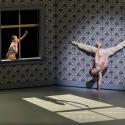
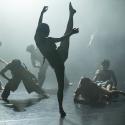
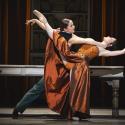
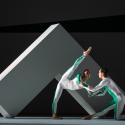
There’s a sly in-joke in the plastering of Mark Morris posters over Sadler’s Wells when Anne Teresa De Keersmaeker’s Rosas are currently inside it. Morris, the waggish American choreographer whose publicity shouts “Joy, Pure Joy”, dubbed her “De Tearjerker” when she followed him into the prestigious position of resident choreographer at Brussels’ Théâtre de la Monnaie.
Joy is not what De Keersmaeker offers in Rosas danst Rosas. Resignation rather, tiredness, restlessness, boredom, unease, exhaustion, yes, in spades. This was the work that made her name 25 years ago, when she was herself only 23. It looks like the forbiddingly clever work of an earnest young lady with a slip of a body, a lot of brains and no time for charm.
A brutish fourway drill not far short of two hours long without interval, it is minimalism writ vast, using very little material at colossal length, and eventually boring you into finding some way of surviving it - whereupon, who knows, you may suddenly find yourself filling that blank page in desperation, gripped by your own feverish imaginings. Or you may walk out, as plenty of people did last night.
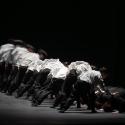
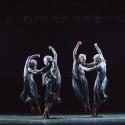
Typical of modern choreographers who insist that working process is all, everything about it is disconnected. In front of a glamorous silver curtain redolent of lapdancing clubs, to intermittent blasts of pulverising mechanistic rhythm, four women dressed plainly in schoolgirlish clothes perform a flawlessly synchronised drill of laser-cut little gestures.
At first they roll in silence on the ground in achingly slow motion, stop-start, up-down, awake-asleep, using their sharp breaths as their “human music”, as it’s described. It’s of microscopically little interest during 45 minutes of this whether one is awake and three are asleep, or one is asleep and three are awake, yet the strung-out perfection of the unison does grip in the way that extreme group synchronisation does.
Then, to an eruption of throbbing sounds like factory looms, they do much the same metronomic tic-tac gesture language while sitting on wooden chairs, which they unstack from a pile in the corner. They deliberately and cheeseparingly add more gestures - like the playground game "One Finger, One Thumb, One Touch of the Nose, Keep Moving".
After an hour of increasing tedium, I was suddenly struck by the resemblance of this over-artful set to a school hall at that nadir of teenage girls’ experiences, exam time, and I set off after this thought like a famished greyhound after a stuffed hare. That silver curtain over the little dais, the wooden chairs, the girls’ uniforms, their sleepless night, their head-clutching, was this a dry, subterraneanly witty account of the horror of school-leaving tests? When the performers faced the audience suddenly pulling their gym shirts down to bare their shoulders, with a shifty dull glance, was this a memory of naive 16-year-olds wantonly flashing at their examiner to get a better grade? Were those clenched fists and self-harming gestures that I saw in their relentless, pendulum-swinging final dance? Those gestures aren’t neutral, they’re all girls’ ones - they say, “I can’t sleep”, “my hair’s a mess”, “my right tit’s too small”, “I know I’ll fail”, “did you hear that noise?” “Ow, I’ve got the curse.”
This is probably utter baloney, since it doesn’t square with the company’s austere explanation of a “contrast between rational, premeditated structures and meaningful emotions, the dialectic between aggression and tenderness, the interaction between unison and counterpoint”. It’s an old trick - if you bore people insistently enough, they come up with something interesting for themselves. Then you claim the prize.
- Rosas danst Rosas plays again tonight, Zeitung is performed Friday & Saturday. Book tickets online
- Check out what's on at Sadler's Wells this season