Though set in a Czech village during the last months of World War Two, armed conflict is peripheral in Karel Kachyňa’s Long Live the Republic! (Ať žije republika). We do see the chaotic departure of German troops in an early scene, and though their actions are pivotal to the plot, the struggles which Kachyňa depicts are the everyday ones experienced by his young protagonist Oldřich. Kachyňa worked on the screenplay with his long-term collaborator Jan Procházka, who described his source novel as about “how I saw and experienced the end of the great war… my happy, painful, already so distant childhood.”
Released in 1965, Long Live the Republic! was nominally intended to be a celebration of Czechoslovakia’s liberation from German occupation and was consequently allotted a generous budget. Filmed in monochrome CinemaScope, it still looks extraordinary; Kachyňa had originally trained as a cinematographer, moving into direction after realising that it gave him more artistic control. He had a reputation for securing good performances from young actors and described the 14-year-old Zdeněk Lstibůrek as his best child performer, Lstibůrek’s Olda appearing in virtually every scene. An occupying army is the least of Olda’s worries; an undersized only child devoted to his mother (Naděžda Gajerová), he’s preoccupied with the village bullies and an abusive alcoholic father, finding solace in his friendship with kindly neighbour Cyril (Gustáv Valach).
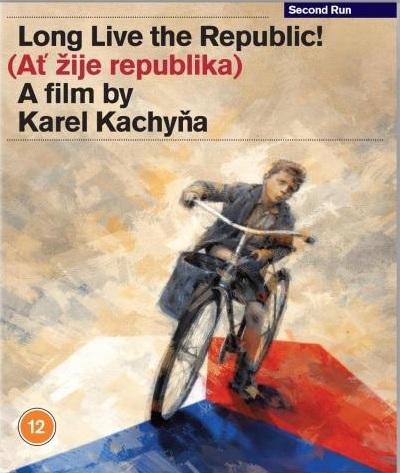
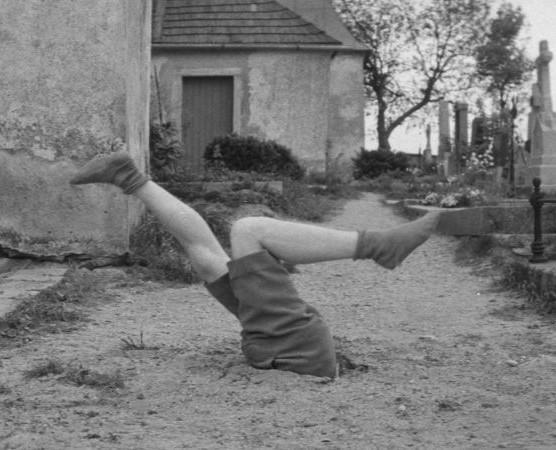
That we’re seeing events through the eyes of a child is reflected in Kachyňa’s editing, with constant, dizzying shifts between the past, present and imaginary worlds. This leads to some wonderfully funny moments, notably when Olda is evading his teenage antagonists in an early scene, soaring over a puddle and dispatching one aggressor so that he falls headfirst in a pothole, his legs waving in the air. The opening sequence is thrilling, Olda racing pell-mell on a bicycle much too large for him, the camera mounted on the handlebars to capture Lstibůrek’s genuine mixture of fear and exhilaration. There are moments when you fear for the safety of the younger actors, whether it’s the bullies scrambling up a church tower or Olda being tossed about in a motorcycle sidecar. Lstibůrek is terrific throughout, and his is surely one of the greatest ever screen performances by a child actor.
Olda’s pursuit of his beloved horse Julina, stolen by retreating German soldiers, dominates the film’s second act, the scenes showing him alone in a vast pine forest emphasising his isolation and insignificance. Kachyňa’s widescreen images of rural Moravia are beautiful, his juxtaposition of fighter planes with birds striking. The Soviet troops encountered by Olda are less threatening, a contrast with the residents of his village; their treatment of a key character accused of collaboration is brutal. The arrival of the new occupying force in the final scenes, their banners carrying slogans like “Long Live Stalin” and “Long Live the Soviet Union”, is treated with utter indifference: rural life will surely continue as it always has.
That Long Live the Republic! was produced at all seems extraordinary, and this visually beautiful, emotionally rich epic, along with Kachyňa’s subsequent features Coach to Vienna and The Ear (both collaborations with Procházka), was taken out of circulation after the 1968 Soviet invasion and not seen again until the early 1990s. Peter Hames’ booklet notes provide an interesting and detailed overview of the film’s production and of Kachyňa’s later career, and the restored HD print is immaculate. Bonus features include a 1998 interview with Kachyňa and Jan Němec’s wordless 1963 short A Memory for the Present.