Messiaen’s Turangalîla, his sprawling 10-movement, 75-minute extravaganza, is garish, graphic and glorious. It is a full-bore, Technicolor, over-the-top, spectacular blast of orchestral fireworks from beginning to end. It is, as the kids say, “a lot”. But not enough for the curators of Multitudes, a multi-disciplinary festival at the Southbank Centre this month, who paired the it with a specially-commissioned animated film by 1927 Studios. Bad idea.
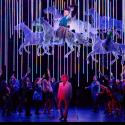
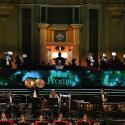
I’m not sure any film would enhance the experience of Turangalîla live – how can the music alone not be enough? – but this one positively ruined it. It distracted and detracted. Whenever I tried to focus on the players my attention was demanded by a film, projected onto a big screen above the orchestra, apparently responding to the overwhelming expression of erotic ecstasy in the music, that instead completely trivialised it. The film, with nods to silent cinema, surrealism, Bollywood and a vague sense of Terry Gilliam without the wit, was tiresome, migraine-inducing and offensively silly.
In an early scene, a one-eyed female with pendulous breasts copulated violently with a bulbous man till her single eye fell off and rolled away. It was a puerile response to Messiaen’s music which, love it or hate it (and plenty of people over the years, including Boulez and Stravinsky, have been haters) is certainly sincere, serious and fully felt. This film made a mockery of it, and I did my best to ignore it, which was difficult as it was like a toddler constantly shouting “look at me”.
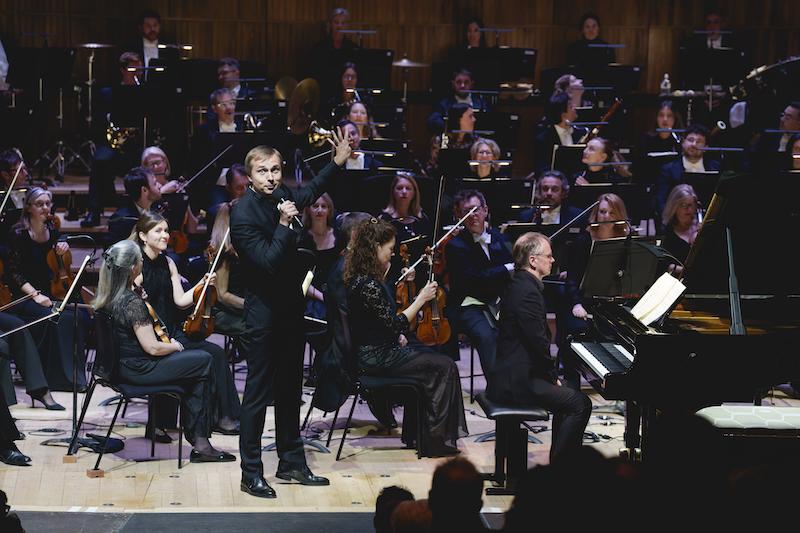
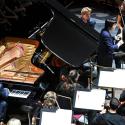
Meanwhile a very decent performance of a major work of 20th century music was taking place. An enlarged RPO gave a good account of it, with Steven Osborne heroic on the hyperactive piano part and Cécile Lartigau, looking as French as it’s possible to look, on ondes Martenot, the ghostly pro-electronic instrument whose survival today is almost entirely down to Turangalîla. I found the ondes a bit prominent in the sonic mix, but that may have been to do with where I was sitting – apparently elsewhere in the hall that was not a problem. But its colour is so integral to the piece’s unique sound.
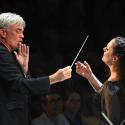
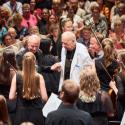
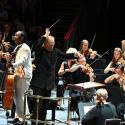
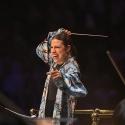
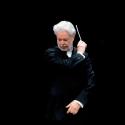
Conductor Vassily Petrenko (pictured above), more animated than the animation, kept fully occupied for the whole piece, and clearly revelling in it. His charming spoken introduction made clear his affection for Turangalîla, and this communicated to the players who, a couple of rocky moments aside, delivered for him. The low brass see a lot of action and made the most of it, Osborne flew around the keyboard, and the huge percussion section added to the exhilaration. But amid the crash-bang-wallop, in the middle of the piece, sits the most extraordinary movement, “Jardin du sommeil d’amour” – “Garden of love’s sleep” – in which time is suspended, yearning string chords cushion birdsong figures on the piano, amid delicate brushstrokes from the vibraphone and celesta. It was exquisite, and thankfully the one time the film-makers decided to stop showing off and get out of the way.
We live in a video age and perhaps others in the audience felt the need of added visual stimulus. But for me, adding this otiose film to the Turangalîla banquet was like forcing the “waffer-thin mint” on Mr Creosote, with similarly emetic results.