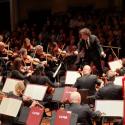
There are few concert experiences as satisfying as hearing cornerstone works of the Romantic repertoire played with energy, commitment and panache, which is what Saturday’s BBC Philharmonic delivered in generous measure.
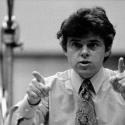
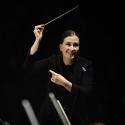
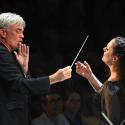
Much of the reason for that must be due to Anja Bihlmaier, the Phil’s principal guest conductor, whose visits are, it seems, always characterized by articulation that’s crafted and intelligent, with widely expressed dynamics and contrast and constant imaginative touches. Add to that the solo violin playing of Bomsori Kim and you have something special.
First, however, was the last piece in these concerts from Julia Wolfe, the orchestra’s composer in residence for the season. Big Beautiful Dark and Scary is the somewhat puzzling title of a piece from 2002 that reflects her immediate reaction to “9-11” – the attack on the Twin Towers in New York by terrorist hijackers in September 2001. It’s one of those world events where you remember what you were doing when the news broke (in my case preparing for a trip abroad the following day, and after the initial shock being mesmerized as the buildings collapsed completely, one after the other). Julia Wolfe was extremely close to it all: she was two blocks away, taking her children to school, when the planes hit. There’s evidence in this musical document of pure mental trauma, I think: horror-movie-style sounds (flutter-tongue flutes among them) grind upwards in pitch to massive sonic climaxes, and there are downward scale effects as the sound level decreases temporarily, evoking unease, apprehension, and frantic activity. The biggest crescendo of all results in heart-rending, long drawn out, shock – and only a resounding gong remains at the end. It’s visceral and disturbing, not so much a meditation as an anguished scream.
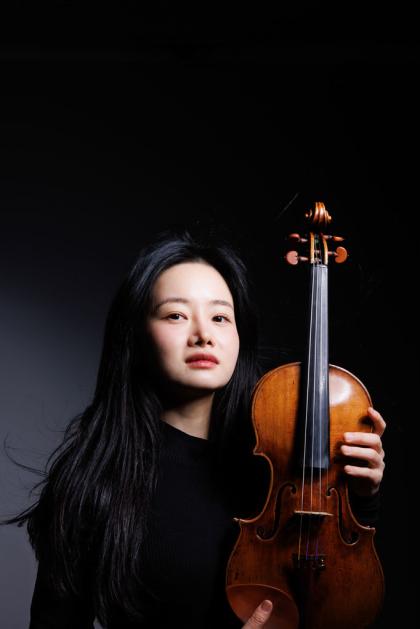
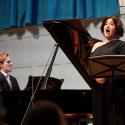
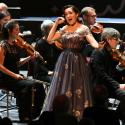
There needed to be an uplifting contrast to that, and it came in Tchaikovsky’s Violin Concerto. Bomsori Kim (pictured left), South Korean by birth and Juillard-trained, made her auspicious BBC Proms debut in 2023 with the Bruch Concerto no. 1 alongside the BBC Philharmonic and Anja Bihlmaier (also making her Proms debut), so it was a happy reunion for all concerned. Her approach to the Tchaikovsky was thoughtful and multi-faceted in the opening movement: Bihlmaier had set the style with a gracefully phrased rendering of the opening, and kept the orchestral contribution precise subsequently, while the solo embarked on a journey that emphasized the dance-like quality of the first main theme and drew things out to near-excess in exploration of the second – the tempo had to be pressed hard in the following tutti to get back to the movement’s initial impetus. The solo cadenza was sweet and almost plaintive (Bomsori Kim can make her violin whisper as well as sing), but when it came to the coda everything was speed and excitement.
The same focus on contrast came from the central, Canzonetta, movement and the finale following. The Andante was expressive and meditative, slowing at times as if to seem like improvisation – the Allegro vivacissimo was fast and furious (except for a brief change in the second subject), and hugely energetic, Zigeuner-style. This soloist can play in song-like mode with purest tuning and limpid tone, and in firework passages like a soul possessed, but she knows just what she wants to get from a virtuoso concerto, and with a conductor as alert as Anja Bihlmaier the results are a thrilling ride.
Follow that, you might think, but when it’s the Symphonie Fantastique by Berlioz it can be a still wilder one. It still seems extraordinary and modernistically daring almost two centuries after it was written – for this music the label “Big Beautiful Dark and Scary” seems wholly appropriate. Anja Bihlmaier is an expert at obtaining precise bravura playing from this orchestra, and its “Daydreams – Passions” first movement came with a thrilling crescendo to lead to the allegro main theme and plenty of drama throughout, its climax dominated by the sonorities of timpani and piccolo stretching the sonic texture to the max. The whirling waltz-tune second movement (“A Ball”) was played precisely according to the book, with the Philharmonic wind principals shining in their solo spots, and built urgency magnificently towards the acceleration at its end. The “Scene in the Country” third movement maintained its flow along with vivid contrasts, those wind players eloquent again, and the rumbling thunder effects from the four timpanists prescribed by Berlioz were executed with conscientious clarity.
It’s in the final two movements (segue’d pretty smartly on this occasion despite the pause in the score) that the Symphonie Fantastique goes beyond anything written before it (or since, you might try adding). The “March to the Scaffold” has a cinematic quality in it, with detailed instructions from the composer as to how its drum sounds were to be achieved, and was enhanced by having two tamburo drummers up in the choir seats area behind the orchestra to highlight the point of execution in its descriptive story (with an audible “plop” from pizzicato strings as the severed head falls to the basket). But at the same time it’s a wonderfully roistering tune and was played with splendid aplomb and rhythmic drive, leading to a finely calculated peak of intensity.
The “Dream of a Witches’ Sabbath”, with two timpanists, two bass drummers and bell players among the percussion team, is always a glorious romp and this was no exception. Anja Bihlmaier devoted attention to every detail and brought it to a truly frenzied end.
- To be broadcast on Radio 3 on 5 May
- More classical reviews on theartsdesk