In Jaco Van Dormael’s black comedy, God (Benoît Poelvoorde) is an alcoholic arsehole living in 21st-century Brussels, who maliciously causes destruction across the world while bullying his silent wife and daughter Éa. As with much of Dormael’s work, the surreal, in his own words “not yet civilized” vision children have of the world inspires the lens through which we experience the film. Éa (Pili Groyne), God’s rebellious but moral 10-year-old daughter, narrates chunks of the story and is its strong protagonist. Accompanied by her gaggle of eccentric apostles, she flees her prison and sets out to write a brand new testament.
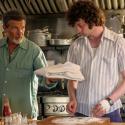
Having made Mr Nobody (2009) in English, Dormael returns to French for The Brand New Testament, his second collaboration with scriptwriter Thomas Gunzig. Van Dormael places his native Belgium at the heart of this film and, using the country as his cinematic playground, he presents us a world in which God created Brussels first. (Pictured below: Benoît Poelvoorde as God) Éa is determined to seek revenge on her father, who purposefully sets people against one another “for God… for Allah”. In defiance of his (His?) spiteful dictatorship, which includes a “Sod’s law” set of rules to undermine humans – the queue next to yours always moves quicker; plates only fall and smash once you’ve already washed them – Éa satisfies her taste for revenge by hacking into God’s computer and leaking a text message to the entire population revealing the date they’re each going to die. Humorously, Éa’s older brother Jesus (David Murgia), or JC as he’s referred to here, condones her plan as “awesome” from his position as a talking mantelpiece ornament.
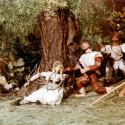
Choosing apostles is all guesswork, according to JC. He tips Éa off about an escape route through a secret tunnel in the back of the family washing machine. Once in the real world, Éa picks up a dyslexic tramp to be the testament’s scribe, a beautiful amputee, a porn addict, a killer who sells life insurance, a deserted wife played by Catherine Deneuve (pictured below with friend), a trapped explorer, and a sickly child. Each apostle narrates their story to the camera, while Éa listens to their chests to determine each's personal piece of music – Purcell for the sex addict, circus music for the abandoned wife and so on. An Pierlé’s piano compositions also blend perfectly with the larger classical arrangements in the score. Included in Dormael’s bag of tricks are painting-like stills of the characters against busy background action, while Sylvie Olivé's theatre-like set designs look real in cinematographer Christophe Beaucarne’s extreme close-ups until the camera pans out and we see God setting fire to a cardboard version of Brussels and crashing a plane into model fields. There are other surreal touches. A disembodied hand dances gracefully to opera in front of its former owner. Giraffes loiter around deserted urban roads, chickens perch on cinema chairs and a tiger lounges in a modern bedroom, all gently mocking the order in which God supposedly created the world.
This is a work of poignant feminism correcting the lack of female voices in the Bible which surprised Dormael in his Catholic upbringing. Groyne is fiercely determined as Éa, while Yolande Moreau is subtly charming in the role of God’s baseball-loving wife who eventually takes control of the world by calmly popping her own password into the computer: “Welcome, Goddess!” it replies. The Brand New Testament is a loosely biblical, comic fantasy telling an elegant, uplifting story that questions: what would the world look like if God were alive and female?
Overleaf: watch the trailer to The Brand New Testament