

Art can inspire music, and vice versa. When concert (as opposed to theatre or film) scores are accompanied by images, however, the effect dilutes the impact of both; above all, the imagination stops working on the visual dimension created in the mind's eye.
classical music reviews
Gavin Dixon

An auspicious debut with the Royal Philharmonic for Vasily Petrenko. Just watching him conduct, it is clear that he is a natural communicator, always giving a clear, generous beat and never missing a cue. No surprise, then, that the orchestra was on his wavelength from the start last night in Mahler's Second ("Resurrection") Symphony, reflecting back all his dynamism and focus. That immediacy was balanced by careful planning on Petrenko’s part, with tempo choices finely calibrated for dramatic power and structural coherence.
Gavin Dixon

The annual Bach Choir St Matthew Passion is a satisfying mix of new and old. The tradition dates back to 1930, and, as was the fashion then, the choir employed is huge. Applause is kept to a minimum, another nod to tradition, as is the translation of the text into English.
David Nice

Cherrypicking from 17 concerts to come up with the one by last year's Leeds International Piano Competition winner may seem a bit unfair to the French Institute's ever more ambitious annual It's All About Piano! Festival. It was hard, for instance, to miss out on the youth element, the Satie bookending the weekend's events, or for that matter the absolute star of the festival two years ago, David Kadouch, who then gave one of the best, and most intriguingly programmed, recitals I've ever heard and teamed up for a Saturday night duo recital with Adam Laloum.
Peter Quantrill

Some of us have waited years for this. The opportunity to see Schumann’s largest, most ambitious work was not to be missed. For this most literary of composers, setting the Alpha and Omega of German poetry was a labour of love, which he undertook in reverse, but with progressively less reliable inspiration. From the grandiose bluster of the overture, composed last, you would be hard pressed to anticipate the sublime heights of the third part, composed by Schumann in a wake of elation shortly after completing The Paradise and the Peri.
Graham Rickson

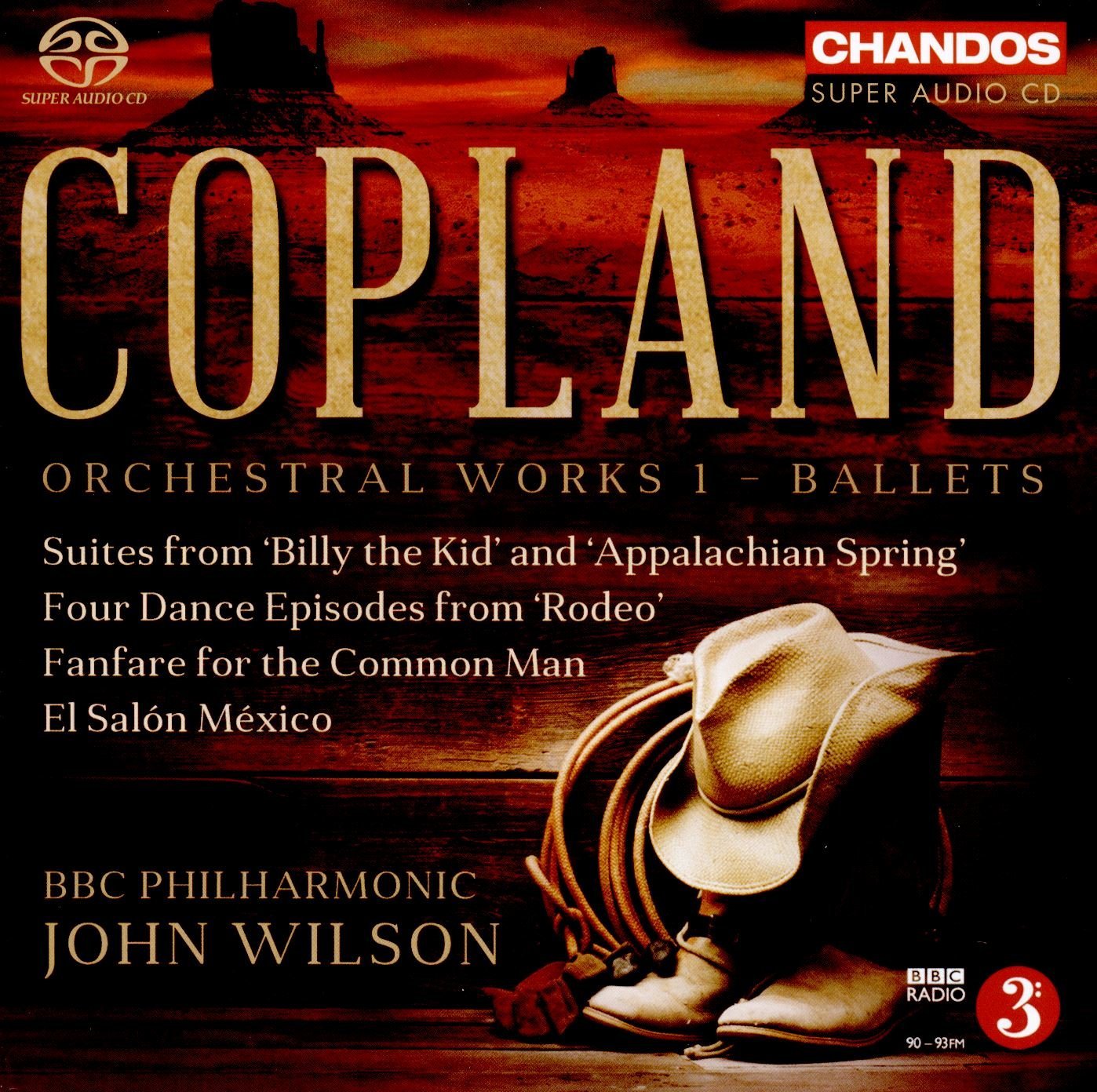 Copland: Orchestral Works 1 BBC Philharmonic/John Wilson (Chandos)
Bernard Hughes

Last night’s concert at the Barbican focused on the theme of dreams and night-time, centred around the UK premiere of Dream of the Song by George Benjamin. But the one piece on the programme that did not fit with the theme stole the show. Stravinsky’s American-period masterpiece Symphony in Three Movements supplied the energy and rhythmic impetus lacking elsewhere.
Christopher Lambton

I expect that there will be a sense of mild disappointment within the ranks of the Scottish Chamber Orchestra that its great Brahms season did not come to quite the conclusion intended. As readers will know from last week’s review of the Fourth Symphony, a herniated disc meant that Principal Conductor Robin Ticciati had to pull out of both that concert and also last night’s performance of the Deutsches Requiem (he has also withdrawn from Glyndebourne performances of Wagner's Die Meistersinger).
Peter Quantrill

How can an orchestra perform the music of the future? This was the question posed by Francois-Xavier Roth, congenial maestro and charming educator, as the standard concerto for platform arrangers played out behind him on the floor of LSO St Luke’s. Roth had just offered one confident answer to the question, with the first performance of Dr Glaser’s Experiment by Darren Bloom.
Glyn Môn Hughes

A double dose of Einaudi may not be the best programming idea. A world premiere in the first half and then a UK premiere in the second part of the concert was, perhaps, overegging the musical recipe. But add to that some Respighi and some Bernstein, with conductor Damian Iorio in charge, and things turned out not so bad after all.