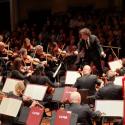
The annual Bach Choir St Matthew Passion is a satisfying mix of new and old. The tradition dates back to 1930, and, as was the fashion then, the choir employed is huge. Applause is kept to a minimum, another nod to tradition, as is the translation of the text into English.
But the choir has not been deaf to more recent developments, or to the rise of period performance practice. They now sing with period instrument ensemble Florilegium, and the choir’s musical director, David Hill, led an account that draws on recent trends, not least in the fleet tempos and elegantly shaped phrases, particularly in the choruses. It’s a hybrid approach, but performed with such conviction that it never felt like a compromise, with most of the artistic decisions validated through the sheer quality of the choral singing.
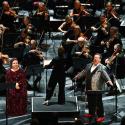
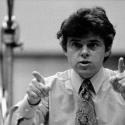
Hill’s interpretation (the conductor pictured below by John Wood) felt both flexible and focused. He conducted the choruses with broad, sweeping gestures, and the choir responded with expressive and lyrical singing. He was not afraid to bring out details in these louder passages, and made particularly expressive use of decorated phrase endings and cadences. His direction of the solo numbers was more restrained, often allowing the obbligato soloist to set the tempo and shape the phrases.
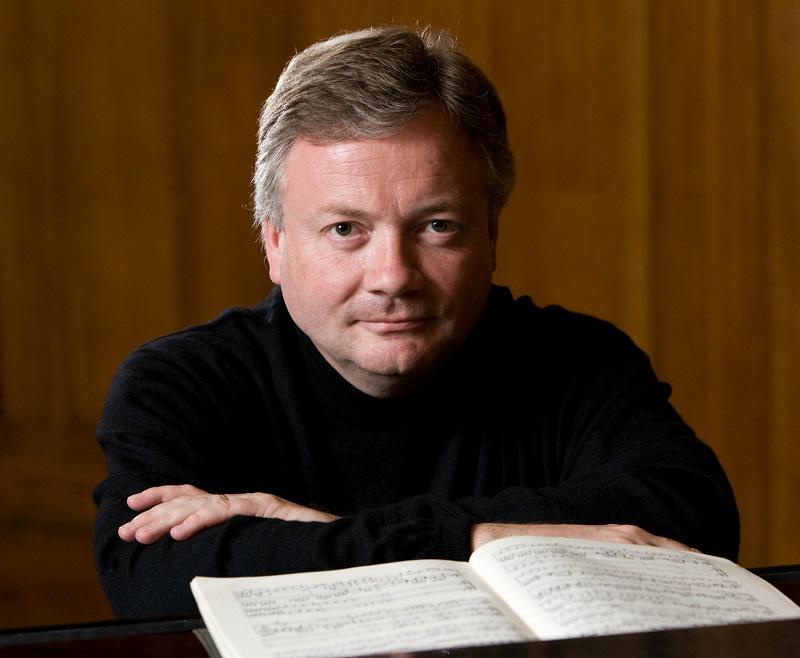 The work is clearly second nature to conductor, soloists and continuo group, allowing an ideal continuity from number to number, with the musical structure never standing in the way of the story telling. That narrative quality is enhanced through singing in English, although the antiquated King James translation cries out for an update.
The vocal soloists were all good, and in most cases ideally cast. Narrator Toby Spence was suitably declamatory, although struggled to maintain his tonal focus in some of the louder passages. Bass Paul Whelan stood in for an indisposed Matthew Best as Christ. Tall and bearded, he is an imposing presence on the stage, and his voice is suitably commanding. Soprano Sophie Bevan was admirably expressive, although occasionally lagged behind the beat. Tenor Nicky Spence had a similarly operatic presence, and his few arias were marked out by a vocal colour wholly distinct from that of his near namesake (but no relation) Evangelist. Baritone Henk Neven sang all the support roles convincingly, and made for a suitably conflicted Pilate, contrite Peter and weasely Judas. But the pick of the soloists was mezzo Jennifer Johnston, ideally expressive, especially in “Have mercy, Lord, on me” (as “Erbarme dich” is here rendered), and technically faultless, with ideal projection and tonal control.
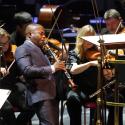
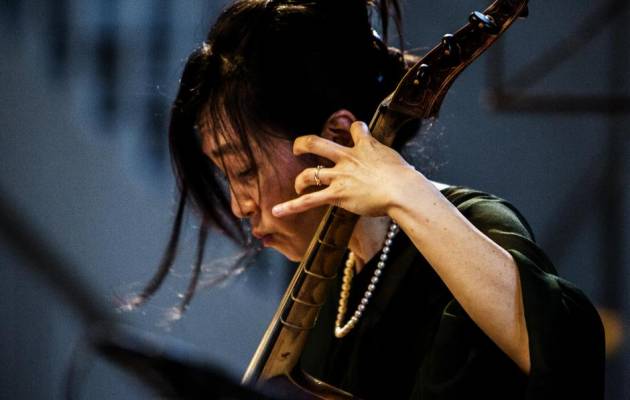 The orchestral playing was serviceable, but rarely met the standards of the singing. Playing without vibrato often exposed fragile ensemble in the strings, and the woodwind sections also lacked consistency in intonation. But the orchestras were redeemed by solid continuo sections, and by several soloists, particularly second orchestra leader Kinga Ujszaszi and viola da gambist Reiko Ichise (pictured above by Janus Engel), a standout performance in the second half.
But the real star of this show was the Bach Choir itself, and the standard of choral singing throughout was impressively high. David Hill’s ability to shape and nuance the choruses, despite the huge number of singers involved, was a testament to their standards and consistency. Internal balance within the choirs was always finely judged, and the repiano group (of schoolgirls – another longstanding Bach Choir tradition) projected well. The performance was dedicated to Sir David Willcocks, the choir’s musical director from 1960 to 1998, who died last year. It was fitting way to honour his memory, and from the sheer quality of the choral singing, they certainly did him proud.