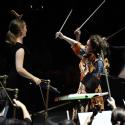
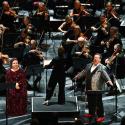
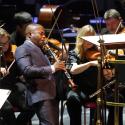
I expect that there will be a sense of mild disappointment within the ranks of the Scottish Chamber Orchestra that its great Brahms season did not come to quite the conclusion intended. As readers will know from last week’s review of the Fourth Symphony, a herniated disc meant that Principal Conductor Robin Ticciati had to pull out of both that concert and also last night’s performance of the Deutsches Requiem (he has also withdrawn from Glyndebourne performances of Wagner's Die Meistersinger).
Principal Guest Conductor Emmanuel Krivine agreed to stand in for both concerts but in the event he only managed the first, leading to the further substitution of the Dutch operatic conductor Ed Spanjaard. Of the two planned soloists, baritone Matthias Goerne was unwell, replaced by Roland Wood, which meant that of the original names only soprano Kate Royal remained on board this somewhat wounded enterprise.
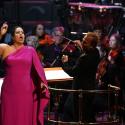
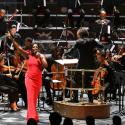
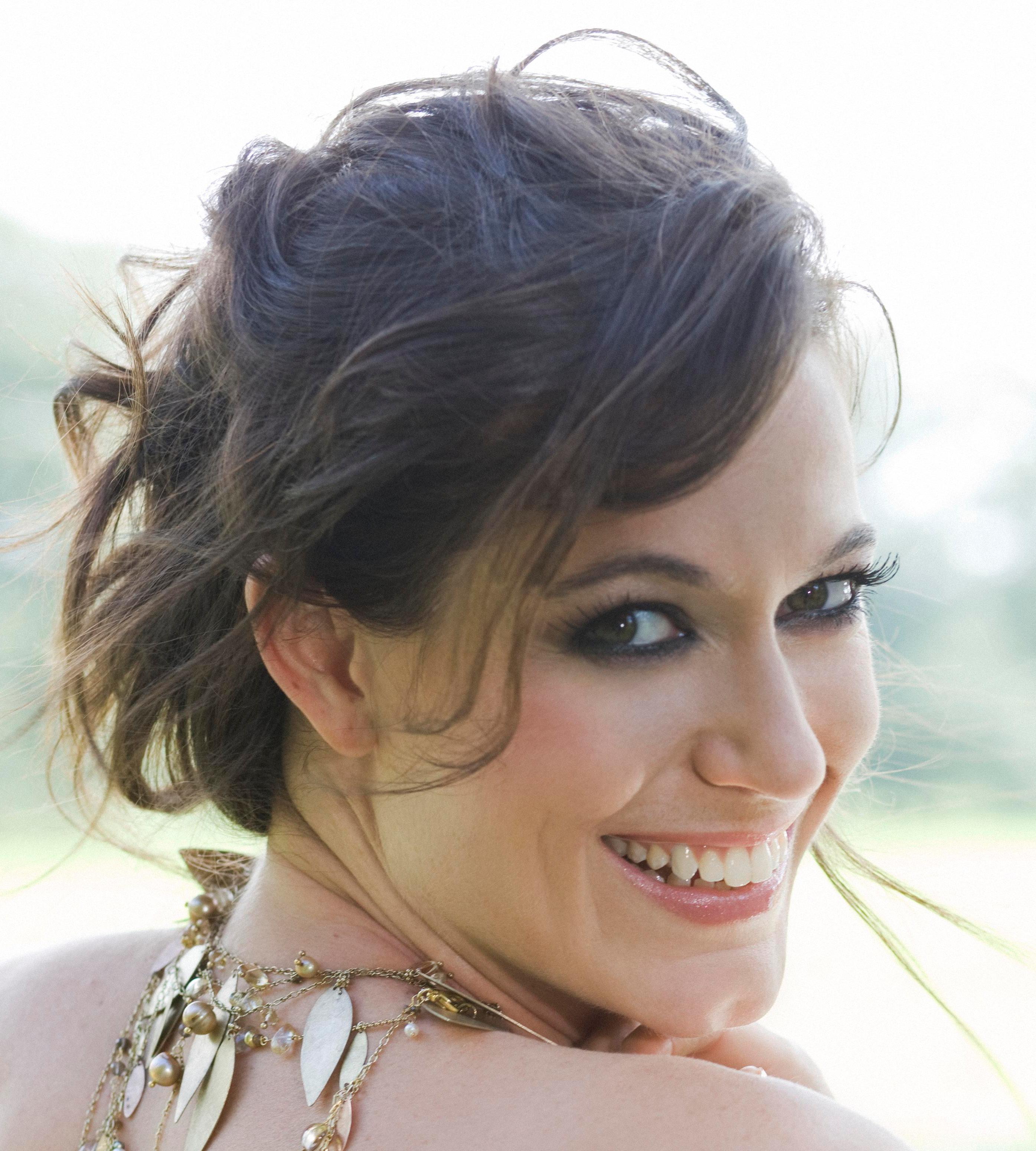 But if in the end this was not quite the performance we expected, it was nothing to do with the substitutions. After a fresh and invigorating performance of Haydn’s Symphony No 102 we came to the Brahms after the interval. It terms of musical expression and nuance, there was much to praise in Spanjaard’s interpretation. The transparency of woodwind sound, so much a Ticciati trademark, was still there, the orchestra precise and responsive, the chorus very well trained, with neat consonants and a clearly focussed projection. As for the two soloists, Brahms makes it difficult – blink and you miss them – but neither quite rose to the occasion. Kate Royal’s “Ihr habt nun Traurigkeit” (the soprano pictured above right) seemed dry and somewhat matter-of-fact, while Roland Wood’s interjections in the choral texture were clear but lacked engagement.
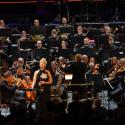
The real problem, however, with this performance was that of scale and concept. Whereas the Scottish Chamber Orchestra’s cycle of Brahms symphonies has been a revelatory antidote to conventional heavyweight symphonic forces, with acerbic period brass, biting timpani, and limited vibrato, the Requiem does not seem to lend itself to such lean, sinuous interpretation. An orchestra and chorus that sounded magnificent about a year ago in Haydn’s Creation struck me as struggling to respond to the extraordinary warmth and richness of Brahms’ choral textures. Some years ago I heard the Requiem in the same space with another, larger, orchestra, and can recall being awed by the sudden, epic, power of the great climaxes, reinforced by pedal notes from the noble Usher Hall organ. For reasons that are totally understandable the SCO chose to use its own little chamber organ for last night’s performance but try as she might (and she did) Jan Waterfield could not make herself heard above a chorus of 70 belting out “Denn alles Fleisch ist Gras”.
The astute reader will sense a contradiction. Should the orchestra have been bigger or smaller? Was the chorus too large for the organ or to small for the hall? Both, really. It was one of those performances that, with the right vision, might easily have turned into something magnificent despite its built-in tensions. Whether Ticciati had a plan in mind that would have achieved this, we won’t know until he is able to have another go.