

When, in late 2021, I heard the UK premiere of Sir James MacMillan’s Christmas Oratorio, it truly felt like a heaven-sent gift of musical and vocal splendour after the long famine of our lockdown purgatory. Four years later, with the renewed thrill of large-scale live performance no longer so acute, how does it hold up? For the most part, with undimmed brilliance: at the Barbican, the composer himself conducted the BBC Symphony Orchestra and Chorus in a signature work that gathers four centuries of sacred music into a 100-minute meditation on the Christmas story. It transcends pastiche to find a musical language that irresistibly speaks to the present while honouring the past.
Accessible, eclectic, listener-friendly but strikingly free of cynical sentimentality, this is an Oratorio devised by a staunchly committed (Roman Catholic) believer rather than one of the well-disposed doubters and seekers – from Berlioz to Britten – who have written most of the best-loved Christmas music of the past 200 years.
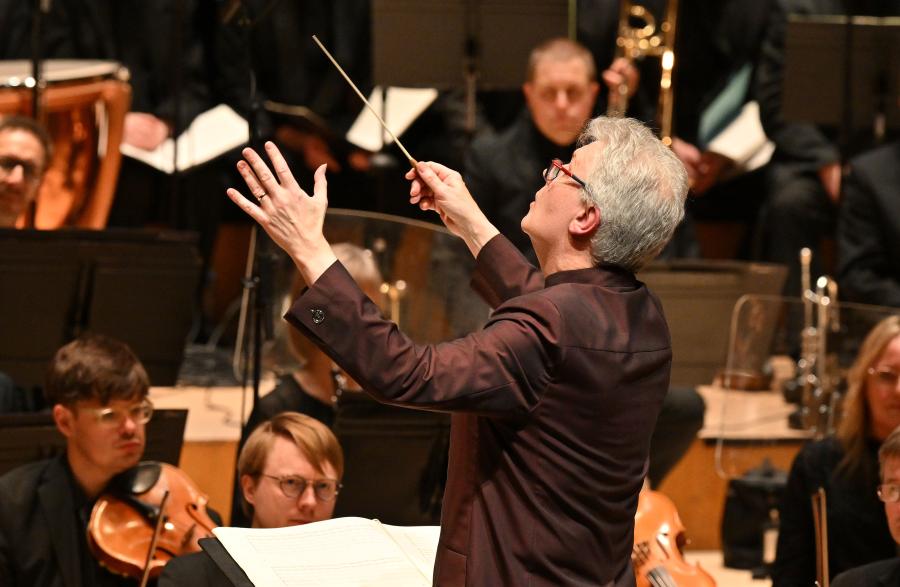
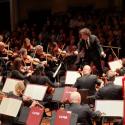
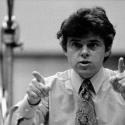
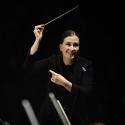
That faith matters, to MacMillan (pictured above) and to us. It means that his “double palindrome” of 14 mirrored sections – sinfonia, chorus, aria, “tableau”, all divided into two parts – places a heavy, even un-Christmassy, emphasis on the suffering and sacrifice in wait for the babe born in a stable. Across the manger falls the shadow of the cross. Menacing timpani interrupt the angelic melody of the celeste from first to last. Brass earthquakes rock sweet choral lullabies.
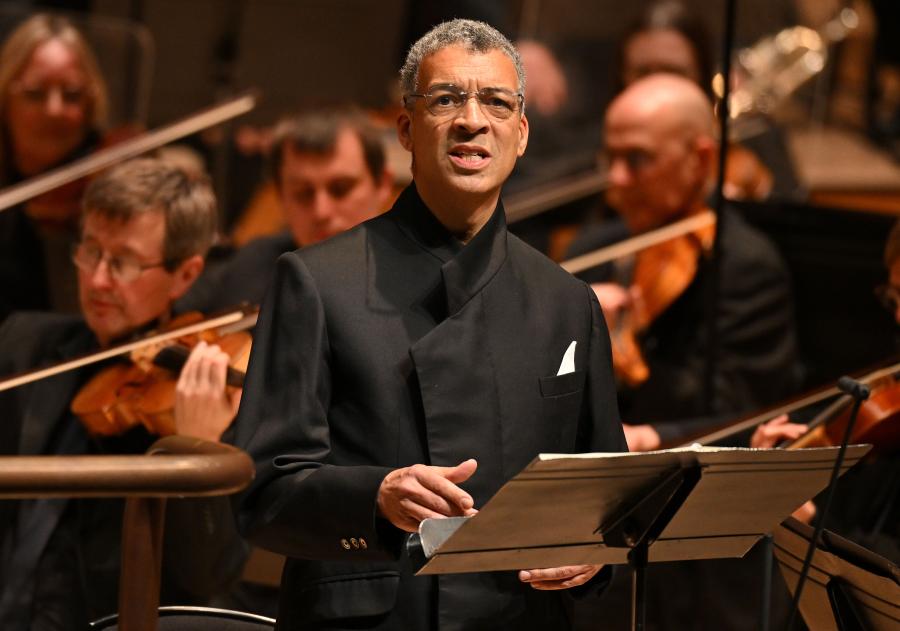
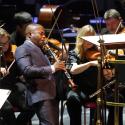
In one of the devotional poems set as soprano and baritone arias, Milton’s “On the Morning of Christ’s Nativity”, soloist Roderick Williams (pictured below) reminded us that “The Babe lies yet in smiling infancy/ That on the bitter cross/ Must redeem our loss”. MacMillan’s Nativity incorporates a Passion too. This time, I registered how brutally the periodic squalls of violence and dissonant outbursts in the orchestral writing threaten to wreck the comely peace proclaimed in the exquisite choral numbers.
MacMillan serves us a feast of lavish beauty, but makes us pay for our eventual comfort and consolation with a theological toughness rarely evident in seasonal favourites. In the first of the two Gospel narratives presented as “tableaux”, Herod’s Massacre of the Innocents and the Flight into Egypt propel a Christmas story not of cosy adoration but of indiscriminate mass terror and panic-stricken exile. That presiding motif felt, in anything, even timelier in 2025 than it had in 2021. At the close, lines from another modern Christmas piece by a serious believer came to mind, TS Eliot’s “Journey of the Magi”: “This Birth was/ Hard, bitter agony for us, like Death; our death”.
Notoriously, Eliot also wrote that “Immature poets imitate; mature poets steal.” Not a scavenger but a transformer, MacMillan can now – maturely – stride across the canon, from Palestrina and plainchant to Stravinsky and Shostakovich, to recruit modes and accents to serve his own distinctive vision. Somehow he avoids kitsch, with Scottish folk inflections – audible from the first dialogue of clarinet, celeste and harp to the lovely Gaelic lullaby at the work’s climax – a sort of sonic guarantor of authenticity. This time his stylistic jolts and lurches felt more marked than in the celebratory mood of the premiere; what’s not in doubt is the composer’s command of every voice he chooses to adopt.
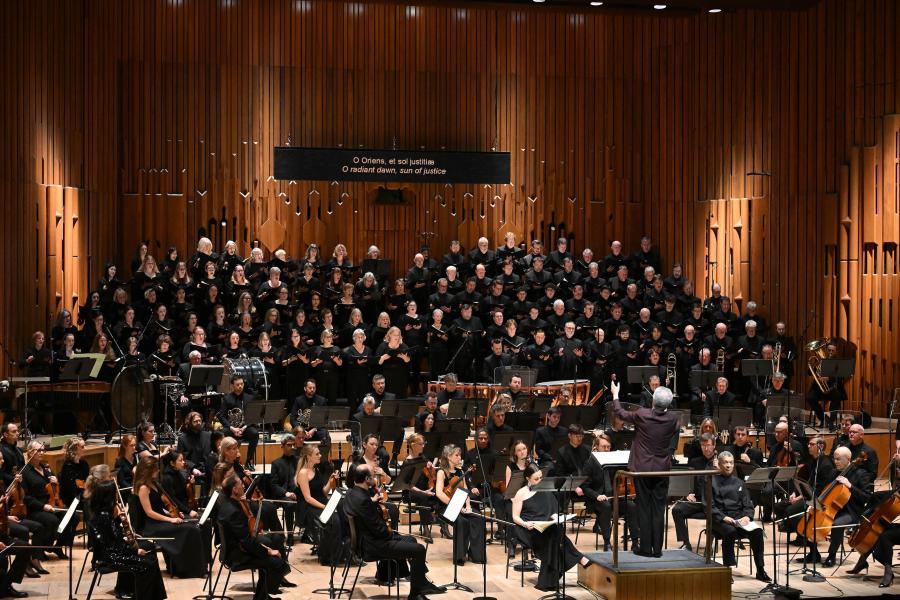
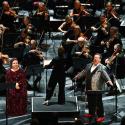
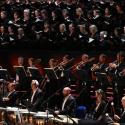
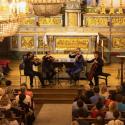
Directed by Neil Ferris, the BBCSO chorus (pictured above) took the lion’s share of pure delight. In the mesmeric opening Advent antiphonal “O Oriens”, the exultant Christmas hymn “Hodie Christus natus est”, and the ethereal reverence of the “Magnum mysterium”, they blended strength and sweetness with a lucidity of utterance that respected the composer’s wholehearted commitment to the text. This should never be just a gorgeous wash of background sound. Still, the choral sound does project a terrific power and glory: the ecstatic shout of the “Hodie” in particular must rank among the finest settings of those words.
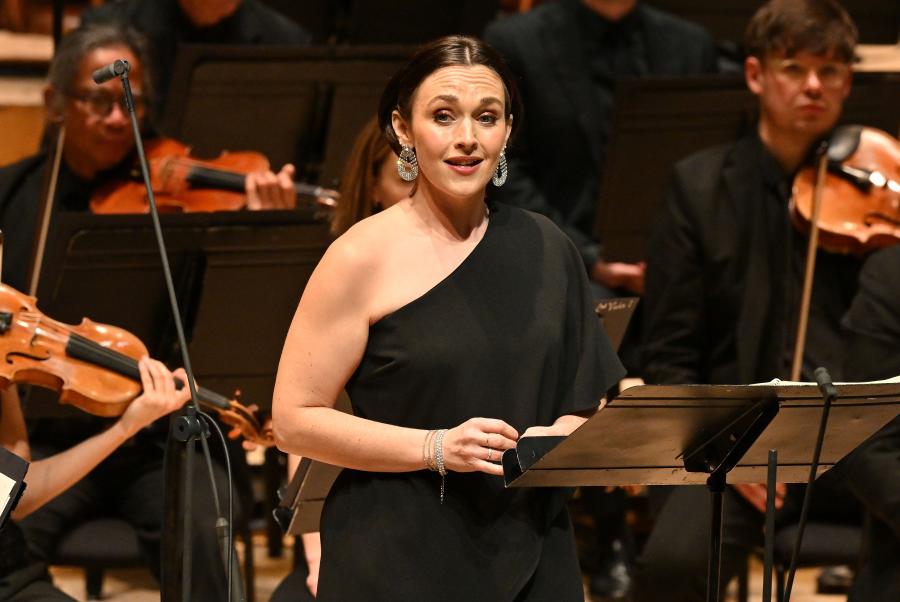
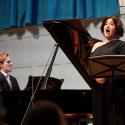
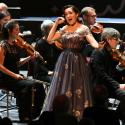
As for the soprano and baritone arias, MacMillan makes his soloists toil for their reward. The Milton ode, Donne’s “Nativity”, two poems by the English Jesuit martyr Robert Southwell: these are not pretty ditties to decorate a Christmas card. Rhian Lois (pictured below) took time to settle as she grappled with the knotted ardour of Southwell’s lines, but especially in the second evocation of the “Burning Babe” she married sound and meaning with intense drama and formidable control. Forget Yuletide schmaltz: the poet imagines the Christ-child horribly incinerated to redeem our sins, until “I called unto mind that it was Christmas Day”. Williams, meanwhile, supplied a master-class in diction and expression as he made every nuance of Donne’s and Milton’s nativity pieces clear, bright and emotionally credible. If anything, his wonderfully polished baritone sounded a little too serene, genial even, amid these wrangles of the striving soul.
On the podium, MacMillan shaped and pointed each finely-wrought instrumental passage with care for both the immediate moment and overall momentum. Philip Moore’s celeste, and Daniel De Fry’s harp, kept an angelic watch over the whole score, and did so with a magical touch. Antoine Bedewi’s timpani regularly crashed into the message of peace to menacing effect while the brass – from Philip Cobb’s fanfaring trumpets down to Sam Elliott’s tuba – memorably took on parts that range from sombre chorale and warm carolling to dissonant, gate-crashing thuggery. And leader Igor Yusefovich stepped up to partner the vocalists in solo passages of ravishing, but never cloying, lyricism.
MacMillan’s theological vision as Incarnation as a prelude to Passion takes us far from the consolatory crib that dominates much favourite festive music. But, especially in the Oratorio’s second part, he delivers amply on the seasonal promise of abundant gifts, of “grace upon grace”. So the choir’s infinitely tender but pin-sharp rendering of the climactic Hebridean cradle-song, the “Taladh Chriosda”, yields in the final orchestral Sinfonia to a string quintet, a brass chorale, a falling shower of stars in the strings, and at last the angelic farewell of celeste and harp.
Doctrine aside, it makes for a contemporary seasonal offering as generous and satisfying as the most hardened sceptic could wish. MacMillan the man of faith, however, would want us to move beyond simple musical pleasure and ask (as John Betjeman did in his poem “Christmas”): “And is it true?” That’s a question no review – for that matter, no performance – can begin to answer.

Comments
Tremendous review, packed…