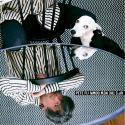
Luster’s fifth track “Halo” has the lyric “mystical creatures… of Éirne,” referencing the Irish river and lough of the same name – both of which are associated with a mother goddess. Earlier, the album’s opener is a short, ambient-styled, scene-setting instrumental titled “Réalt,” where birds, wordless vocals and a harp are heard. Réalt translates from Irish Gaelic as “star.”
The second album, then, by the Connemara-born Maria Somerville affirms her Irish origin (the track "Corrib" is named after another lough, one located in Connemara). In contrast, Luster cleaves stylistically to a form of English, home counties-born shoegazing. Specifically, by cross-pollinating second and third album Slowdive, albeit with a lesser emphasis on electronica. There is, however, one overt excursion into the latter territory: Luster‘s beats-bedded seventh track “Stonefly”, which brings to mind the pulse of music evoking a sunrise experienced during a comedown. The vaporous Luster is, though, so assured it deftly transcends its ostensible influences.
Somerville first attracted attention in 2019 with the self-issued debut album All My People (copies now sell for £50 to £60). It was more abstract, ambient, skeletal and less lush than Luster; akin to a very stripped-down take on the early Flying Saucer Attack. On the new album, a stronger melodic sensibility suggests an immersion in traditional music – indeed, Lankum’s Ian Lynch plays uilleann pipes on the hard-edged, pulsing “Violet” and the Dublin-based Australian Margie Jean Lewis contributes folk-styled violin to the out-of-focus “Flutter.” The harp on “Réalt” is played by Róisín Berkeley. Luster’s lyrics recurrently focus on figuring out what is a projection, what is real, facing loss and how a new beginning can be found once a sense of place is secured.
Now, Somerville has been picked up by the storied 4AD label, an imprint with a solid grounding in musical impressionism. With Luster, Maria Somerville has created a sound-world which envelops like an inexorable bank of fog. Transposed to a live setting, this could be formidable.