Shadows opens with “The Lone West,” a short, desolate instrumental featuring a simple keyboard refrain with a flute-like quality and what may be an early Seventies drum machine. There’s a bit of Young Marble Giants in there. The Brian Eno of Another Green World, too. The Ghost Box label’s characteristic nebulousness is also apparent.
The next track features a vocal. Sailing over a similar musical bedding, Cate Kennan’s voice on “Shadows” is distant, etiolated, devoid of colour. A twangy guitar plays single notes. There is some Santo and Johnny-esque lap steel and sparingly used castanets. The synthesisers employed sound as if they are old, analogue models. The lady in the radiator in David Lynch’s Eraserhead would recognise a kindred musical spirit.
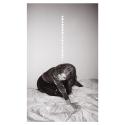
Shadows is the second album from the Los Angeles-based Kennan, whose parents have backgrounds in bluegrass and folk music. She has studied violin. It has taken a while to get to this point. Over late 2017 (when she debuted recording-wise on Scott Gilmore’s Subtle Vertigo album) and early 2018, she regularly played live in Belgium, Germany and the Netherlands. After this, into 2022, her public appearances were confined to LA. More widespread shows across America arrived with the appearance of her debut album, October 2022’s The Arbitrary Dimension of Dreams. Shadows is a little fuller sounding than its predecessor, but the thematic preoccupations have been carried forward.
Lyrically, on Shadows, phrases such as “shadows are moving,” “standing on the edge of time,” “the void,” “you'll fade away into my memory” and “fading avenue of our memory” – the latter pair in two different songs – baldly telegraph Kennan’s concerns with the insubstantial; what’s either hard to grasp, or fading from recall and view. In the world fashioned by this tellingly titled album, it seems barely anything is corporeal, fixed. Indeed, in “Reverie,” she declares “I'll wait for what I'll never find.”
Seeking to convey this dissociation via the album’s ten tracks has the danger of pushing listeners towards their own reveries – losing focus on what’s being heard. Nonetheless, the crepuscular, vaporous, wraithlike Shadows makes its case. It will be intriguing to see how – in a suitably sympathetic setting – this works live.