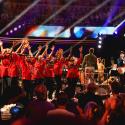
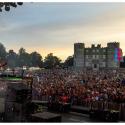
The feelgood vibe that made Dreadzone famous nourishes a sensibility that reaches beyond time and space. Their music, originally honed in the early 1990s, hasn’t aged one bit, and as they drove an enthusiastic crowd of devoted followers to something near ecstasy in Bristol last Saturday, every glorious moment felt as good as new.
Part of a musical movement that fed into a party culture held together by substances that encouraged an open heart and collective communion, the live experience always brought out the best in them. Although MC Spee has had his share of health problems and came off the road for a while not so long ago, he’s back on top form, strutting around the stage helping raise a storm with his charismatic trickster persona, when he is not taking a rest on a high chair from which he can deliver his words of wisdom and good cheer.
Greg Roberts drives the music from his drum-kit with vigour and precision, complemented by the rock-steady bass of Leo Williams who delivers an irresistible pulse, pausing occasionally for dramatic effect, only to return with renewed vigour, driving the dancers from one level to the next.
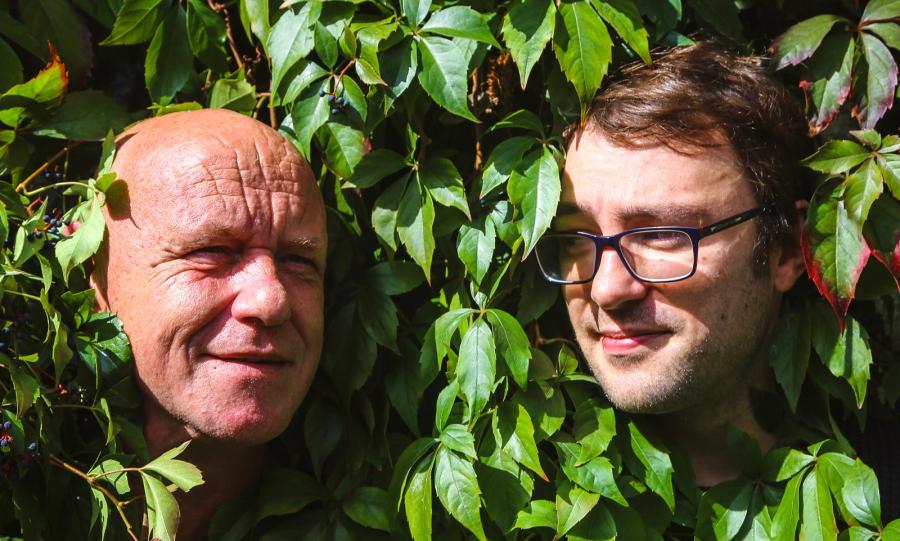
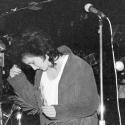
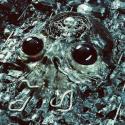
The evening was opened by old friends and sometime collaborators, The Orb (pictured above), still very much founder Alex Paterson’s outfit, these days paired with mixer/engineer/programmer Michael Rendall. Known way back for ambient sounds that helped ravers come down ever so gently, and many wonderful and wide-ranging collaborations that explored the wilder edges of psychedelia, not least with Lee “Scratch” Perry, the Bristol set featured intense house rhythms that Paterson has always been drawn to in contrast to the chill-out delights he made his name with. The high energy sounds, drawing added value from serial repetition, and changes in texture that slid in and out of the foreground almost imperceptibly, were enhanced by striking visuals, varying from the abstract to the surreal, and animated in sync with the pulse and textural changes in the music.
When Dreadzone followed, the high-energy mood gave way to that unmistakable mélange of reggae, dub, dance-hall and folk that has won so many hearts over the years. In a long line of British psychedelic music, that goes back to early Pink Floyd, the band have played with reverb, a magical and three-dimensional approach to sound that thrives on the mind-slowing effect of consciousness-altering substances: sonic epiphanies that never fail to play with all the senses.
While drawing deeply from within Jamaican culture, Dreadzone were also a band that celebrated the love affair between the more party-orientated rock of the post-punk era – think Jah Wobble and The Clash – and the contagious spirituality at the heart of reggae and Rastafarianism. “Zion Youth” remains a classic – reminding an audience whose hips were snaking most sensually, of the African roots of our best party music – the great irony at the heart of the history of colonialism and slavery, as saxophonist Manu Dibango once told me. As if this were the medicine we most needed to cure ourselves of the puritanism and uptightness at the heart of white culture. How not to feel grateful for this music? And how can we ever forget the extraordinary and life-changing gift that has come from West Indian immigration to these islands?
A hymn like “Little Britain”, drawing as it does on European classical and folk traditions is heartland Dreadzone and the audience In Bristol lapped it up as it were a national hymn for another nation, the nation of party-goers and seekers of a spiritual life that flourishes on the dance floor, fuelling the joy of like-minded and open-hearted punters. There is such infectious bounce in this music – whether in the communal celebration of a kind of devotional piracy in the classic “Captain Dread” – with its crazy mix of traditional and contemporary dance styles – and a remarkable quote from West Indian poet Derek Walcott, or the heart-warming call to greater awareness communicated so joyfully in “Life, Love and Unity” or in the ever-so-inspirational “Mountain”, probably one of their best songs ever, a jewel in their most recent album and an instant classic.