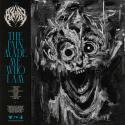
Kassé Mady Diabaté is one of the great singers of West Africa, a member of Toumani Diabaté's Symmetric Orchestra and, more recently, the Afrocubism all-star line-up. His latest album Kiriké (Horse’s Saddle) on the Parisian No Format label is a beautiful return to his acoustic, traditional roots as a singer, produced by French cellist Vincent Segal and featuring kora maestro Ballaké Sissoko, Lansiné Kouyaté on balafon and Makan Tounkara on ngoni, conjuring up the spirits and messages of centuries-old Bambara songs of the ancient Manding Empire. This music runs deep. The kora of the south, the balafon of the centre and the dry, brittle ngoni of the northern sub-Saharan Mali are drawn together by the soft, hypnotic baritone voice of Kassé Mady, but the album only hints at the experience of seeing them on stage.
The concert, on the closing day of the EFG London Jazz Festival – which has programmed some superb World Music sets into a remarkable ten days – featured all of the new album, but in extended, enriched renditions of palpable, almost touchable beauty. There's a langorous, timeless air to it, the buzzing balafon pinning the rhythmic underlay, Diabaté reciting verses and declaiming over the top, a persistent, distant, focusing signal from each instrument creating a shimmer or web more than a wall of sound. The voice seems to emit light; it is always rising.
This is a cosmic African quartet that plays with time and space
There is a discombobulating aspect to this music, because its complex, constant interweaving gives you the sense of there being no top and no bottom. You know your body's the same solid mass it always is but you're floating in this music like it was some kind of amniotic fluid. You feel you're in defiance of the laws of physics. There's a wealth of pleasurable filigree woven in to it, passages as ornate as the ceremonial costumes they wear for their performance. They're properly serious – it feels like a crucible, not a stage. Miles and Coltrane were as serious back in 1959, making timeless music. This is a cosmic African quartet that plays with time and space on the same epic scales, making music that runs deeper and locks tighter than any algorithm.