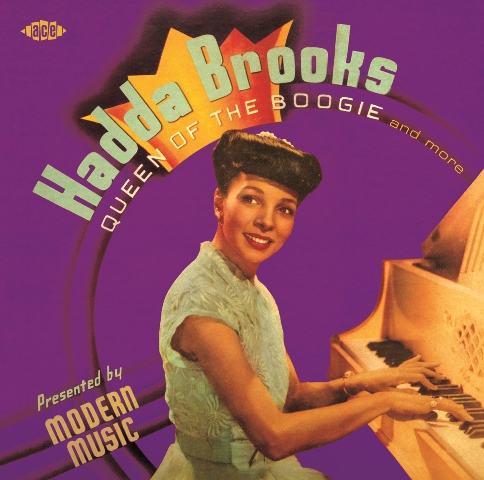
 Hadda Brooks: Queen of the Boogie and More
The rolling piano is irresistible. Upbeat and swinging, it powers forward with an unstoppable momentum. Accompanied by walking double bass and brushed two-step drums, the right hand suddenly peels off a descending cluster of notes while the left pounds out a solid, repetitive rhythm. Although almost rock ‘n’ roll, this is the sound of 1946 and Hadda Brooks’ “Juke Box Boogie”.
“Juke Box Boogie” became the opening cut on Brooks' first album, 1948’s modestly titled Queen of the Boogie. Its reissue brings not only an opportunity to revel in and assess what Brooks is about but is also a reminder that the rock ‘n’ roll boom of six or so years later wasn’t just fuelled by country and blues/rhythm and blues, but also the boogie rhythms and melodies which had been popular since the Thirties.
Jackie Brenston’s “Rocket 88” – the 88 from the number of keys on a piano – is often credited as the first rock ‘n’ roll record, but in essence the Ike Turner-created 12-bar was a boogie and barely a step forward from what Brooks and other boogie pianists like Meade Lux Lewis and Albert Ammons were doing a decade before she turned her hands to the style.
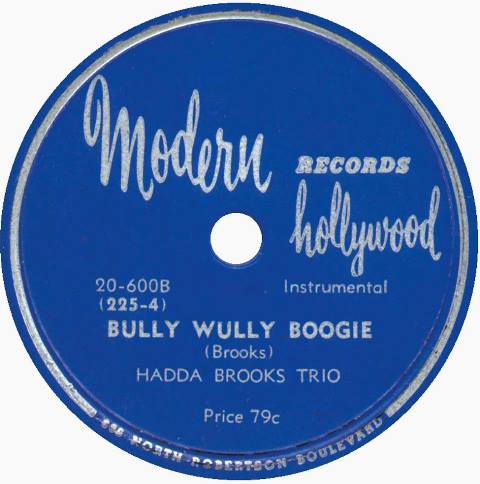 Reissuing Brooks’ debut album is potentially tricky. When it was released in 1948, the word album meant album. Back then, an album was a collection of 10-inch 78s: each in its own wallet and bound together inside a book-like hard cover – like a photo album. Queen of the Boogie collected three 78s and sported just six tracks.
This CD adds 18 tracks and, remarkably considering the vintage of the recordings, 15 of the total 24 (all-but one recorded in 1946 and 1947) are previously unreleased and either alternate takes to what was issued or entirely unheard. The packaging and annotation in the booklet are great and the essay insightful. This is an exemplary reissue.
Brooks was born Hadda Hopgood. Before recording, she had no intention of embracing the boogie trend. A piano teacher in Los Angeles, she was stumbled on by Modern Records’ Jules Bihari in an instrument shop as she played classical music. She also accompanied aspiring Fred Astaires at a tap dance school. Initially drawn to her glamour and beauty, the smitten Bihari asked if she wanted to make records. Soon, she was in charts and proclaimed Queen of the boogie.
Her first hit, 1945’s “Swinging the Boogie”, opened the door to recording what she liked most – blues and ballads. But the association with boogie led to some extraordinary performances. Like any the trend, boogie inspired novelties. With the twist, The Beatles, punk there were “Twistin' Round the World" (Chubby Checker), “We Love You Beatles” (The Carefrees) and “"Gimme That Punk Junk" (The Water Pistols). Brooks recorded “Boogie at the Bandbox” and “St Louis Blues Boogie”. Anything to shoehorn the magic word boogie into the song title.
 Queen of the Boogie and More stands apart as it is the first set to include recordings tailored to Brooks’ abilities – classical melodies given the boogie treatment including "Grieg’s Concerto Boogie in A Minor”, “Humoresque Boogie” (after Dvorak) and “Minuet in G Boogie” (from Beethoven). All are delightful, vital and wildly infectious.
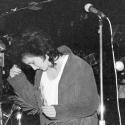
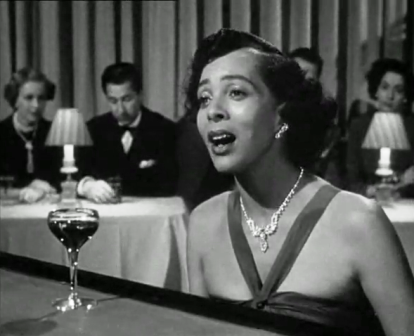
But Brooks moved on. Of the unreleased cuts, one is a sensitive reading of Hoagy Carmichael’s “Stardust” which points where she was headed. She left Modern Records and was seen singing in the grade-A noir film In a Lonely Place in 1950 (pictured above right). Her TV series which debuted in 1957, The Hadda Brooks Show, was America's first to be hosted by a black woman. She performed at Hawaii’s inauguration as a US state in 1959. She was, seemingly, successful at anything she turned her hand to. Time, though, also moved on and she fell into obscurity before a successful mid-Eighties comeback. She died, at age 86, in 2002.
A collection of mid-Forties boogie might, at first, seem one for archive obsessives only - no matter how well presented. But one listen to the fantastic Brooks is enough to sweep anyone along with these timeless, energetic performances.