Punk rock, or what’s touted as punk rock, is practically inescapable right now. In London, a series of events tagged as Punk.London: 40 Years of Subversive Culture includes concerts by reanimated bands, exhibitions and film seasons. Backers include the British Fashion Council, the British Film Institute and the Design Museum. The Mayor of London is an official supporter. Sponsorship has come from the Heritage Lottery Fund. The year 1976 was apparently when punk began, and it’s time for these august bodies to celebrate the anniversary.
Joe Corré, the son of Sex Pistols’ manager Malcolm McLaren and founder of the pricey female underwear brand Agent Provocateur, has said Buckingham Palace is another of Punk.London’s supporters. He reacted by declaring “the Queen giving 2016, the year of punk, her official blessing is the most frightening thing I’ve ever heard. Talk about alternative and punk culture being appropriated by the mainstream. Rather than a movement for change, punk has become like a fucking museum piece or a tribute act.” As a protest, Corré has vowed to reduce his punk memorabilia, valued at £5 million, to ashes.
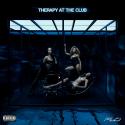
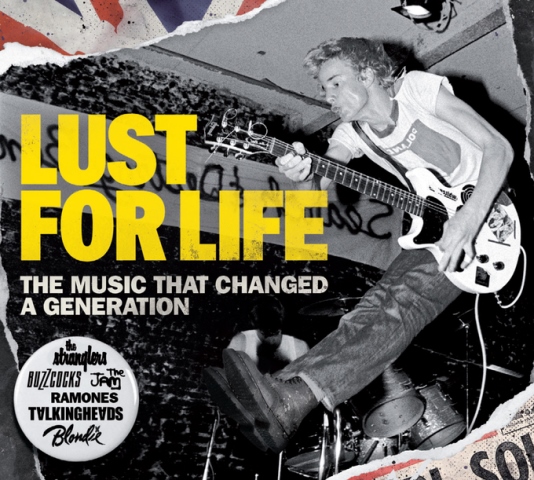 The release of Lust for Life: The Music That Changed a Generation doesn’t merit such an extreme reaction but it does induce a deep sigh. It is marketed as “The Official Punk at 40 Album.” The press release says it “is a collection of 60 iconic punk and new wave hits of the era.” Nowhere is it revealed who has anointed it “official” and why it is “official”. The 3-CD digi-pack set has no booklet and no liner notes, so illumination isn't forthcoming. It is issued by the Universal Music Group Inc, “an American-French worldwide music corporation that operates as a subsidiary of Paris-based French media conglomerate Vivendi” (yes, the words following the comma in that last sentence are taken from Wikipedia).
Misgivings about Lust for Life are not related to it being the product of a multi-national corporate business. What had been called "punk" made its deal with that world the moment Sex Pistols signed with EMI in October 1976. The reservations stem from the baseless hubris, dodgy packaging and the tracklist. Just one track is from the year-zero which is the subject of the anniversary: The Ramones’ 1976 “Blitzkrieg Bop”. Sex Pistols do not appear. British punk’s first single, The Damned’s “New Rose”, is also absent (their 1979 single “Smash it up” is included). As the supposed “Official Punk at 40 Album”, Lust for Life comes up short on the 1976 front.
 It also stretches the limits of what it is to be an “iconic punk and new wave hit of the era” beyond breaking point. The Piranhas’ “Tom Hark” is new wave and iconic? Ditto Jona Lewie’s “You'll Always Find Me in the Kitchen at Parties” and The Motors’ “Airport”. The Cure are new wave? The rationale for choosing what appears is unfathomable and, without liner notes, it must remain so. The sequencing throughout is bizarre and jarring. Any lingering feelings of solemnity invoked by Magazine’s stately “Shot by Both Sides” are killed off when it is followed by fellow Mancunians Slaughter & the Dogs’ yob-punk anthem “Where Have All the Boot Boys Gone”. While great tracks are included, the selection appears to have been made by playing blind man’s buff with what was in the charts from 1977 to 1981. Taste and perception may define what is punk or new wave, but Lust for Life emphatically misses the mark.
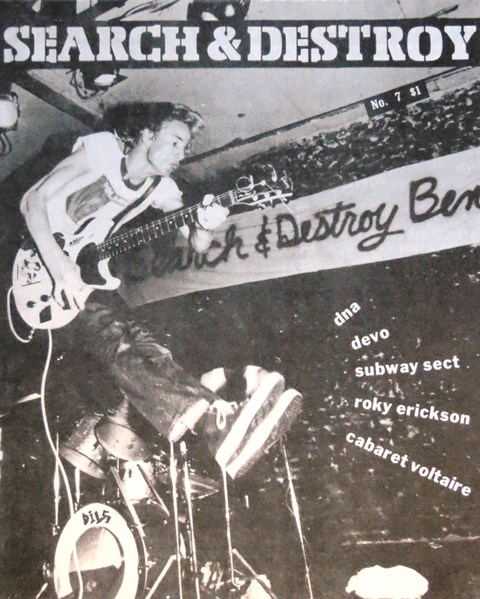
Examination of the cover confirms this should be no surprise. A photo of a leaping guitarist is superimposed on a Union Jack backdrop. It would not be unreasonable for the American bands included to be put out by this. Closer scrutiny reveals worse. The words on the banner behind the guitarist are seen in mirror image. The reversed cover picture is of Chip Kinman, of Californian punk band Dils, and was taken at a benefit for San Francisco’s Search & Destroy magazine on 11 May 1978: the banner says “Search & Destroy benefit.” The image first appeared on the cover of issue seven of Search & Destroy (pictured above left) and the photographer is Ruby Ray who, more recently, has published a book of her punk-era photos. In the original shot, Kinman is wearing hi-tops. The re-rendered Lust for Life version not only flips the image but also alters it so he is digitally transformed to be seen wearing Doctor Martens. Why this defacement? Surprisingly, the package does not credit the picture. Dils do not appear on the compilation.
The mendacious cover image of Lust for Life rewrites history. On second thoughts, perhaps Joe Corré might want it for his bonfire? As to what Kinman and Ray think of their involvement, has anyone at Universal asked them?