With their contrasting yet entirely complementary timbres and their ability to create textural palettes ranging from lonesome single notes to fulsome chords rich with harmonics, the combination of pipes and fiddle is surely one of the most potent in traditional Irish music.
That was certainly the case at this remarkable concert celebrating the work of the 19th century music collector, Canon James Goodman (1828-1896). A Protestant minister, Irish speaker and uilleann piper from Dingle, Co. Kerry, and later a Professor of Irish at Trinity College Dublin, Goodman’s passion for music saw him amass a vast collection of over 2,300 tunes and 90 songs, many hundreds transcribed from the playing of fellow piper Thomas Kennedy.
The music-making confounded your expectations with endless surprises
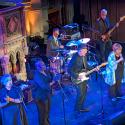
Bringing this wondrous collection from page to stage were two outstanding musicians, fiddle player Aoife Ní Bhriain and piper Caoimhín Ó Fearghail. Straddling the worlds of traditional and classical music, as much at home leading the Clare Memory Orchestra as she is performing with the Crash Ensemble, Ní Bhriain proved to be a stunning stylist, leaping around octaves and switching between tune playing and accompaniment in the blink of an eye.
From An Rinn in the west Waterford Gaeltacht and a recipient of the TG4 Young Musician of the Year Award in 2012, Ó Fearghail’s virtuosity and versatility – in addition to the uilleann pipes, he also sings and plays flute and guitar – has seen him in much demand by bands (Caladh Nua, Danú) and soloists alike.
Presented by Irish Heritage and the Irish Traditional Music Archive (ITMA) in association with the English Folk Dance and Song Society, and a year in the preparation, from the very opening bars of the march “Fáinne Geal an Lae”, a unique version of the well-known “Dawning of the Day”, the music-making confounded your expectations with endless surprises.
The slow air “Ceó Draoigheachta Sheól Oidhche Chum Fághain Mé” (“It was a magic mist that put me astray one night”) was a spine-tingling stand-out. Played first by Ní Bhriain, underpinned by Ó Fearghail’s single note drone on the root note of A, by the end of the final, unison, repetition the air had cast a powerful spell over the Cecil Sharp House audience.
As well as the more unusual, even unique, repertoire contained within the collection, such as the perky “Quadrille” (which irrevocably called to mind The Chieftains), it was fascinating to hear the duo play two of the best loved jigs in the tradition, “An Rógaire Dubh” and “Airgiod Caillighe” (a version of “The Hag with the Money”) and note the subtle differences in phrase endings when compared to the versions we know today.
The venerably ancient love song “Maidin Bhog Aoibhinn” and “Caitlín na Guaire”, the latter framed by the loveliest of instrumentals and grounded by a profound D drone in the pipes, hinted at what a treasure trove the collection is for any aspiring traditional singer.
Illustrating how the collection represents a living, breathing entity, rather than a museum piece frozen in time, the duo took poetic licence with a couple of hornpipes which they appended to the march “An Fhinne-Bhean Mhodhamhuil” (“The Gracious Fair Lady”), transforming the first into a captivating strathspey, complete with some bracing double-stopping from Ní Bhriain, and the second into a driving polka. Matching each other note for note, you couldn’t blow smoke between the players.
The evening began with a scene-setting introduction from the Director of ITMA, Grace Toland, and an instructive film by artist Michael Fortune which provided useful background on the collection.
Long thought lost, Toland revealed that the book of song lyrics Goodman transcribed was finally reunited with the rest of the collection in Trinity College in 2008 (having been discovered in an attic in England). Well over 150 years since his initial, painstaking transcriptions, the Goodman collection represents a priceless snapshot of tunes and songs as they were played and sung at the time in west Kerry.
Overleaf: watch Mick O'Brien, Emer Mayock and Aoife Ní Bhriain perform “Ceó Draoigheachta Sheól Oidhche Chum Fághain Mé”