Poland's most imaginative composer after Chopin, and his natural heir in the realm of sensual reverie, certainly knew how to yoke a full orchestra to his dreams and fantasies. Yet the work by Szymanowski I've most longed to hear in concert is the three-movement Mythes for violin and piano. A recording of it by Kaja Danczowska and the great Krystian Zimerman quickly acquired cult status in the 1980s. So it seemed like a heaven-sent gift to hear it live in the hands of an even more rounded violinist, young Norwegian Henning Kraggerud, and another maverick Polish pianist, Piotr Anderszewski. They could hardly have made a more dazzling case; yet by the end of the concert it was clear that a single dance theme in an early quartet by Bartók, rigorously developed, was worth more than all the Szymanowski in a packed programme.
Before the self-appointed guardians of another "unjustly neglected" composer pen any venemous defence, let me try and qualify that remark. I'm profoundly grateful to Anderszewski and his colleagues, as I was to Jurowski in the instance of last week's Myaskovsky rarity, for giving us the chance to test our responses in the concert hall to music that has always had a curiosity value in recorded form. The live experience, though, has to engage the heart as well as the head, and what's the result? That for all the technical accomplishments, even the historical furthering of sounds and ideas, Szymanowski's actual substance - thematic backbone, inspired idea, call it what you will - just won't stick. It's also unwise to claim, as did the programme note, a "more complex" status for Szymanowski's fusion of folk music with a personal idiom than appears in the works of the two Wigmore concerts' other featured composers, Janáček and Bartók. That notion was quickly brushed aside by the more strongly-etched works by the Czech and the Hungarian featured last night.
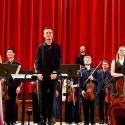
Even a top notch quartet like the Belcea couldn't quite keep nagging doubts at bay in Szymanowski's First String Quartet of 1917. The experience of the first movement was a bit like Schoenberg's Transfigured Night back to front, with the noble transfiguration first - and the Belceas certainly made those opening chords sound like Schoenberg's sextet of players - followed by reams of angst. Only Schoenberg at that stage in his life was bursting with good ideas, and I didn't hear any in Szymanowski beyond the opening of the slow movement. Even this was supposed to be simple, but seemed to develop uncertainly, maybe in homage to Debussy; the music for the finale is written in a different key for each player, but you don't hear that clearly in the results.
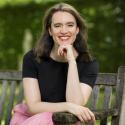
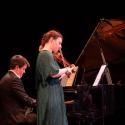
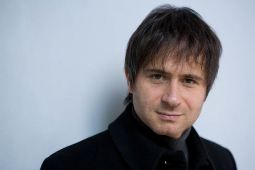 And then came Janáček's In the Mists in the fierce, improvisatory hands of Anderszewski (pictured right), curator of this two-concert festival. Stronger yet tender themes were wrenched sideways and downwards, a forthright optimism (in the penultimate Andantino) questioned by a pale shadow, leaving the argument unresolved. Anderszewski doesn't tell the whole story; for the distant gleam, the blue remembered hills, we'd also need that other fine interpreter of Janáček's piano music Thomas Adès to lend perspective. But his music-making is always alive, always questioning; and in Kraggerud he had an equal questing partner. Szymanowski's writing for both players in the Mythes is tumultuous and fearsome: cascading water music complemented by trilling double-stopping in "The Fountain of Arethusa", capricious caperings of wood-nymphs stilled by harmonics sounded by Kraggerud into the open Steinway for extra resonance to represent the faun's pipes in "Dryads and Pan". There's no shortage of imagination, but again the thematic writing needs harnessing to truly strong and original ideas.
As it also does with the wispy settings of Julian Tuwim's bizarre, sometimes evocative Polish in the Slopiewnie or Word Songs of 1921. A singular judder in soprano Iwona Sobotka's unusual voice production was offset by surrounding luminosity and surprising strength, and in the final evocation of a river sprite, a haunting marriage of descending scales with the piano part. Still, the thick late-romantic air needed clearing, which it was by Belcea violinists Corina Belcea-Fisher and Laura Samuel duetting at the start of Bartók's First String Quartet. Here at last was long-term firmness of purpose reflected in ideal quartet dialogues, moving through the great arches of the opening movement to the dynamic extremes of the overwhelming dance finale. A sensational performance of a work by a master. "It may seem a bit of a cliché" said my companion afterwards, "but the roll-call of greats is there for a reason, isn't it?" I agree - except when it comes to propelling Czech genius Martinů into the front rank where he belongs. But that's another story I'll save until Saturday.
Even a top notch quartet like the Belcea couldn't quite keep nagging doubts at bay in Szymanowski's First String Quartet of 1917. The experience of the first movement was a bit like Schoenberg's Transfigured Night back to front, with the noble transfiguration first - and the Belceas certainly made those opening chords sound like Schoenberg's sextet of players - followed by reams of angst. Only Schoenberg at that stage in his life was bursting with good ideas, and I didn't hear any in Szymanowski beyond the opening of the slow movement. Even this was supposed to be simple, but seemed to develop uncertainly, maybe in homage to Debussy; the music for the finale is written in a different key for each player, but you don't hear that clearly in the results.
And then came Janáček's In the Mists in the fierce, improvisatory hands of Anderszewski (pictured right), curator of this two-concert festival. Stronger yet tender themes were wrenched sideways and downwards, a forthright optimism (in the penultimate Andantino) questioned by a pale shadow, leaving the argument unresolved. Anderszewski doesn't tell the whole story; for the distant gleam, the blue remembered hills, we'd also need that other fine interpreter of Janáček's piano music Thomas Adès to lend perspective. But his music-making is always alive, always questioning; and in Kraggerud he had an equal questing partner. Szymanowski's writing for both players in the Mythes is tumultuous and fearsome: cascading water music complemented by trilling double-stopping in "The Fountain of Arethusa", capricious caperings of wood-nymphs stilled by harmonics sounded by Kraggerud into the open Steinway for extra resonance to represent the faun's pipes in "Dryads and Pan". There's no shortage of imagination, but again the thematic writing needs harnessing to truly strong and original ideas.As it also does with the wispy settings of Julian Tuwim's bizarre, sometimes evocative Polish in the Slopiewnie or Word Songs of 1921. A singular judder in soprano Iwona Sobotka's unusual voice production was offset by surrounding luminosity and surprising strength, and in the final evocation of a river sprite, a haunting marriage of descending scales with the piano part. Still, the thick late-romantic air needed clearing, which it was by Belcea violinists Corina Belcea-Fisher and Laura Samuel duetting at the start of Bartók's First String Quartet. Here at last was long-term firmness of purpose reflected in ideal quartet dialogues, moving through the great arches of the opening movement to the dynamic extremes of the overwhelming dance finale. A sensational performance of a work by a master. "It may seem a bit of a cliché" said my companion afterwards, "but the roll-call of greats is there for a reason, isn't it?" I agree - except when it comes to propelling Czech genius Martinů into the front rank where he belongs. But that's another story I'll save until Saturday.
- Anderzewski and friends give a second concert in the Szymanowski Focus at the Wigmore Hall on Friday 7 May
- This concert has been recorded by BBC Radio 3 for broadcast on 6 July