

This week we’ve offbeat violin and viola duets played by a renowned husband-and-wife duo, Scarlatti keyboard sonatas played on piano, and a very Italian take on Shakespeare from one of the 20th century’s fieriest conductors.
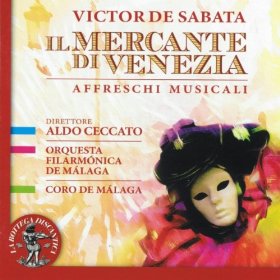 Victor de Sabata: The Merchant of Venice Orquesta Filarmónica de Malága, Coro de Malága/Aldo Ceccato (La Bottega Discantica)
Italian conductor Victor de Sabata (1892-1967) is best remembered today for recording a classic account of Tosca with Maria Callas in 1953. He was also a composer and collaborated with the German director Max Reinhardt on a spectacular production of The Merchant of Venice in Venice in 1934. It’s a glorious, eclectic mishmash of a score, with lush swathes of late-Romantic slush enlivened by passages of astonishing, quirky invention. Hypnotic tolling bell sounds, unaccompanied choruses, laughing trombone glissandi and harpsichord all feature. There’s a lovely use of mandolins in an early scene, predating their appearance in Prokofiev’s Romeo and Juliet, and an exquisite love scene played out on chiming celeste, glockenspiel and harp.
Things never become too kitsch, and de Sabata cunningly spices up his late-Romantic palate with dissonant brass fanfares and aggressive, strident chorus writing. It’s all wonderfully enjoyable, despite a production which slightly overdoes the sound effects. Persuasive performance, too, from the youthful Malága orchestra under Aldo Ceccato.

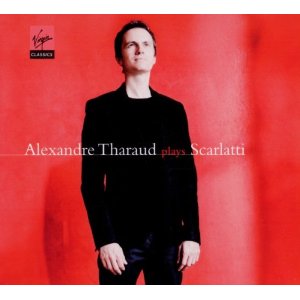 Alexandre Tharaud Plays Scarlatti (Virgin)
Alexandre Tharaud’s recordings of Bach, Couperin and Rameau played on a modern piano are self-recommending, and it’s no surprise that he’s now tackling Domenico Scarlatti. He wrote 555 sonatas for harpsichord, and 18 of them are included here. They’re not sonatas in the conventional sense but single-movement works rarely exceeding the five-minute mark. Tharaud’s choice of a modern Yamaha grand is fully vindicated – the music glows. The faster, more flamboyant sonatas erupt with thrilling oomph in a way that they just wouldn’t if played on a harpsichord. Scarlatti spent his latter life working for the Spanish court, and clearly became a fan of flamenco – the K141 sonata is one of several which brilliantly replicate the sound of a guitar, the clipped chords accompanying showers of repeated notes in the right hand.
The musical material is not always especially memorable, but it’s all in the delivery, as in the brilliant arpeggio figures opening K72. The tipsy downward flourishes which interrupt the singing line of K132 suggest Tharaud improvising dreamily in a tapas bar. Best of all is the tiny two-minute aria which forms K32, a gorgeous moment of calm which hints at what Bach’s keyboard music might have sounded like had he lived in warmer climes. The close-up recording adds to the fun.
Watch Tharaud on Scarlatti
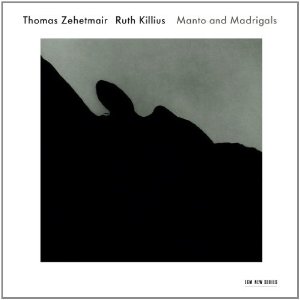 Thomas Zehetmair and Ruth Killius: Manto and Madrigals – Duos for violin and viola (ECM)
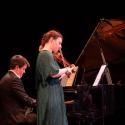
In which violinist Thomas Zehetmair, music director of the Northern Sinfonia, teams up with his viola-playing wife Ruth Killius. They sound great together, but the main reason for investigating this release is the eclectic programme on this nicely produced ECM disc. It’s the sound of the two instruments together, the throatier viola sonorities complementing Zehetmair’s violin, and the way that these two players transform the thornier works in their recital into vibrant, living music.
There are fun things here – the Pirouettes harmoniques from Heinz Holliger’s Drei Skizzen, its racing violin harmonics circling the viola line. The third Holliger piece asks the soloists to softly sing, creating a six-part texture. Killius also gives herself a vocal accompaniment in the final section of Scelsi’s Manto. Maxwell Davies’s Midhouse Air begins by subtly invoking Orkney folk music, before coming clean in the final seconds.
Bartók’s tiny, ingenious 1902 Duo can only be fully appreciated by looking at the score – both players play from the same music, though one reads upside down and back to front. Martinů’s Three Madrigals are a perfect encapsulation of the composer’s style – pieces which pulsate with energy and Slavonic soul. There’s a tiny, powerful three-movement Duo by Skalkottas, a Greek pupil of Schoenberg. Johannes Nied’s Zugabe has the two musicians throwing the same note back and forth in different registers. It sounds just like a bouncing ping-pong ball.





Add comment