

Nothing says summer opera quite like the skittish melodies and Neapolitan oom-pah-pah of a Donizetti overture. It doesn’t get much cheekier or more playful than this, the kind of music that makes you long for a pea shooter to pelt opera-goers with a stealthy fire of peanuts, or daub the bald head of the concert-goer in front of you during his Act II siesta. When set against the greenery and obbligato peacocks of Holland Park, a work like Don Pasquale makes sense in a way it scarcely can in the corseted confines of a traditional opera house. Add a witty staging by Stephen Barlow, and Richard Bonynge – the godfather of bel canto – in the pit, and summer sunshine is guaranteed, whatever the weather.
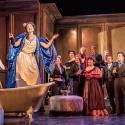
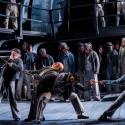
Enter the tented auditorium and you find yourself transported to a rather down-at-heel, contemporary seaside resort. A strip of beach leads back to a lean-to café, La Casa del Fish ‘n’ Chips – the septuagenarian Don Pasquale’s business empire. While some productions (Jonathan Munby’s Carmen, recently) work with the rather stern formality of the Holland House backdrop, others chafe against it. Here the juxtaposition of Jacobean ramparts and the grubby seafront give proceedings an appealing mongrel charm, aided by the gentle comedy of Barlow’s direction and designer Colin Richmond’s eye for detail.
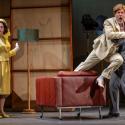
Don Pasquale himself (Donald Mawell) trundles about the stage on a mobility scooter, pursuing Norina (Majella Cullagh) like a benevolent but rather randy Dalek. His is a great entrance, and the double act with the slick Dr Malatesta (smoothly sung by Richard Burkhard), which reaches its climax in a scene-stealing Broadway routine for Act III duet "Aspetta, aspetta" complete with umbrellas, can-can kicks and jazz hands, is truly a thing of beauty.
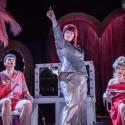
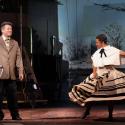
The comedy of the initial encounter between the old man and his bashful intended “Sofronia” is generous. Cullagh enters in full nun’s habit before stripping off to reveal a clinging red number, enough to induce any number of heart attacks in her aged husband, but only the poor relation to her extraordinary Act III creation. Visually the dynamic between the buxom Cullagh and Maxwell’s (padded?) belly-led Don Pasquale, all too-tight clothing and jowls, is finely observed, and just the right side of sitcom slapstick.
A new set-up for the orchestra pit sees the issues of previous years resolved to some extent. Ensemble is better (with occasional judders) though balance is still a problem – an inevitability really in this rather difficult space. Bonynge offers a characteristically poised account of Donizetti’s score, relishing particularly the touches of mock grandeur and minor key gravitas (the muted trumpet solo opening Act II is a mournful gem). There were moments, however, when I longed for just a little more vulgarity or bite to a rather undercooked string sound.
Tenor Colin Lee leads the cast as Don Pasquale’s put-upon nephew Ernesto. Secure throughout the range, his upper register is the star and gives his audience plenty to get excited about. His solo scene in Act II offers more lyrical legato than many, but it is the serenade "Come’e gentil la notte" (impeccably synchronised offstage) that crowns proceedings.
While Donald Maxwell offers stage presence and years of experience to the role of Don Pasquale, vocally it never quite catches fire. Pitched somewhere between character singing and a straighter delivery, the result is neither funny enough nor lovely enough to commit fully to either approach. His wilful Norina was efficiently sung by Cullagh, whose technique is absolutely secure but whose occasionally rather pinched tone is hard to love. Dramatically however this is a partnership that sells its charms, elevating this rather cut-price Don Bartolo/Rosina pairing to something rather more piquant in its own right.
I’m not sure that Don Pasquale is the kind of opera ever to provoke (or to benefit from) epic performances. Sunny and slight, the arias are as disposable as they are charming, and the trick seems to be to achieve a sort of corner-of-the-eye intensity – a comedy that tickles but doesn’t assault – allowing Donizetti’s score and gossamer plot to flourish without labouring anything unduly. It’s a game at which Barlow and Bonynge here prove themselves more than masters.


Add comment