There's a one-man play inside every politician – and a one-woman play behind each male leader. Linda Griffiths's and Paul Thompson's solo show, Maggie and Pierre, explores Maggie Trudeau's struggle with bipolar disorder and her temptestuous relationship with Canadian Prime Minister Pierre Trudeau (father of current PM Justin Trudeau). Written in 1979 but only now receiving its European premiere, this is an ambitious attempt to explore the personal fissures that politics creates.
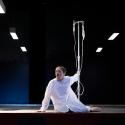
The play races through Maggie and Pierre's whirlwind relationship, which begins following a chance encounter on a beach in Tahiti. The two quickly marry and young Maggie – only 18 when she first meets Pierre – is breathlessly propelled into a life in politics. Actress Kelly Burke plays a tumbling wave of characters – prying journalists, preening politicians, tutting wives and adoring fans – and does well to hold the play together. She is utterly convincing and charming as Maggie Trudeau, the pot-smoking beauty who finds herself trapped inside the heart of the political elite. There is something of the caged nightingale about Burke's Maggie who flutters and flirts and longs to be free.
Burke is less successful when it comes to embodying the men in Maggie's life. Pierre Trudeau comes across as a plastic politician, stuck forever inside a frozen grin. Burke and director Eduard Lewis push too hard to carve out the differences between flighty Maggie and pragmatic Pierre and end up rinsing Pierre of any personality whatsoever. This is a man who, at least initially, charmed a nation; he could do with a little more sparkle. The same goes for journalist Henry, who rather earnestly narrates from the wings.
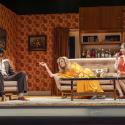
Designer Sarah Booth is forced to contend with an imposing set from another show currently in rep at the Finborough, and struggles to make an impact. A large tapestry reads "Reason over Passion", but it's essentially a glorified screen behind which Burke makes endless costume changes. A desk sits to the side of the stage and scene headings are faithfully projected onto a screen that hangs above. It's all a bit ploddy and does little to support Burke, whose energy understandably begins to flag.
Director Lewis takes the show at a deliberate pace, which allows for some quiet moments of reflection but also results in some chronic dips in energy. The dialogue feels particularly slow, as Burke is forced to literally jump between endless roles. But there are some lovely still moments when the whirl of characters halts and we rest with Maggie for a moment. In one fantasy scene, Maggie describes her idea of freedom: an idyllic wood dappled in sunlight, where people run naked and happy. The stage grows quiet and we begin to understand just how much politics – the people and the posturing – has worn away at Maggie's soul.
- Maggie and Pierre is at the Finborough Theatre until 5 July
- Read more theatre reviews on theartsdesk