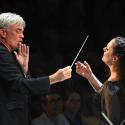
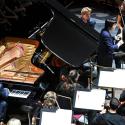
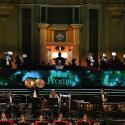
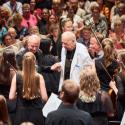
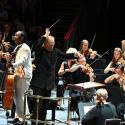
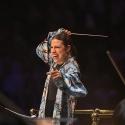
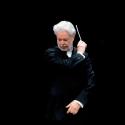
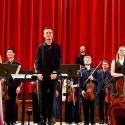
They’re singing songs of praise in Aldeburgh today – namely Britten’s magical unaccompanied choral setting of Auden’s Hymn to St Cecilia on the composer’s birthday and the annual celebration of music’s martyred patron. And what a right to celebration Britten Pears Arts will have earned after a weekend of concerts from bold John Wilson’s latest super-orchestra, an army of technicolor generals.
I heard the first, and possibly for me the best of 2021 (though it's not all over yet), on Saturday evening, after a return to the Red House where in 1983 we Hesse Students, jolly labour for the Aldeburgh Festival in return for concert tickets, were invited by Pears for a rather starry garden party. I’d seen the spacious library several times over the subsequent years, but not inside the house, where more top-notch paintings grace the walls, the relatively recently restored composing room or the 2013 archive building, where original letters and manuscripts pertaining to the weekend’s events were laid out for close inspection. Among them were John Ireland’s measured praise in a Royal College of Music report for the 17-year-old composition student he didn’t really understand – "industry" is underlined as the principle virtue, and "considerable grasp of technique" is highlighted – and a list of poems selected, at the end of Britten’s life, for a projected Sea Symphony (pictured below). While Vaughan Williams in his masterpiece of 1903-9 stuck to one poet, Walt Whitman, Britten was to have followed the Spring Symphony polyphony.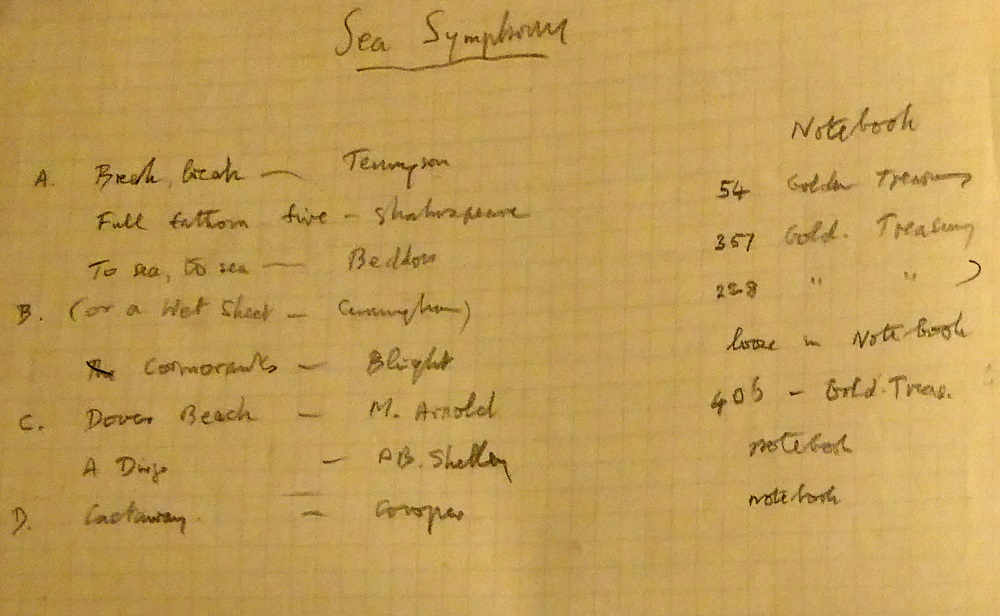 These were fascinating connections to the first of Wilson’s two concerts. It started with Ireland’s Mai-Dun and ended with Vaughan Williams’ A London Symphony (No 2, of course, following A Sea Symphony, No 1). The 1921 "symphonic rhapsody" inspired by Maiden Castle in Dorset encases pretty lyricism with a march of the ages, colourful enough and connecting with the more resonant example in the finale of the symphony, and even perhaps with the mysterious/stern striding of the Impromptu replacing the original third movement of the concerto (another connection is that this was adapted from Britten’s incidental music for the 1937 radio drama King Arthur). If anyone is going to carry off Ireland’s prophecy of music for sound film, it’s Wilson, and his hand-picked team of top players serves the lushness to the life. This is a superband which at first almost overwhelmed the kindness of the Maltings Concert Hall, begging comparisons with the Lucerne Festival Orchestra when Abbado was at the helm and Paavo Järvi’s Estonian Festival Orchestra – just as good-looking, too, which would be irrelevant if the players didn’t visibly show their joy in going with the Wilson ebb and flow.
That was Kolesnikov’s prerogative, too, and there came a point in the opening Toccata of the Britten Piano Concerto where you felt the excitement could go through the roof, threatening to snap off. It held, and the 24-year-old composer goes further, broader and deeper than the character-titles of his movements imply – or at least it seemed so in this performance, easily the most enthralling I’ve heard of the work, So much more, then, than what it feels like in the first two movements – Prokofiev’s Sixth Piano Concerto – or the finale’s opening homage to Shostakovich’s First Symphony. Kolesnikov rode the storm, toyed with the waltz, reached out for the supernatural in the spookiest moments of the Impromptu, raised the roof in double octaves. The sense of inspiration in the moment continued with perhaps the most radical of Chopin’s Mazurkas as encore, Op 17 No 4 in A minor, its mid-air start still trailing extroversion before Kolesnikov took us into the heart of the mystery. 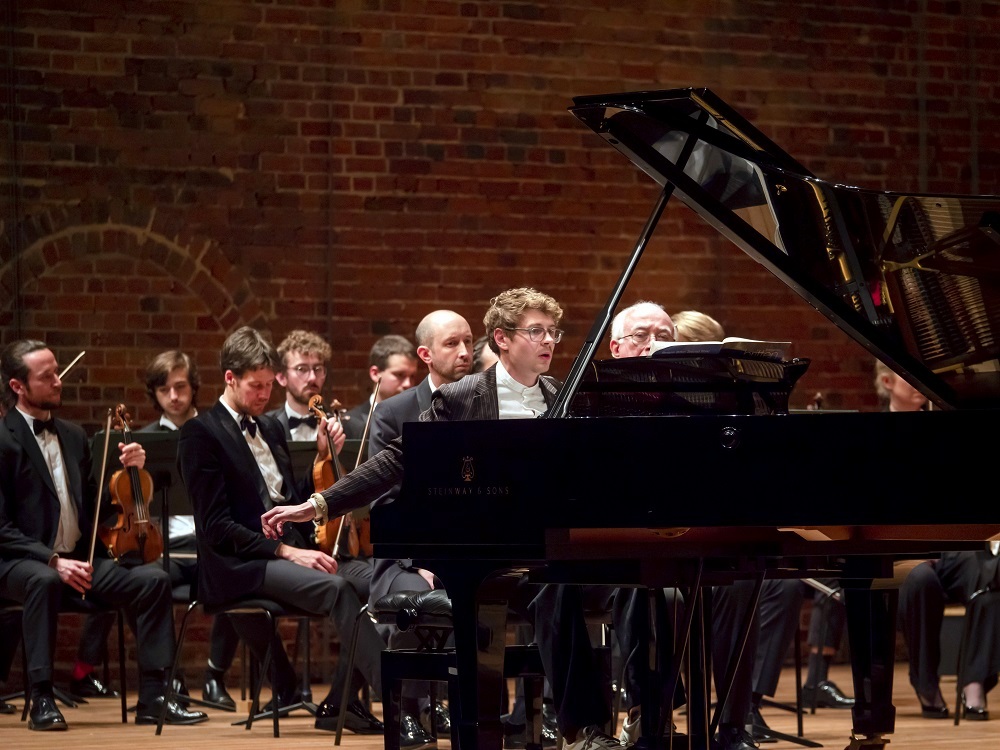 Kolesnikov’s praise for the orchestra seemed heartfelt, and rightly so; one unforgettable moment in the concerto was an uncanny snarl from the trombones, led by the peerless Helen Vollam. Collectively, though, the brass had most chance to shine in the romping fanfares and the ghosts of ages past of Vaughan Williams’s symphony, ringing London as an image of the world, even perhaps the universe. The hurly-burly of folksy melodies tumbled out not so much in riotous street life as in pyroclastic flows.
Here, at last, we got extended introspective poetry, rounded in miraculous solos from first viola Scott Dickinson and cor anglas player Peter Facer. VW’s divided mists of strings, too, played their part: is there anything more simple in its inspiration than the pulsing triplets on a single chord answered by two notes on the first horn in the bewitching slow movement? The finale brought an apocalypse to cap even this electrifying take on the concerto, and then the still small voice of hope that London, and all else, will endure. I bet the second concert, on Sunday afternoon, was spellbinding, too; but always best to go out on a total high.