

RaMell Ross’s feature debut follows his poetic documentary Hale County This Morning, This Evening (2018) in again observing black Southern teenage boys, this time in Sixties juvenile prison the Nickel Academy, where beatings and unmarked graves await the unluckiest. It faithfully adapts Colson Whitehead’s Pulitzer-winning novel The Nickel Boys (2019), whose writing’s loving warmth made its horrors bearable, his hope for his characters outlasting their fates.
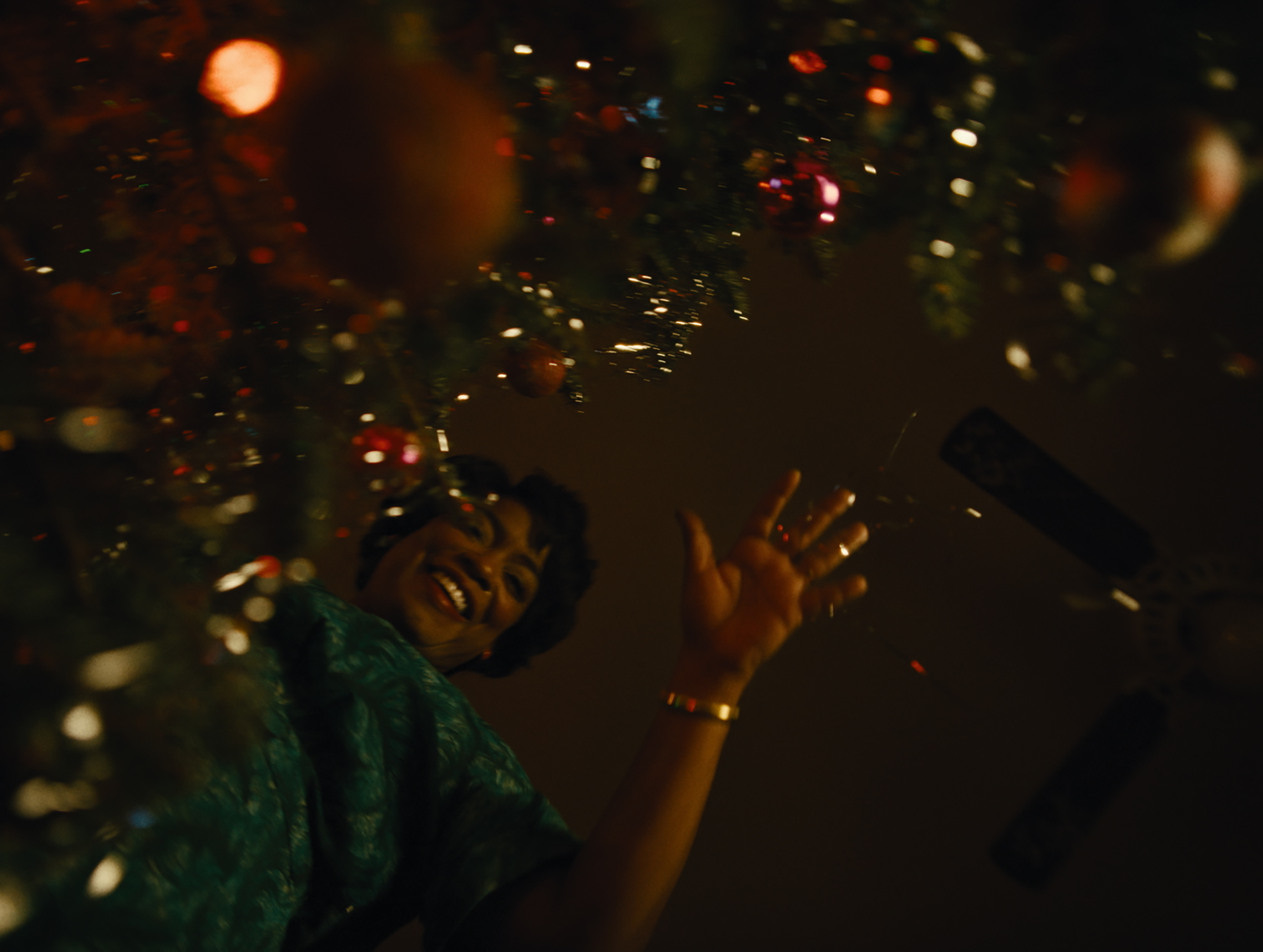
Elwood (Ethan Cole Sharp) is a serious-minded schoolboy in Tallahassee, Florida, driven by Martin Luther King’s Civil Rights protests and an inspiring black teacher (Jimmie Fails) to beat the racist odds and fulfil his abundant potential. Early Sixties streets are vivid with promise and explored under the worried protection of Elwood’s grandmother Hattie (Aunjanue Ellis-Taylor, pictured below), compounding his earnest belief that he can climb to King’s promised mountaintop by diligent application, simply rising above racist obstacles. Instead even physically setting on the path to further education sends him tumbling backwards, as a chance lift in a stolen car makes him a Nickel boy.
 Narrative identity is crucial to Whitehead’s book, and Ross films from his protagonists’ points of view. We see Elwood’s world through his eyes for 37 minutes, glimpsing his reflection in an iron, till he fully appears from the perspective of fellow inmate Turner (Brandon Wilson, pictured below), a looser-limbed, worldly boy fascinated and fearful at his friend’s idealism. It’s a technique intermittently tried in crime and horror films such as the Chandler adaptation Lady in the Lake (1947), which fades in importance once the boys interact.
The sense of interiority works in concert with Ross’s sensuality as the sun sparks on a crucifix in a pickup truck and an alligator surreally thrashes through a gutter, and the natural world offers tender beauty close enough to touch. From the Silver Surfer’s alien exile in the Marvel comics Elwood reads to the Academy’s enticing, forbidden open fields, such cosmic possibility is cruelly dashed by racism. The score’s fly-buzz strings deepen the sense of tropical rot.
Whitehead’s institution was inspired by the Dozier School for Boys, where mass graves were disinterred in the 2010s. The fictional regime enforced by bored, brutal functionary Spencer (Hamish Linklater) seems survivable at first, till the full sadistic reality is revealed in a nondescript concrete chamber whose humming, frightening soundscape faintly recalls The Zone of Interest.
 The futility of resistance and ambition finally calcifies Elwood’s heart into a hard kernel of near nihilist rebellion, a life or death stubbornness. Turner, cynically used to this losing game, sees survival not in stacked white decks but black folkloric sleight of hand, the realm of Br’er Rabbit’s Southern briar patch and the mysteries of passing. “You might have to shine, trade places with ‘em,” he advises, “like in a ghost story.”
Nickel Boys’ first-person limits are less significant than its elliptical nature, passing over the full horror of the boys’ beatings in a welcome if softening refusal of black trauma porn. All the performances feel right – including the upright seriousness of Sharp’s Elwood and Daveed Diggs as his wounded adult iteration – but they exist in a story laying lapidary clues to itself, like time-lapse photography or blackout memories. The subliminal logic is of dreams, the intention immersive, as Ross’s camera inhabits his protagonists’ minds, perhaps even grasping for their souls. His visual elegy for black innocence and hope of course points towards fatally racist police stops and BLM.
Avoiding easy routes to sentiment, he also mislays the lessons of Whitehead’s uncharacteristically direct, heartrending cry for love and justice, preferring a sickly, sun-dappled spell and gossamer threads of feeling.
- More film reviews on theartsdesk











Add comment