In the icy early hours of 1 February 1918 a bizarre figure was seen wandering aimlessly along the platform of a railway station in Lyon. A solider. Lost. When asked his name he answered, “Anthelme Mangin”. Other than that he had no memory of who he was, of where he had been, of where he was going, or of what had happened to him prior to arriving on that station platform on that frigid February night.
The story of Anthelme Mangin captivated France. For many he was the living embodiment of the unknown soldier buried beneath the Arc de Triomphe. A walking, talking memorial to the horrors of the First World War, and a symbol of hope to the families who desperately claimed him as their own.
Among those enthralled by Mangin’s story was the young playwright Jean Anouilh, who was searching for a subject for one of his early plays. To him there was something poignant and funny about the way in which Mangin was hawked around from family to family by psychiatrists in an attempt to discover his true identity, and in 1937 Anouilh’s comedy, Le Voyageur sans bagage, fictionalising one such meeting, opened in Paris to critical acclaim.
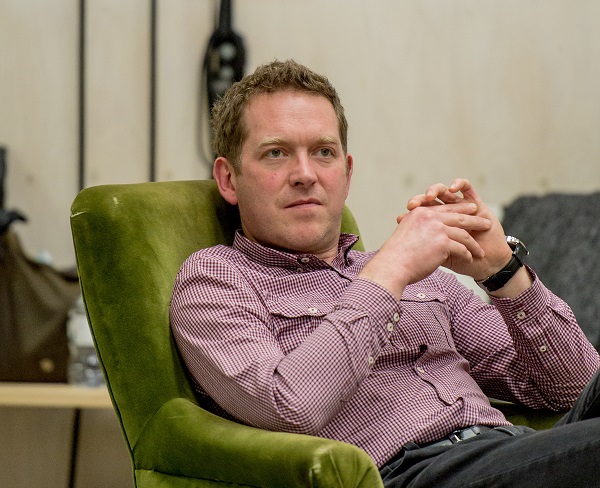 There was something enchanting about the idea to me as well. A copy of Anouilh’s play sat as a paperweight on my desk for a long while before a chance conversation with Donmar Warehouse artistic director Josie Rourke made me pick up the play and look at it again. Josie mentioned the long tradition in French literature of the unknown man, often a warrior, who walks out of a misty past and attempts to make life anew. A character like Dumas’s Martin Guerre, or Hugo’s Jean Valjean. (Pictured above: Barnaby Kay as George Fox in rehearsal)
As we talked I began to wonder about other traditions similarly fascinated with an unknown man remaking himself. It spoke of a world where class and position couldn’t pin you down. A world in thrall to reinvention. A world in which your story was your currency. That world, that idea, was of course, America. American culture was littered with history-less men, remaking themselves with stories about who and what they were. Just think of Jay Gatsby!
There was something too about this idea that especially spoke to me of the innocent and credulous world of America in the 1950s. While Europe was struggling out from under years of war and conflict, America was glowing with affluence and optimism. Deliriously capitalistic, it was a world that was perfectly captured in the sumptuously filmed melodramas of Douglas Sirk and the glittering screwball comedies of Billy Wilder.
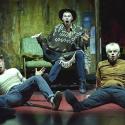
Not needing much of an excuse, I plonked myself on the sofa and began to binge on the classic films of that decade. And what a decade it was! Some Like It Hot, The Apartment, Written on the Wind, Imitation of Life, Invasion of the Body Snatchers. I got up off the sofa delirious. (Pictured below: Katherine Kingsley as Mrs Marcee Dupont-Dufort in rehearsal)
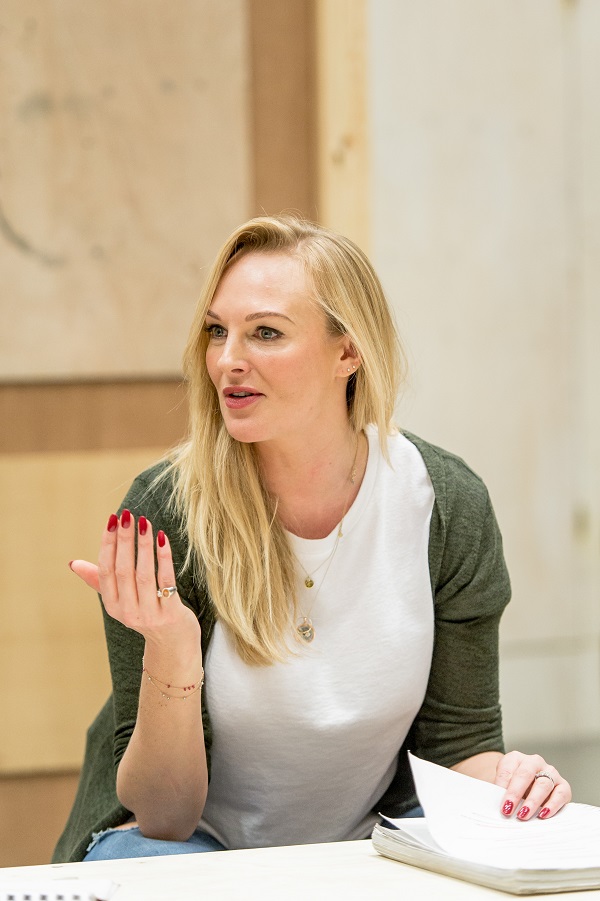 I began to think about the act of adaptation and why I liked it so much. To me, adaptation is always a conversation. A conversation with another author – across form, culture, language, time and space. I cock an ear, to listen both for what the author is saying, and often to what they’re not. There’s something about adapting that makes me feel accompanied. Less alone. Sometimes the conversation I’m having is pretty polite. Sometimes it’s more verbose. Boisterous even.
I wondered if the conversation I was having with Monsieur Anouilh might need to be a bit more raucous. I wondered if I shouldn’t invite a few more guests to the party. I wondered if by taking the broad dramatic arc of Anouilh’s original play, and reflecting it through a new set of circumstances provided by, say, Sirk and Wilder and their version of America in the 1950s, something new and delighting might not turn up.
So I set to work. I took Anouilh’s lost man, gave him a nice short haircut, bought him a smart Brooks Brothers suit, introduced him to the kind of Martini-soaked family that would have made even Freud’s eyes water, and plunged him in to the rarified world of a hot summers weekend in the Hamptons in the late 1950s.
Hopefully, the result – part me, part Anouilh, part Sirk, part Wilder – is a very human and forgiving story about a man with no memory found wandering along a railway station platform, desperate for happiness, whose future is only as bright as the story he chooses to tell about his past.