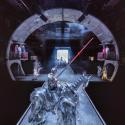
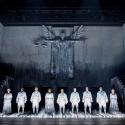
The opening scene of the Old Vic’s Oedipus is dominated by a giant backdrop of a skull-like face, eyes shut and rock-like. It belongs to the actor playing Oedipus, presumably, Rami Malek. This is as near to a close-up of the title character as we get.
Co-directing, Matthew Warchus and choreographer Hofesh Shechter have created a claustrophobic Thebes, dazzled by the sun and water-less. Its only features are a microphone stand and a lit dais, both of which rise from the floor as needed. To begin with, the backdrop lighting turns a flaming tangerine, fading to a pallid lilac by the end. For long stretches the set is in half-darkness, Oedipus's face only fitfully prominent. Even when he stands at the front of the stage in a modern double-breasted suit, addressing his citizens via the microphone, lights shine into the audience’s faces, making it hard to focus on him comfortably.
For somebody with the vocal range of a classically trained actor, being partly obscured like this would be no disadvantage. Malek is not that kind of actor. His mercurial talents thrive in close-ups, on screens of all sizes, but here he needs to communicate his persona and his conflicting emotions via subtle shifts in intonation. He has vocal heft, but little nuance. So his speeches, delivered in his normal American voice (to underline his outsider status in the city-state he rules?), are monotone; and when we hear the crowd murmuring at full volume, it’s hard to work out whether they are dissenting or noisily appreciative.
 Also crowding out speech is Shechter’s music, which creates an ominous wall of mostly undifferentiated electronic sound, wordless chanting giving it rhythm, with the odd articulate thought breaking through, such as somebody in the crowd insisting Thebes is a sacred place that its citizens cannot abandon, even though they are dying of drought.
Making his voice heard over this audial soup is Creon (Nicholas Khan), a man of faith in the gods who rejects the rationality with which his king approaches problems. Oedipus’s belief in logic and facts clearly leads to his downfall, whereas the oracles he discredits are shown to be the real soothsayers, the truth-tellers. Ella Hickson’s script spells out the cause of his aversion to these oracles as the psychological load he has had to bear since an oracle told him, age 17, that he would kill his father and marry his mother.
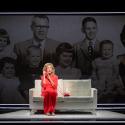
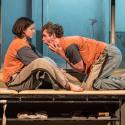
Elsewhere the prosaic tone of the text is at odds with the drama of the setting, especially in the scene where Jocasta (Indira Varma) lays into her husband’s attempts to find new evidence about Laius’s death with the sarcasm of a middle-class housewife reproaching her husband for yet again losing his car keys. There is little palpable chemistry between these two, even when they embrace; their union seems a mismatch. Their children are cast young and can't be expected to deliver like adults; even so, I don't think little Antigone (Róisín Bhalla) should get a laugh in the poignant finale where she leads her blind father into the desert.
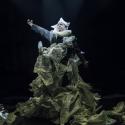
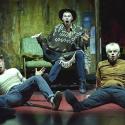
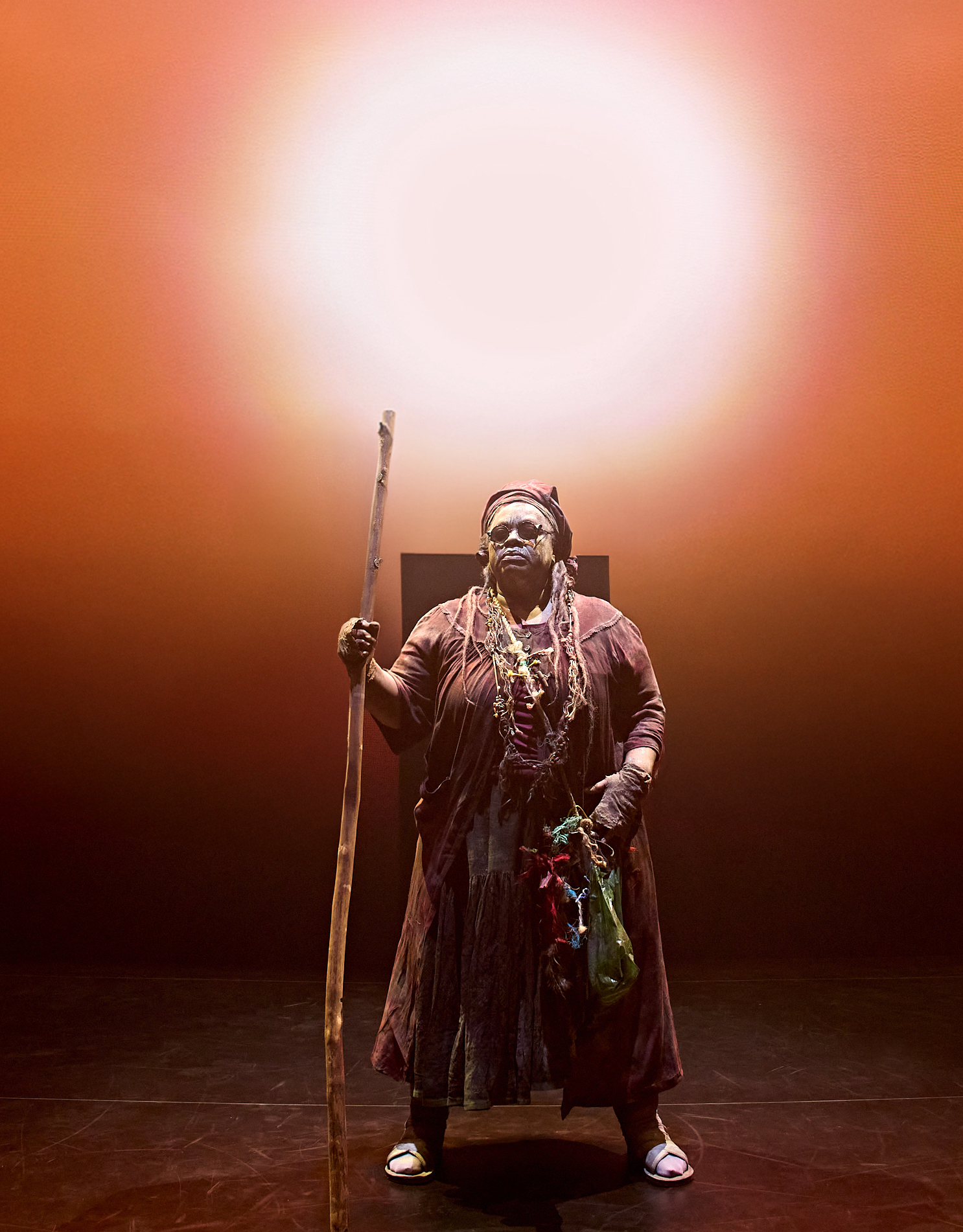
Things are spiced up by the arrival, first of the hermaphrodite sage Tiresias (an imposing Cecilia Noble, pictured above, in grey dreads and shades), then of the Messenger (Joseph Mydell) from Corinth, telling of the death of Oedipus’s father, and finally of the Shepherd (Nicholas Woodeson) who was tasked with killing him as a baby, all depicted with precision and conviction, their testimony slowly piecing together the trap from which Oedipus cannot free himself. Finally, the text seems to take centrestage.
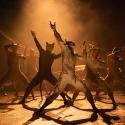
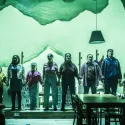
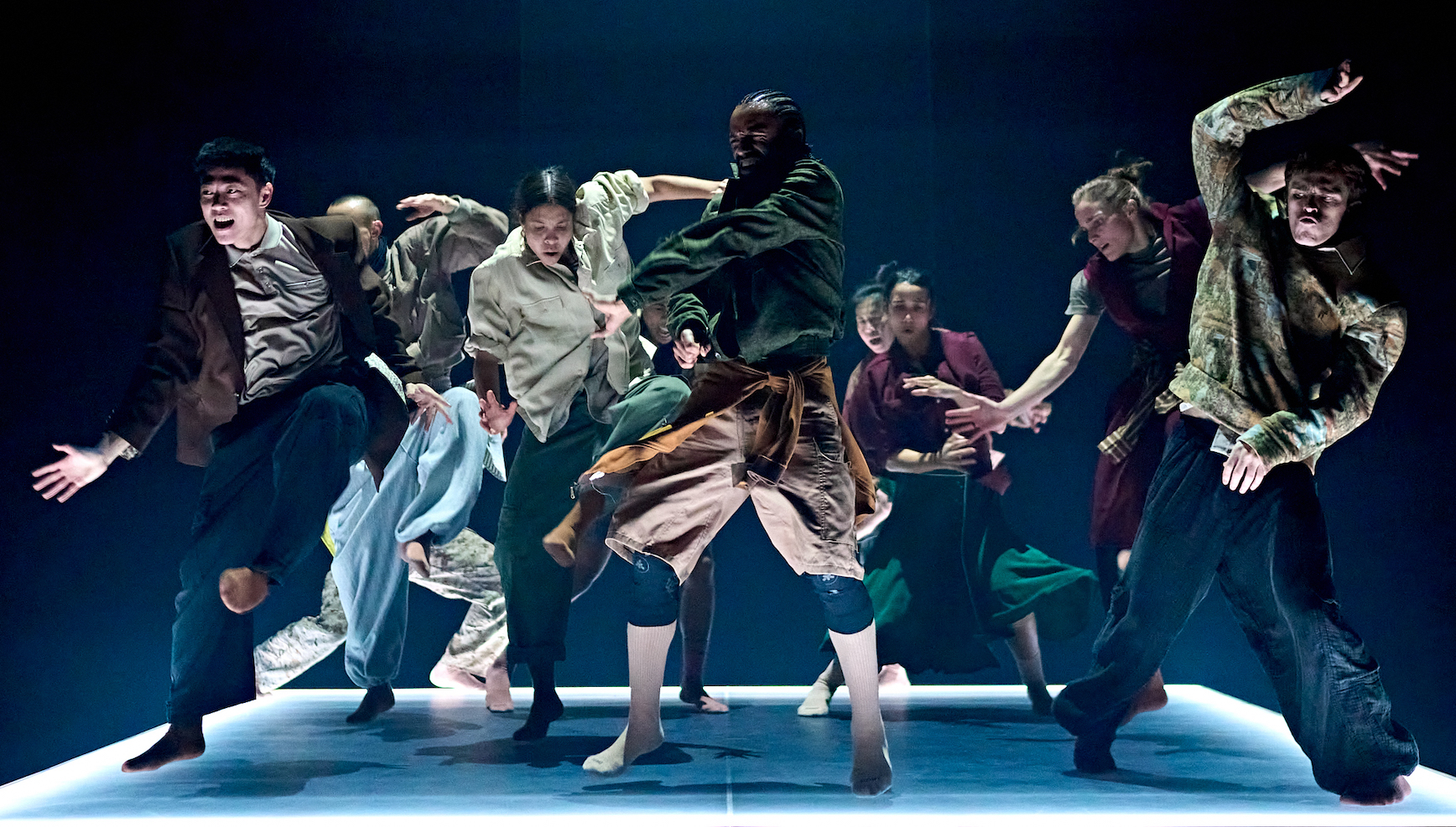 But language is just half the production on offer. The other half is Shechter’s domain, maybe more than half as his dancers (pictured above) seem to erupt into virtually every scene, thrashing about as if wired to the National Grid, in the steps Shechter always devises. They slink and stomp, seem about to perform a Middle Eastern folk dance with arms elevated, or move as if they have red ants inside their costumes, limbs and torsos writhing. Even when Shechter slows down the tempo and gives them expansive string music for dance accompaniment, the moves are much the same, just less frenetic.
These are extremely gifted performers, but Shechter’s choreography, much like Malek’s voice, doesn’t do nuance. So it’s hard to work out whether the dancers are angry, celebratory, warlike. They presumably represent the residents of Thebes, or ordinary citizens in general, a lifeforce that is a key element of the story, but they end up looking like a narrative embellishment rather than fuelling its core. That said, those who have never seen any of Shechter’s work before will probably be astounded.
- Oedipus at the Old Vic, until 19 March
- More theatre reviews on theartsdesk