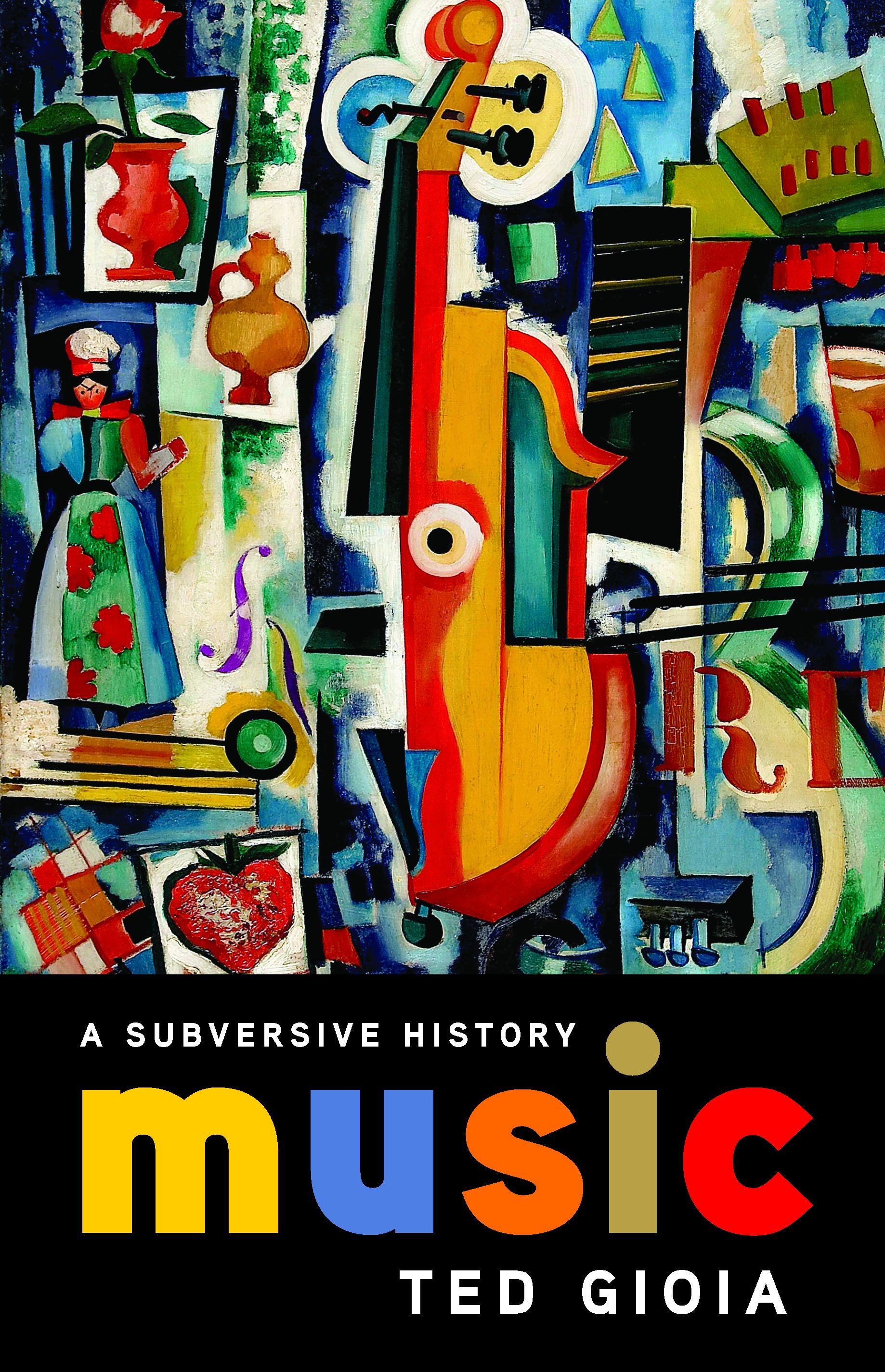
People who derive comfort from Classic FM’s strapline that European classical music is “The World's Greatest Music" are going to have a major problem with this book. American music historian Ted Gioia has marshalled 25 years' worth of his own life and several centuries of music history into 500 pages which put that complacent assertion in doubt.
“The scope of this book is the full history of music,” he writes in his introduction. And his aim? "Above all, I hope to topple established hierarchies and rules, subverting tired old conventions and asserting bold new ones."
Gioia argues that new music comes from disruptors, that “innovation in music requires an outsider’s stance,” that “insiders might very well run the wheels of commerce, but they [..] rely on outsiders to keep them turning.” He charts a recurring pattern of musical invention that comes from people who are in some way marginalized, and shows how their output is inevitably adopted and acquires value and reach through being toned down and made respectable: “the transgressive innovator eventually finds acceptance as an admired cultural hero.”
 The range of knowledge on display and the virtuosity which Gioia can deploy to prove his argument are astonishingly wide. He is a very broad listener: in a recent interview he estimated that he listens to roughly 1,000 new CDs from across the musical spectrum each year. For instance, he tells the story of Haydn (who spoke more or less no English) and the entrepreneur Salomon, who brought him as a complete outsider into the rich London market. He is equally fascinating on the phenomenon of how the Beatles were able to keep moving forward and innovate, leaving imitators like the Monkees way behind. He stresses their outsider-ish ground – what Liverpudlians refer to as their “scally” side – and connects this with the fact that Liverpool was “the most bombed place in all of England during the Blitz.”
Gioia is highly instructive on the subject of songs and their roots in either herding (“the preference for a stable, settled life” ) or hunting (“more assertive, more aggressive, more likely to rely on drums...”). There is also a wealth of examples of music, particularly in the classical sphere, as a "tool of territorial assertion" and "weaponization".
Sometimes the pace of the narration can be giddying. Take one astonishing page (226) looking at the links between sensuality and religious devotion, and fasten your seatbelts. At the top we are in the company of the Hindu goddess Radha. We then zoom through the European cult of the Madonna, dip briefly into the Chinese Shijing or Book of Songs, zip through Dante (with excursions to the hymns of Enheduenna in ancient Mesopotamia and John Coltrane’s A Love Supreme…) and arrive at the bottom of the page back in the Indian sub-continent listening to the Bauls of Bengal.
A 500-word review of a 500-page book is not going to do it justice. There is a mass of information here, and Gioia has an encyclopaedic knowledge which enables him to draw at liberty and at any moment from a vast array of sources. There were times I wished that Gioia could have placed his dauntingly massive experience in the context of some other, equally persuasive conceptual frameworks, such as Simon Frith’s Performing Rites (1996) or Ben Ratliff’s Every Song Ever (2016). He doesn’t, but this fascinating book has definitely earned its place on my bookshelf alongside them.
- Music: A Subversive History by Ted Gioia (Basic Books, £30)
- Read more book reviews on theartsdesk