The world as we perceive it always has bits missing. This is either because your brain cuts bits out to avoid data overload, or because things are externally cut out before the data reaches you. Either way, this “missingness” is both essential to our being able to experience the world in a manageable way and also the cause of error and misunderstanding as we move through that world.
Such is the thesis of this new book by mathematician and public scientist Kit Yates, You Don’t Know What You’re Missing (or, You Don’t Know What You’re M ss ng, as it appears on the book’s title page – and I’m sure the reason they didn’t actually call it that is that it might have gone missing in listings and online searches). It’s a readable, informative and enjoyable book with an interesting and novel perspective, even if some of the material feels familiar and well-trodden.
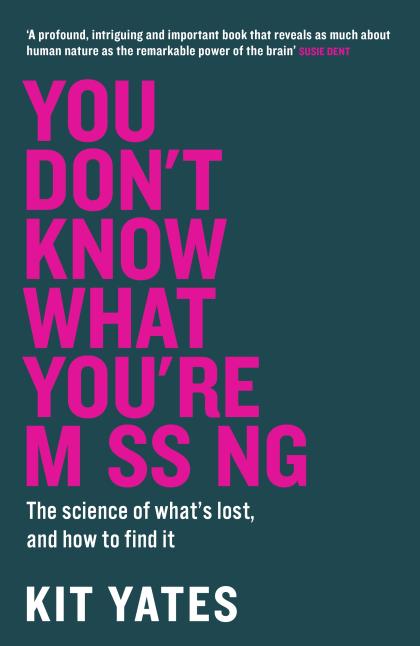
Yates identifies and discusses three types of “missingness”: intrinsic, extrinsic and constructive. “Intrinsic missingness” covers things like our brains filling in a blindspot with what it thinks is probably there (such as an empty stretch of road) causing us to potentially miss what is actually there (perhaps a cyclist). “Extrinsic missingness” is when external factors are stripped out from the information that reaches us (such as sample bias in an opinion poll) and can be even harder to spot, as it is difficult for us to allow for what we don’t know is missing. Lastly – and in some ways most intriguingly – is “constructive missingness”, where we can infer things from the very absence of data, which Yates explains through Sherlock Holmes’s legendary non-barking dog.
But if this all sounds theoretical, everything is explained through anecdotes (quite a lot involving grisly deaths in cars and planes), diagrams and images, such as the spooky disappearing Cheshire Cat on page 36. There are times things get a bit general and the book loses focus on its central argument – “missingness” sometimes goes temporarily missing – but you are only ever a few pages away from a revealing insight, such as the section on “survival bias” in chapter six. Above all, I finished the book with an increased appreciation of how extraordinary the human brain is, even in the edge-cases where it is being fooled or misled.
This is Yates’s third book – I haven’t read the others, but I am a fan of his Substack newsletter – and is written in a personable and lucid style, making the concepts understandable to a general readership, even when they veer into the difficult (I only really lost him in the section on “channel entropy” in chapter 4.) His conversational tone and obvious competence across his field makes him a very comforting and companionable presence through a book about absence.
- You Don't Know What You're Missing by Kit Yates (Quercus, £25)
- More book reviews on theartsdesk