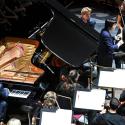
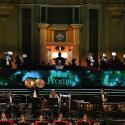
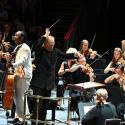
People hold lots of different opinions about the European Union, but there’s really only one acceptable opinion to be held about the European Union Youth Orchestra; namely, that they’re brilliant. Their visit to the Edinburgh International Festival consisted of two hour-long concerts, but the hundred musicians, aged 18-26, hailing from 27 countries, crammed more artistry and brilliance into those two concerts than some orchestras manage in a season.
Sure, the tone wasn’t always there, and occasionally you could notice a lack of maturity. The violins sounded rather too bright for Elgar’s "Nimrod", for example, and the trumpet was a little scrappy during the klezmer sections of the third movement of Mahler’s Symphony No. 1 (was it rubato, or did he just miss a cue?); but you can forgive almost anything when the playing is so full of energy and spirit.
Lots of moments in Britten’s The Young Person’s Guide to the Orchestra drew attention to both their freshness and their skill, such as the sparkling flutes, the assertive violins or the unusually airborne trombones, and the Mahler movement plodded forwards darkly until the violins played the second song quoted in the symphony from Lieder eines fahrenden Gesellen with delectable sweetness, with some characteristically tart brass swoops in the klezmer section as an extra treat. 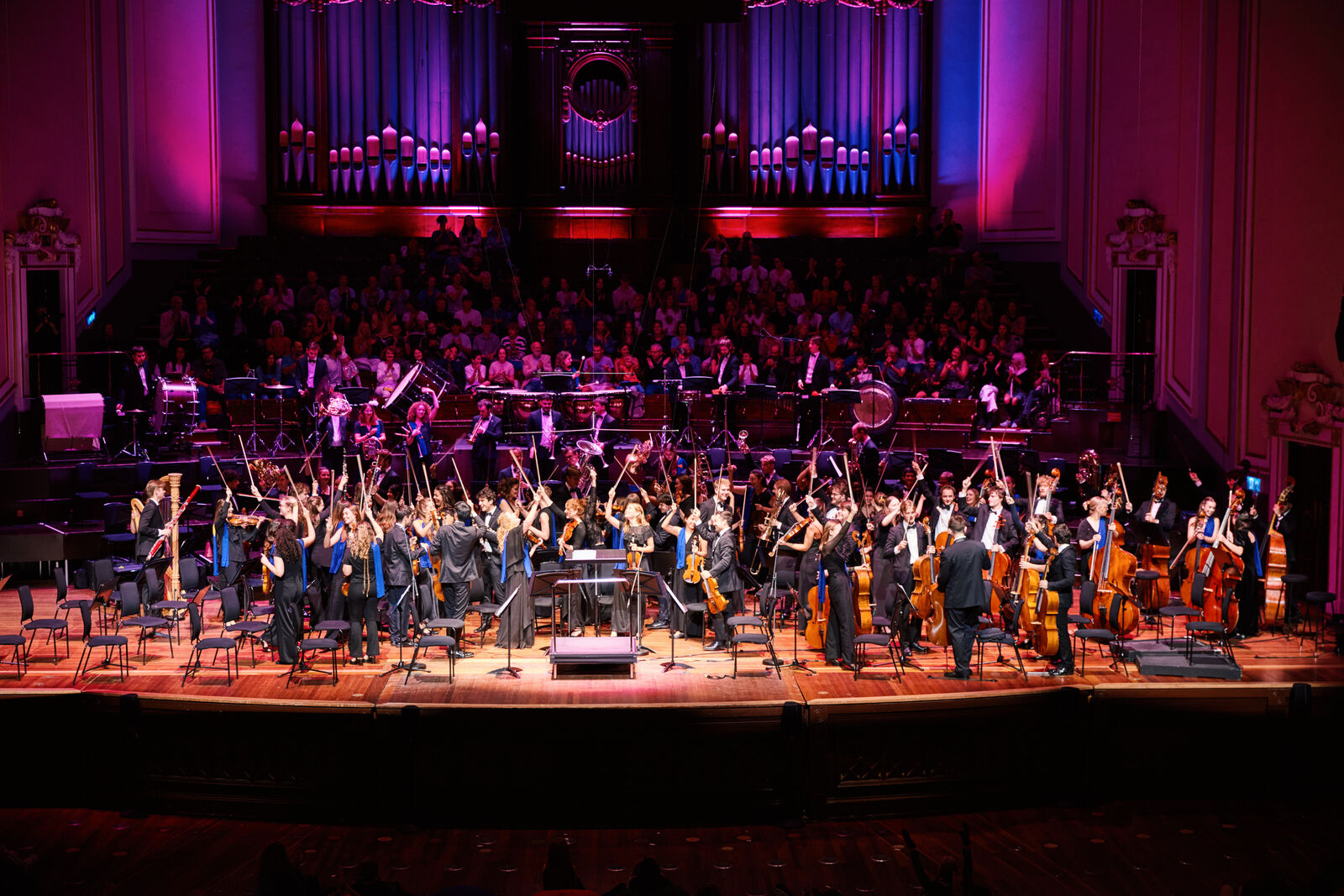 All that was in their 6pm concert. For the 8pm one they were joined by cellist Nicholas Altstaedt for a performance of Strauss’s Don Quixote where each episode sounded so different from the previous one that it was like turning the pages of a picture book. However, there was a unifying warmth to the sound, from the gentle gurgle of Sancho Panza’s theme to the gorgeous oboe cantilena of Dulcinea. Altstaedt had a cheeky tendency to steal the limelight in the early variations – it isn’t a cello concerto, after all – but became much more a part of the whole as the piece progressed, and he was at his finest in the gentler episodes, like the nocturnal vigil or the death scene.
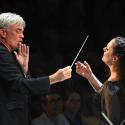
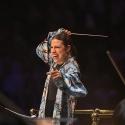
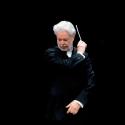
Conductor Gianandrea Noseda did a very good job of unfolding each piece in the most straightforward manner possible, and was at his best in controlling the jagged shards of Carlos Simon’s Fate Now Conquers, whose different blasts of sound jutted out like bolts of lightning from a thundercloud. Noseda had a handle on it all, though, and his players followed him valiantly and cleanly.
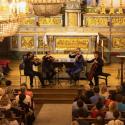
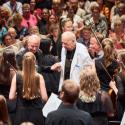
It helped, incidentally, that these concerts were part of the festival’s Usher Hall beanbag series, a set of concerts where the seats are removed from the Usher Hall’s ground floor and replaced with beanbags on which the audience recline while listening to the players. It makes the vibe much more naturally relaxed and, for the earlier of the two concerts, it attracted lots of children, which made for an even more inclusive atmosphere. It’s genuinely exhilarating to be part of an audience of people queueing to get in and scrambling to get the best available beanbag. Nicola Benedetti, the festival’s director, was an added bonus, chatting from the stage and enthusing to the young audience about what they were hearing. She could teach Noseda a thing or two about relating to the crowd, though. His rather clunky audience patter needs a bit of work: his baton spoke much more eloquently.