2015, Sibelius anniversary year, yielded no London performances of the composer's last masterpiece, the Prospero's farewell of his incidental music to The Tempest. With Shakespeare400, 2016 has already made amends: even if the Bardic input came solely from Simon Callow doing all the voices, and summing up the plot – "elsewhere on the island", "meanwhile..." – Osmo Vänskä served up more of the original numbers for the 1926 Copenhagen production than I've encountered live before.
Previous "editions" from Neeme Järvi and John Storgårds gave us more of the play, the last with an abridged version brilliantly realised by students of the Guildhall School, but both conductors stuck to the music as reconformed and reorchestrated in the two orchestral suites. Last night it was fascinating to hear Ariel's otherworldly flute invocation within the oak tree supported only by harp and violins, for instance, or the violent music for Antonio, the polonaise-exit of the reunited Milanese and the haunting epilogue added for a Finnish production in 1927, none of which appears in the suites.
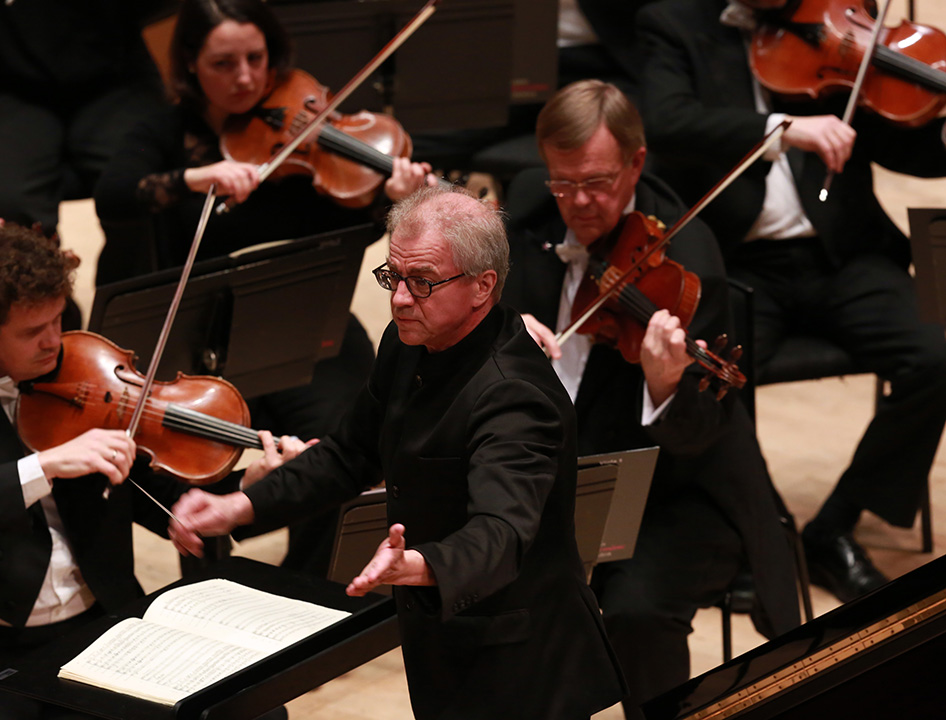
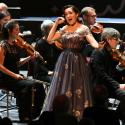
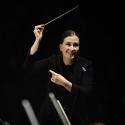
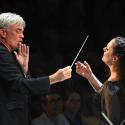
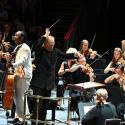
We also had all four of Ariel's songs delivered in Finnish by mezzo (yes, mezzo for this island spirit) Lilli Paasikivi. It would have been helpful if Callow had given us the Shakespearean originals before each one, and if Vänskä (pictured above with members of the LPO last night by Amy T Zielinski), engaging larger forces than would have been used in the theatre (shame not to have a harmonium), had kept the ensemble down in the first two. Balances weren't always perfect within the orchestra, either, but the Finnish conductor's painstaking detail – which can sometimes rob Sibelius of his seeming naturalness – paid off in some necessary nuancing. His sequence gave the best concert-hall argument yet for Sibelius's genius at characterising Shakespeare's diverse dramatis personae, making this as much an opera for orchestra as Prokofiev's complete score for Romeo and Juliet. Whatever its hybrid roots, it's a total masterpiece, which would be hard to claim for Adès' overrated, if fitfully inspired, operatic Tempest.
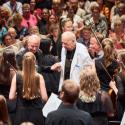
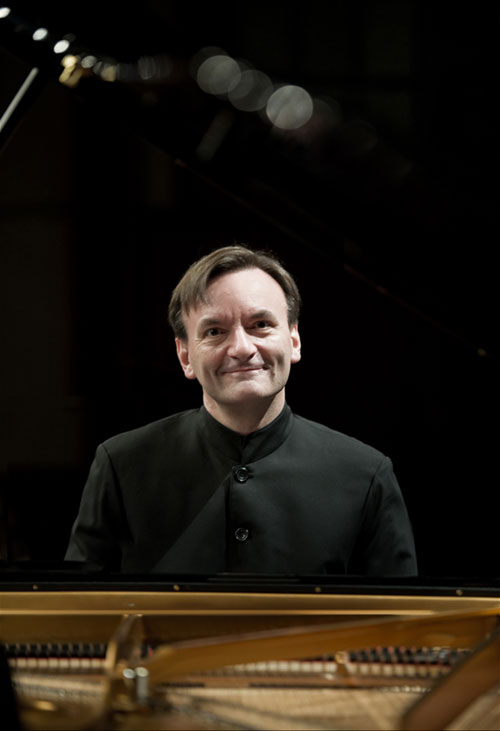 Earlier Dvořák's sometimes puzzling Piano Concerto found Stephen Hough (pictured left by Sim Cannety-Clark) impersonating Ariel rather more successfully than Caliban or Prospero. All three are really necessary for a complete picture. I've always found Hough a bit overstretched in the big concertos by Tchaikovsky and Rachmaninov – everything's there, but the virtuosity feels effortful, and there was sometimes a feeling of "Thank goodness I've got through that bit" about Dvořák's more grandiloquent gestures.
Where Hough scored was in seeming to improvise music that would otherwise leave us unsure of where Dvořák is going in this relatively early (1876) piece. That accounted for the first-movement cadenza and the whole of the slow movement, deliciously whimsical. This was, moreover, the best of on-the-ball partnerships with Vänskä and the LPO players, supremely vigilant and very persuasive in the outer-movement themes, authentically Dvořákian in colour – the cellos at the start – and in the dance rhythms. For an encore, Hough gave us rather more familiar Dvořák in the shape of "Songs My Mother Taught Me", effortlessly and delicately embroidered by the pianist in the style of the bonnes bouches with which he sealed his very original arrival as a front-runner on "The Piano Album" 28 years ago.