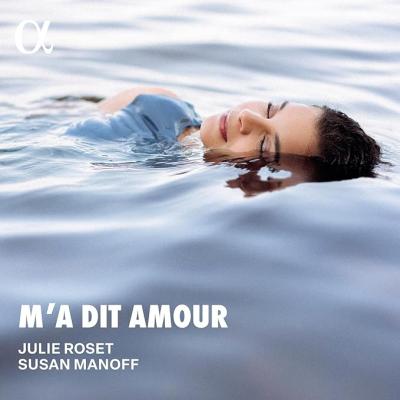
M'a dit Amour: Songs by Debussy, Louis Beydts, Enescu and Isabelle Aboulker Julie Roset (soprano), Susan Manoff (piano) (Alpha Classics)
Avignon-born soprano Julie Roset’s debut recital album is a delight. To hear a dazzlingly bold voice of such character and flexibility, and such intelligent singing is a constant pleasure. Roset was already snapped up by a big agent before she had completed her artist diploma at Juilliard. Having shone since with baroque specialists such as William Christie and Raphaël Pichon, and elsewhere, she now has an operatic career which is well on its way. For example, she has just made her Met debut as Fiakermilli in Strauss’s Arabella – in the same production as Louise Alder (also a house debut) as Zdenka.
The joy of this disc is the brilliant choices of repertoire which Roset and pianist Susan Manoff have made. The singer and the pianist knew that they wanted to work together from the moment they met and had what Manoff describes as a mutual “coup de foudre”. Each discovered that the other had similar levels of enthusiasm for (eg.) Debussy and for Louis Beydts. And, since they were enjoying the process of selecting repertoire together so much...they ended up taking a year doing it. For those in search of Fiakermilli-style agility, just let the metaphorical needle drop at Isabelle Aboulker’s totally over-the-top “Je T’Aime”. For limpidity and floatiness, these performances of some of the songs which Debussy when in his twenties and in thrall to Marie-Blanche Vasnier are the stuff of dreams, especially the 1881 setting of Leconte de Lisle’s “La fille aux cheveux de lin”, which is preceded by Manoff playing the famous piano piece, written more than two decades after the song.
Manuel Rosenthal’s “Pêcheur de lune”, poetically an octet of alexandrines, is a beautiful moment of repose, completely unlike the time Susan Manoff had to make way for obbligato percussion on the doolally version she recorded of it with Patricia Petitbon. Another joyful moment here is the set of three “Chansons pour les Oiseaux” by Louis Beydts. Roset and Manoff make a far more persuasive case for Beydts than the lacklustre Dubois and Raes 2024 recording. And don’t overlook a beautifully paced, flowing “La Reine du Coeur” from Poulenc’s La Courte Paille, which stands as a massive hint for the future: a Roset/Manoff disc of Poulenc is a very appealing prospect indeed. Sebastian Scotney
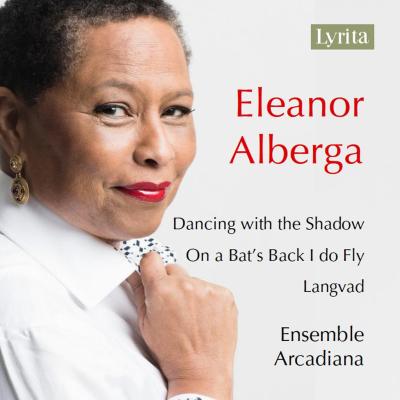
Eleanor Alberga: Works for Chamber Ensemble Ensemble Arcadiana/Thomas Kemp (Lyrita)
Eleanor Alberga is always a rewarding composer to hear, and is typically assertive and mercurial in this collection of three chamber works, sympathetically played by Ensemble Arcadiana. The pieces are all old, but heard in recent revisions that were premiered in Ensemble Arcadiana’s festival in 2022, and recorded shortly after. First up is Dancing with the Shadow (1990), a 25-minute work whose five movements progress from duet, to trio and so on to the sextet final movement. The piece was written to be danced to – Alberga has worked with dancers throughout her career, both as composer and pianist – and there is a balletic litheness to the music that makes it very danceable, and an emotional range that ranges from the skittish third movement to the nocturnal stillness and Debussyan flute lines of the fourth. The liner note focuses on the allusion to the Jungian “shadow self” in the title, and the darkness this implies, but I hear it as a more sparkly and bright piece, exemplified in the percussion-led exuberance of the finale. It is invidious to pick out individual instrumentalists here, but Karen Jones’s flute playing is vivacious and spicy.
On a Bat’s Back I do Fly, from 2000, takes as its starting point one of Ariel’s songs from Shakespeare’s The Tempest. The music evokes the magical world of Prospero’s island with Alberga’s usual deftness, the fleet-footed Ariel is heard in the writing for vibraphone, the more dangerous magic of the island always in the background. Cut from very different cloth is Langvad (2006), named for a tiny Danish hamlet, host of an arts festival that Alberga frequented at the time of its composition. The music takes a line for a (very long) walk, from the languid, improvisatory clarinet solo (Jon Carnac) at the beginning through a winding route that offers solo spots to the other players, right up to the driving repetitions of the final panel, in a way that is thoroughly engrossing. Bernard Hughes
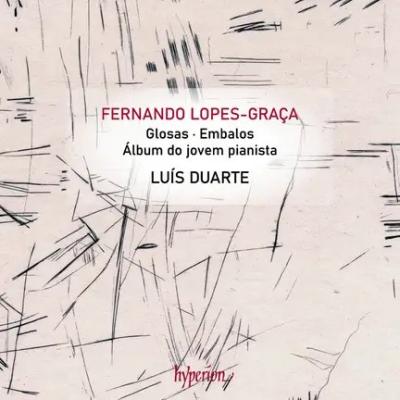
Fernando Lopes-Graça: Glosas, Embalos, Álbum do jovem pianista Luís Duarte (piano) (Hyperion)
Portuguese composer, pianist and musicologist Fernando Lopes-Graça (1906-1994) began his professional career when he was just 14, accompanying silent films in his native Tomar. A piano and composition student at the Lisbon Conservatoire, Lopes-Graça’s musical development took place against a background of intense political upheaval, his internationalist ideals pitting him against António de Oliveira Salazar’s authoritarian regime. Increasing familiarity with the music of Bartók prompted Lopes-Graça’s interest in ‘authentic folklore’, as opposed to state-sanctioned Portuguese folk music. Mário Vieira de Carvalho’s fascinating booklet essay for this Hyperion release left me hungry for more information about this intriguing, overlooked figure.
Luís Duarte’s generous selection of piano music, superbly played and warmly recorded, serves as a perfect Lopes-Graça sampler, the three works here mostly composed between 1950 and 1963. Weightiest are the 11 Glosses on traditional Portuguese songs, from 1950. As with Bartók’s treatments of folk music, the accessibility and rawness of the source material can seem at odds with the sophistication and dissonance of Lopes-Graça’s musical language, though the spikiness and dissonance never completely occlude the folk melodies. Try the third number “Da canção alentejana "Cisirão, Cisirão"”, or the tiny “De uma cantiga bailada ribatejana”. The final gloss begins with a simple, spare hymn tune fragment, Lopes-Graça transforming it into something impossibly grand and imposing over seven minutes.
Three of the 5 Lullabies on traditional Portuguese songs were composed in 1973, completing a sequence begun in 1955. Exquisite, spare miniatures, Duarte’s restraint and eloquence are admirable, especially during the fifth lullaby’s ghostly fade. Lopes-Graça’s Album for the young pianist is delightful, a collection of “21 short pieces of low and moderate difficulty” which sound here like an Iberian Mikrokosmos. Each one is a jewel, the sequence including an explicit homage to Bartók and a startling “little quarrel in toccata style”. I was enthralled by this album. You will be too.
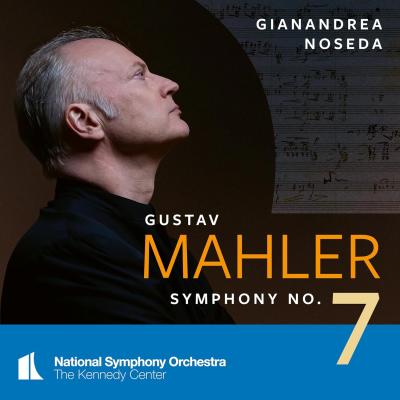
Mahler: Symphony No. 7 National Symphony Orchestra/Gianandrea Noseda (National Symphony Orchestra)
Musical first impressions are usually long lasting, and the Mahler 7 recording that I can readily replay in my head is still the first one I heard. Georg Solti’s swift, extrovert performance was the only one available in my local library and I’m still fond of it; a reading which doesn’t dig deep but remains brilliantly played and very exciting. Here’s a new live recording from Gianandrea Noseda and Washington’s National Symphony Orchestra, more idiomatic but possessing some of Solti’s sheen. This work really needs a virtuosic brass section, and the NSO players up to the challenge. Occasionally you’re wrongfooted by Noseda’s tempo choices, the opening bars of the first movement’s “Allegro risoluto” theme feeling impossibly leaden before a well-managed accelerando literally brings things up to speed. Mahler’s lush second subject is nicely handled, making his refusal to linger over the development section’s more florid passages disappointing. Still, the movement’s brassy coda is exhilarating. Wit and charm are emphasised in the first “Nachtmusik”, with some superb horn playing and sharply pointed rhythms.
Noseda’s scherzo similarly stresses black humour at the expense of spookiness, but there’s plenty of warmth in a flowing account of the fourth movement. The clangourous “Rondo-Finale” is fast and fearless, the mood unequivocally upbeat, brass and percussion really letting rip as the movement proceeds. If you’re looking for a clear-eyed, objective account of a fascinating symphony in excellent sound, look no further. Packaging and presentation are attractive, and this is presumably one of the last releases to carry the former Kennedy Center’s imprint and logo. Let’s hope that the venue’s acoustics survive the rebranding.
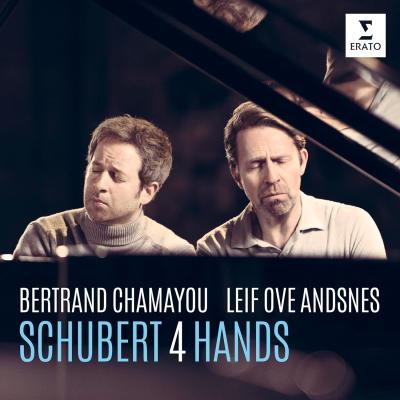
Schubert 4 Hands Bertrand Chamayou & Leif Ove Andsnes (piano duet) (Erato)
My go-to recording of Schubert piano duets has been the Paul Lewis/Steven Osborne disc which – I realised with a shock when I checked – was released as long ago as 2010. So it’s certainly time for a new take, from Bertrand Chamayou and Leif Ove Andsnes, of much the same repertoire, the piano duet music from the last year of Schubert’s life – most notably, of course, his masterpiece, the Fantasie D.940. This unsurpassably brilliant piece is an absolute favourite of mine, and here opens the album (Lewis and Osborne kept it for last). Chamayou and Andsnes are masters of capturing the rapid changes of authorial tone, spinning from naïve melodic simplicity to dark contemplation. For me, the biggest joy of the piece is in its contrapuntal passages, both the witty internal lines of the scherzo section, and the full-on fugue Schubert treats us to. The playing of the scherzo is up-front, confident and poised, suitably quicksilver, while the fugue is stern and precise and monumental. The ending is exquisite, dramatic but not indulgent, and this is a Fantasie recording which will go into my library.
The other tracks are an Allegro (D.947), a Fugue (D.952) and a Rondo (D.951). The Allegro is the most substantial and virtuosic, with Chamayou taking the primo part, where Andsnes did in the Fantasie. Both pianists write interestingly in the notes about their trepidation about playing duets, and it is notable that they switch around, where most pairings have a preferred arrangement. Most interesting is the fugue – Schubert was interested in developing his skills as a contrapuntalist in his last months – and that is on display in a very Bachian subject and working-out. We are so familiar with Bach today that it’s difficult to remember he would have been considered recherché in Schubert’s Vienna, so this fugue would have been a novelty. Chamayou and Andsnes pick their way through its harmonic thickets with care and finish with a very different thing, the Rondo D.951, which is Schubert at his most charming and relaxed. Bernard Hughes
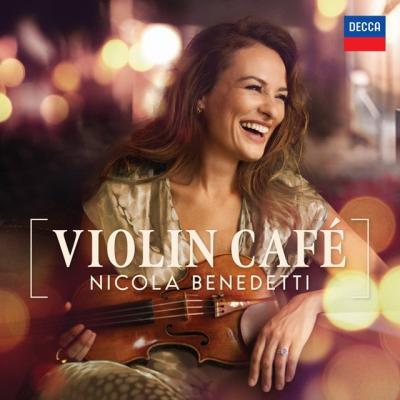
Nicola Benedetti: Violin Café (Decca)
I’m a sucker for an idiomatic transcription, and Nicola Benedetti’s latest disc contains 11 good ones, with solo violin accompanied, variously, by guitar, accordion and cello. Plus bonus appearances from a set of Scottish smallpipes and an extra violin. To Benedetti, combining violin and piano felt too formal, a more eclectic backing band delivering instead a “café-appropriate” sound. Try Stephen Goss’s inventive recasting of Sarasate’s Carmen Fantasy, Samuele Telari and Plínio Fernandes adding colour on accordion and guitar respectively, or Thomas Carroll gamely impersonating an entire cello section in Wieniawski’s Polonaise de concert.
Other high spots include an improbably lush version of Manuel Ponce’s song “Estrellita”, and Benedetti’s duet with Japanese violinist Yume Fujise in Sarasate’s Navarra. Maxwell Davies’ gently melancholy Farewell to Stromness sounds well, and smallpipe maven Brìghde Chaimbeul’s playing in her arrangements of three traditional Scottish songs sent shivers down my spine. An appealing anthology, beautifully produced.