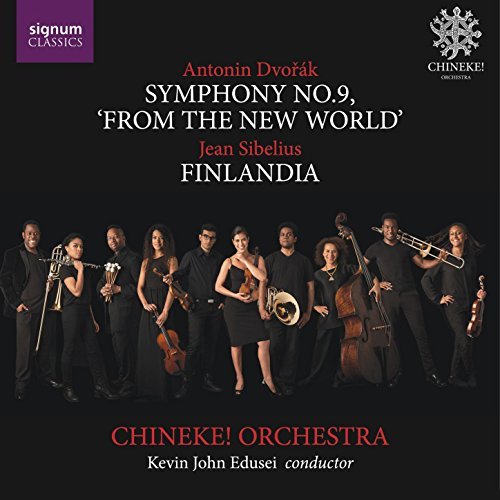
 Dvořák: Symphony No 9, Sibelius: Finlandia Chineke! Orchestra/Kevin John Edusei (Signum)
These live performances mark the recording debut of the Chineke! Orchestra, an ensemble created by bassist Chi-chi Nwanoku to provide opportunities for BME orchestral musicians in the UK and Europe. The only reservations have to concern the programme; releasing a disc of music by dead white Europeans is surely a missed opportunity. Still, Dvořák’s Symphony No 9 does make a lot of sense in this context, a product of the composer's years spent in New York as director of the now defunct National Conservatory of Music in America. Things didn't proceed smoothly; teaching and admin duties limited the time which Dvořák could spend composing, and he ruffled establishment feathers in 1893 by suggesting that the future of American music “must be founded on what are called Negro melodies… There is nothing in the whole range of composition that cannot be supplied with themes from this source.” Some months later, this work appeared: its tunes influenced by the music of the Sioux Indians along with spirituals sung to Dvořák by Harry Burleigh, an African-American student and assistant.
Dvořák's two preceding symphonies are surely better pieces, but this one can still charm in the right hands. As it does here; conductor Kevin John Edusei’s sharp ears and rhythmic accuracy making this a performance to return to. The first movement’s slow intro features superbly placed timpani thwacks, and woodwind intonation is impeccable throughout. Titus Underwood’s understated cor anglais solo is a delight, and there's a spectacular horn fanfare a few minutes before the symphony's close. Sibelius's Finlandia is the curtain-raiser; again, a work which it's difficult to perform badly. Sonorous low brass impress, and the final minutes are uplifting without sounding bombastic. A promising debut, but go to this team’s late night Prom on Wednesday 30 August to hear them in more interesting repertoire.
 Ravel: Le Tombeau de Couperin, Daphnis et Chloé – Suite No 2, plus music by Dutilleux and Delage London Symphony Orchestra/Sir Simon Rattle, with Leonadis Kavakos (violin) and Julia Bullock (soprano) (LSO Live – DVD/Blu-ray)
As filmed concerts go, this package from LSO Live is exceptional; sound and image are perfect, and bonus features include interviews with conductor, soloists and orchestral musicians. And while Sir Simon Rattle’s excursions into standard repertoire can yield mixed results, he remains a superb interpreter of 20th-century music. The colours he draws from a visibly enthused London Symphony Orchestra in Dutilleux’s violin concerto L’arbre des songes are ravishing, the partnership with soloist Leonidas Kavakos clearly one built on immense trust. Being able to see Dutilleux’s orchestra besides hearing it is a real asset; muted lower brass and a cembalon both highlights. And funny to read that one British newspaper mistranslated the work’s title as ‘the tree of monkeys’ when it was first performed in the mid 1980s. More Dutilleux comes in the form of his early Métaboles – a supremely approachable five-movement work with a stunning finale. You can't imagine it being better performed.
Unknown to me were the Quatre poèmes hindous composed in 1912-13 by one Maurice Delage, a Ravel pupil and friend of Stravinsky whose visit to India prompted a lifelong fascination with Indian music. Delage’s recreations still sound startlingly modern, the texts beautifully sung by soprano Julia Bullock. Completing the programme are zingy readings of Ravel’s Le Tombeau de Couperin and the second suite from Daphnis et Chloé, its rowdy “Danse générale” sustained at breakneck speed. This is a co-production with the French TV channel Arté, so the interviews are conducted in a mixture of French and English. Principal oboe Olivier Stankiewicz is a charmer, comparing his relaxed previous post in sunny Toulouse with his hectic new role in London, where he has to “eat music.”
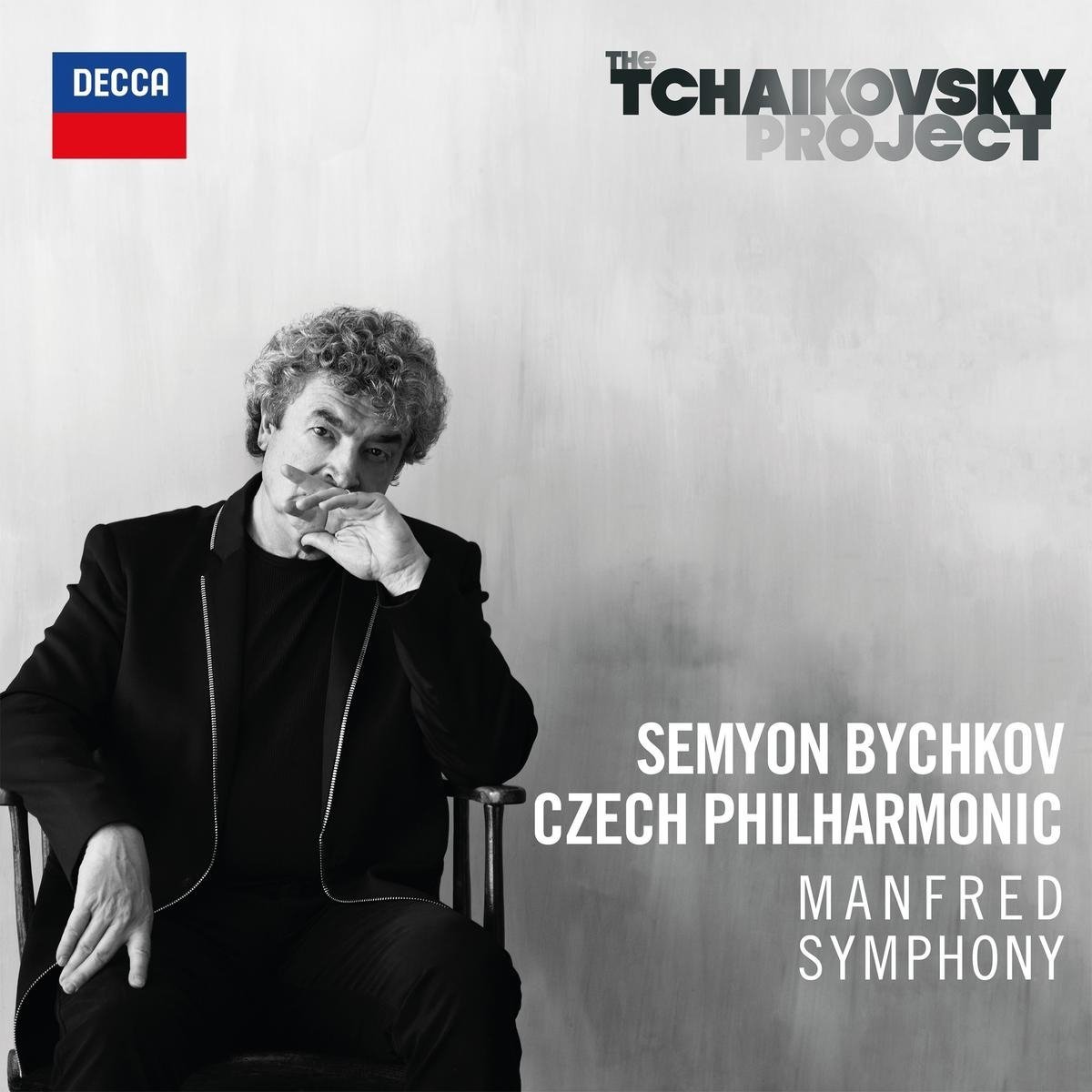 Tchaikovsky: Manfred Symphony Czech Philharmonic/ Semyon Bychkov (Decca)
Tchaikovsky wrote the Byron-inspired Manfred in between his Fourth and Fifth symphonies, initially believing it to be one of the best things he’d written. After hearing the premiere in 1885 he changed his mind, threatening to destroy all bar the opening movement. Fortunately the score survived. The work’s baggage presumably explains why it's still a concert hall rarity. Our loss: this opulent, colourful symphony, replete with organ obbligato, is a hugely entertaining listening experience, especially when delivered by a conductor who believes in it.
Semyon Bychkov could be the man to convince doubters. He’s performing it with the BBC SO at the Proms next Thursday – surely a must-hear. As preparation, buy or download this new recording, taped in April with the Czech Philharmonic on inspired form. Upper strings have a Hollywood sheen and there's some sublime brass playing. The first movement's coda is sensational, anticipating Khachaturian at his kitschiest. This disc is worth buying for those two minutes alone. Interplay between strings and winds in the scherzo is miraculous. Despite the work's doomy narrative, it's difficult not to grin with pleasure. The redemptive organ entry near the symphony's close is wonderful, a necessary corrective after the craziness earlier in the movement. Bychkov's conviction is infectious – an enjoyable disc.