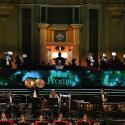
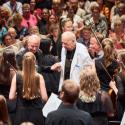
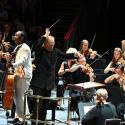
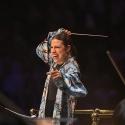
The problem with being the closest major European capital to the United States is that touring American orchestras always visit us first or last. When they hit London, they're exhausted. This was very noticeable the first time the New York Philharmonic dropped by with their new chief conductor Alan Gilbert a few years back. They were a pale and baggy-eyed lot compared to the alert team I'd seen and heard just a few months before in New York.
This time exhaustion wasn't the problem. They hadn't performed Mahler Nine since early January when the fourth movement was interrupted by the marimba beats of a mobile phone and Gilbert was forced to briefly stop the performance. The orchestra had plenty of huff and puff. They were up for it. In fact they were never better than at full tilt. In the first movement's battle between bleakness and ebullience, the orchestra seemed most at home when bathing in the full fiery light. The brass were glorious, individually and as a whole. The principal horn Philip Myers and principal trumpet Philip Smith delivered their tricky, high-lying contributions with an effortless evenness of tone.
The Adagio journeyed predictably and accurately to its washed-out conclusion with as much soul as a draining sink
That the solos were the highlight of the evening reveals where the real problem lay: on the podium. Let me say now that I've always been a big fan of Alan Gilbert's. He's only been at the helm of this orchestra for a couple of years, yet he's turned it around. The energy, precision and confidence that had been sapped from the outfit under the long, barren Masur and Maazel years have returned. Gilbert has presence. His programming is inventive. His interpretations are usually clever. But this Mahler Nine just kind of sucked.
It was all very Delia. Safe. Pre-prepared. The first movement meandered lushly and frothily but with little musical or structural purpose. There was little overall shape. Both the beginning and end were loose; the Andante comodo was jarringly stiff, the final dusk jarringly loud. Gilbert didn't appear to have a full understanding of how lively the Barbican's acoustics can be. Every pianissimo was a piano.
The scherzo was forgettable. There's a difference between the deliberate clumsiness that Mahler asked for and the lumpy one-in-a-bar-ness that was Gilbert's approach. Still there were glimmers of what he's capable of in the nimble waltz. The brass were the thuggish stars of the Rondo-Burleske, barging in on the headless knock-about with a welcome stridency. Gilbert kept a tight reign on proceedings. Never once did one feel that things could get out of control. Which I'm not sure is the point.
The Adagio suffered most from Gilbert's unwillingness to throw caution to the wind. This movement needs to be personal and organic. It only ever achieved this in the warmly vibratoed offering of principal cello Carter Brey. Otherwise it journeyed predictably and accurately to its washed out conclusion with as much soul as a draining sink. The work needed more interventions. From Gilbert. From the orchestra. From mobile phones. From wherever. Beggars can't be choosers.
- Check out the rest of the New York Philharmonic Barbican residency