It's relevant to mention that Arrau also wrote, a little tongue in cheek, of how he wanted to tackle the orgiastic in his dotage. Mackerras had no fear of Wagner's Venusberg bacchanale in the Tannhäuser Overture. You knew you were in the hands of a master from the perfect colouring of the opening woodwind hymn with its smoky first clarinet, and from then on climax after climax unfolded with perfect rightness.
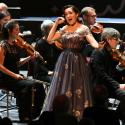
The programme's best-bits-of-Wagner package has been criticised, but what would you rather have: a complete Tristan und Isolde conducted by a nonentity with an also-ran Isolde - and believe me, they are legion - or the Prelude's inexorable, but never too slow, progress as charted by Mackerras and its ultimate consummation in Isolde's "transfiguration through love" sung with high, radiant confidence by Christine Brewer? I choose the latter with a sense of awed gratitude for how much Sir Charles is still able to bring to it.
If Brewer surely remains the most intelligently opulent Isolde of our time and had all too little scope to prove it, Brünnhilde's immolation scene at the end of the Ring gave her a chance to point the significance of the valkyrie-turned-woman's leave-taking, the meaning of the debts she pays to each of the major influences on her life. The words were coloured and inflected with infallible good judgment. And then the denouement simply took flight as the great theme of Sieglinde's apostrophe earlier in the opera reappears for the one and only time. I've never heard this more richly or securely phrased by any soprano - and Mackerras's perfect, billowing support must have helped.
What came before it might have seemed like a whistle-stop Disney tour through the earlier wonders of Götterdämmerung, momentarily jolting us back into reality as the offstage horn solo proved less of a hero than he would have liked; but how the Philharmonia under the supreme master struck us with full tidal force as Siegfried hits the Rhine, or as the brass provide the ultimate, full throated obsequies of the funeral march.
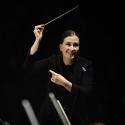
With Mackerras, every key moment thrusts home as it should, given a no-nonsense guidance that knows exactly how every instrument ought to sound, where the right emotional buttons need to be pressed. He sits more often these days, but always rises to conjure maximum definition, most strikingly of all as Loge's fire music surged towards the beginning and near the end of the Götterdämmerung sequence.
In the second concert, we heard what came across as a young man's Beethoven Pastoral Symphony focused with the knowledge of a lifetime. Mackerras plunged the Philharmonia full-bloodedly into rustic dances, gave the woodwind birdsong its head in accompanying detail as well as for the lovely cadenza by an easily flowing brook, and elicited a final climactic flame of startling extra tone in a bouncing rather than a sentimental shepherds' thanksgiving. Extra details like the pecking oboes of the second-movement idyll and chuntering bassoons of the scherzo's trio sat easily within a sound picture superbly freighted by the double-basses lined up as centre-backs, and violas colouring to the conductor's right.
The well-tempered Wagnerian nature-murmurs that followed this time were those of Humperdinck's Hansel and Gretel, its overture all naturally-weighted dark-woods horn choruses and spring-heeled children's songs. If persuading Rebecca Bottone's Gretel and Caitlin Hulcup's Hansel to abandon their scores in the first of two First Act chunks meant one brief memory lapse, it was well worth it to witness a dance-scene of physical ease and charm. What a shame there weren't more children in a far from full audience to enjoy it.
Hulcup doubled as sleep-spreading Sandman, alas without the preceding woodwind trill that gave Strauss a cue in Salome but still lit by string tremolos of exquisite sensibility. And after the tear-jerkingly simple prayer, Mackerras took the Philharmonia up into high, holy Lohengrin regions before casting a Liebestod-like all-encompassing glow around Humperdinck's angel pantomime as you never heard it before. Don't miss the great man's farewell performance of Beethoven's Ninth Symphony next year.