The BBC Proms is the largest classical music festival in the world – an event whose ambition, accessibility and breadth wouldn’t be possible without the Royal Albert Hall and its capacity of well over 5,000 people. But the building that makes this festival possible, that provides the space for the hundreds of Prommers who fill the arena each evening, is also its biggest curse. Its unwieldy, awkward acoustic is a problem that must be faced and resolved every night, and when it comes to Early Music, it’s a resolution that’s partial at best. This B Minor Mass from Les Arts Florissants was no exception. An outstanding performance in any other space was here reduced to one that was simply good.
The question of whether or not HIP (Historically Informed Performance) is, well, hip is an entirely separate one from the pragmatic reality of performing in a venue like the Albert Hall. The issue is not whether forces of just 25 singers and a band of soft-spoken period instruments are authentic, but whether they can successfully convey anything like that authentic experience in the space.
Articulation was veiled, volume muted, clarity and rhythmic bite sacrificed to a wash of subdued sound
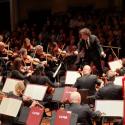
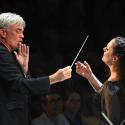
Programming Bach’s Mass as a single musical arc without an interval, William Christie did his best to turn a secular, concert-hall experience into a sacred one. From the first notes of the Kyrie it was clear that Lutheran austerity was the order of the day. Articulation was veiled, volume muted, clarity and rhythmic bite sacrificed to a wash of subdued sound – here was penitence, barely daring to speak its intercessions. As an opening it was emotionally startling, but when the same musical severity also characterised the subsequent two movements, symbolism threatened to overwhelm aesthetics.
With such small forces, the potential colour palette Christie had to work with was already greatly reduced. Certain slower speeds were never going to be an option in here (a more stately Gratias Agimus, for example, was impossible), and there were never going to be those heart-tugging fortissimos that this music can achieve elsewhere. With that extrovert end of the scale so reduced it forced the music to occupy a much smaller range of colours and emotions. Add to that step-out soloists, chosen both to blend in the choral sections as well as deliver solo-weight performances during the arias and duets, and you had yet another muted colour in the mix – voices lighter than you might otherwise choose for the venue.
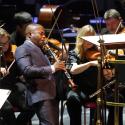
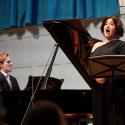
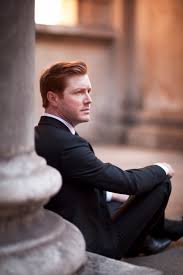 Of the four excellent soloists, only countertenor Tim Mead (pictured) really had the measure of the space, his bladed tone projecting strongly, though occasionally at the cost of intonation. His Agnus Dei was a still point of tremendous beauty, one only baritone Andre Morsch came close to matching in his Et In Spiritum Sanctum, complete with exquisite obbligato oboes. Faced with music that lies consistently just a little too low for ease, rising soprano Katherine Watson produced some gorgeous sounds. Always musical, phrasing with tremendous sensitivity, hers was a performance you’d long to hear anywhere else.
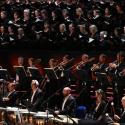
Christie’s period band were a magical toy-box of sounds, from the rasp of Anneke Scott’s horn and the rough-edged glow of the trumpets to the husky caress of the flutes. From the stalls, however, these colours were faint enough, so it’s anyone’s guess how much the further reaches of the hall heard. The choral voices likewise, more suited to Rameau than Bach, favoured an airy, easy delivery with minimal vibrato, and, while elegant, it lacked something of the Germanic grit that we got from their strongly accented Latin.
Whether you like your Bach as severe as Christie or favour a sunnier approach, there was no doubting the thoughtfulness and precision of this performance. From the meticulous stage choreography – choral forces reorganised to heighten the sense of a double choir during the Sanctus, solo instrumentalists brought to the front for the obbligatos – to the coherent tempi and consistent mood, this was a carefully crafted interpretation. Whether it was a performance for this space, however, is less certain. At its best, Bach’s B Minor Mass is a work of transcendent power, a musical statement of faith almost unequalled in the repertoire. Here, it was simply beautiful.