It’s the Royal Northern Sinfonia now, the Queen having bestowed the prefix earlier this year. Programming two Requiem settings in the opening concert of their 2013-14 season seemed on paper a little strange, but the main work was Brahms’s A German Requiem, one of the more upbeat, if unconventional works to bear the title. Odd that some of the most heartfelt sacred music has been written by composers whose religious faith has never seemed their strong point; you think of choral music by Vaughan Williams and Britten. Brahms was an agnostic, and his Requiem is music of warmth and consolation. At times it sounds like the music of a wise elder statesman, but was in fact an early work, its completion prompted by the death of the composer’s mother in 1865.
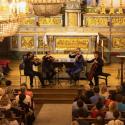
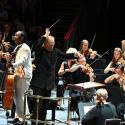
It’s a deceptively hard piece to bring off – seven extended movements, mostly unfolding at relaxed tempi, the orchestral palate dominated by autumnal reds and browns. Playing it with smaller forces can pay huge dividends. Having a crack chamber orchestra onstage, first and second violins separated antiphonally, made a huge difference here. And the orchestra’s chorus behaved impeccably, with no hint of insecurity in Brahms’s occasionally complex part-writing, all underpinned by a lean, secure bass section.
The second movement’s downbeat processional was tellingly controlled, the bell-like harp notes ringing through clearly
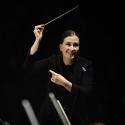
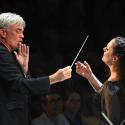
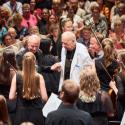
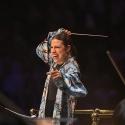
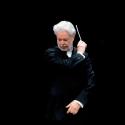
Brahms’s music responds badly to directorial micromanagement. All you really need is a wise, affectionate conductor with a good sense of line and a bunch of players who follow what’s written on the page. You got that here. Thomas Zehetmair’s unfussy direction is a joy to watch, his preternaturally long arms sculpting each phrase with beguiling security. Rarely do you hear an orchestra playing this well while looking this relaxed. And the Sage’s acoustic played a huge part in the evening’s success – a simple, wood-panelled shoebox shape allowing every detail to register cleanly.
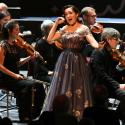
The second movement’s downbeat processional was tellingly controlled, the bell-like harp notes ringing through clearly. I liked the waltzing grace of Zehetmair’s fourth movement, pizzicato strings adding a touch of colour. Soprano Elizabeth Atherton was eloquent in the fifth movement’s touching outpouring of grief. Baritone Matthew Brook sang with wise authority. And when Brahms finally lets his choral and orchestral forces rip in the sixth section, the sound was terrific. This was a beautifully judged performance, with no hint of ennui.
The evening opened with a welcome rarity. Toru Takemitsu’s Requiem for String Orchestra is another early piece, written when its composer was 27. Sounding a little like an expressionist, tortured take on Barber’s Adagio, it contained some wonderful things– eerie ponticelli scrapings and disconcerting, off-kilter chord progressions. Zehetmair directed as if the work was standard repertoire, the playing oozing confidence. Leader Bradley Creswick’s brief solo near the close was heartbreaking. Refreshing to observe such a thorny work received with silent attentiveness by the Sage audience – no coughs, rustles or shuffling. Lingering regrets that this season will be Zehetmair's last as Chief Conductor were quickly banished by cheers at the announcement that he's just agreed to be the orchestra's Conductor Laureate.