The last GP in Britain tries to heal his Rage virus-ravaged country in this sequel not only to Danny Boyle’s 28 Years Later but his Olympics NHS tribute. Dr Ian Kelson (Ralph Fiennes) is civilisation’s softly spoken but ferociously principled keeper, stoking its embers even in the monstrous Infected, while confronting evil people visually and morally modelled on Jimmy Savile.
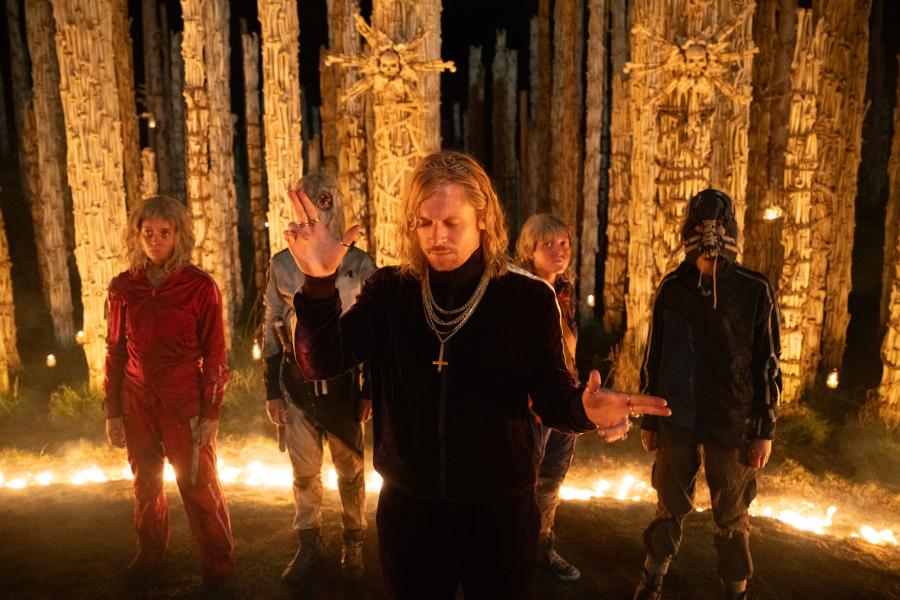
We begin with 28 Years Later's flawed Scottish island redoubt behind us and only its boy Spike (Alfie Williams) going on. He’s now in the clutches of fake Satanist messiah Sir Lord Jimmy Crystal (Jack O’Connell, pictured bottom centre) and his groomed, track-suited, blond-wigged young gang, all turned into Jimmys too. Having survived deadly trial by combat in a drained municipal swimming pool, Spike is dragooned into a reign of rural terror. O’Connell develops the charismatic Celtic threat of his Irish vampire in Sinners, catching the mocking cadence of the articulate bully.
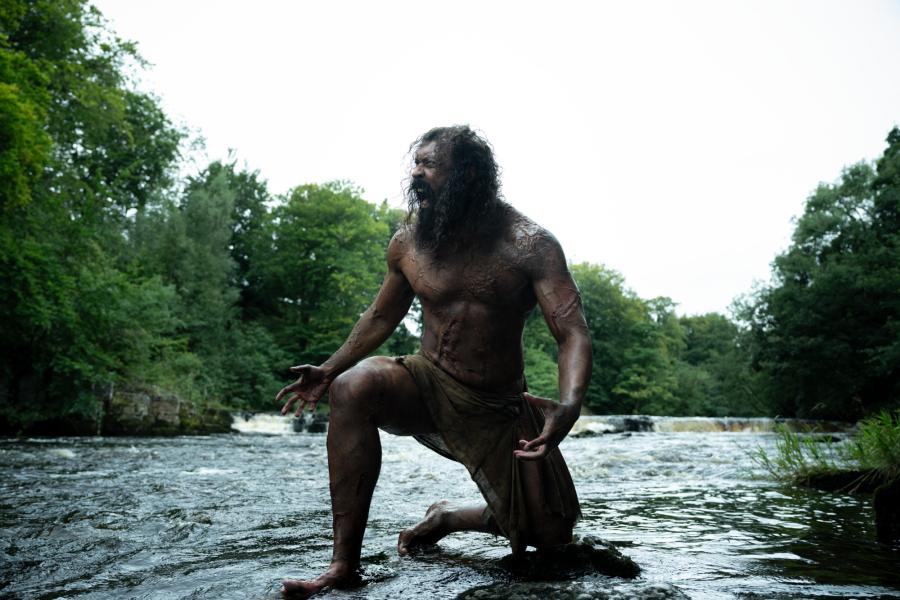
The previous film’s mysterious Dr Kelson, whose shaved head and iodine-stained skin from ritually cleansing skulls seems more Kurtz than Kildare, meanwhile cares for a hulking, injured Infected (Chi Lewis-Parry, pictured above), and discovers morphine’s curative mental properties. “You owe me,” he murmurs to the brute. “Just kidding. I’m NHS. No charge.” This dutiful English gentleman complements Boyle’s more usual Scottish working-class protagonists. He’s poignantly and hilariously attached to the records of his youth, with Duran Duran his madeleine. Fiennes’ tremendous performance typically matches punctilious reserve with vigorous physicality. He finds the introverted drive of this stoic survivor, talking to himself for decades while honouring piles of his neighbours’ corpses, clocking on in stubborn hope of better days.
The series is now a British equivalent to George A. Romero’s Night of the Living Dead (1968) and its sequels, which over the decades made zombies metaphors for racist smashing of civil rights, mall culture, militarism and elite enclaves. Boyle and screenwriter Alex Garland are similarly following Covid and Brexit’s ripples, with their agrarian, post-human country resembling eco-ruin, and the Rage virus almost too perfect a metaphor for the conflicts which infect and divide us.
The new film is among Garland’s finest, integrating his societal speculations as writer-director of Ex Machina (2014) and Men (2022) with lean action, and reconciliation with self-preserving slaughter. Where Boyle’s frenetic, iPhone-shot 28 Years Later jolted his franchise back to life, new American director Nia DaCosta (2021’s Candyman) relaxes into more intimate framing and contemplative pace, periodically panning out to grand Scottish woods in the gloaming, rusting streets and overhead panoramas of a bigger, as yet unexplored world.
DaCosta doesn’t stint on flayed skins and hallucinatory frenzy. But this is equally a film of quiet riverside communions, not least when her close-up camera circles Crystal and Kelson talking, and the older man recalls the times before. “I do remember there was a sense of certainty. Of order…the foundations, they seemed unshakeable,” he sighs of a world we've already lost. In a rousing coda, accurate history and doing right is passed from parent to child, laying foundations for a final film, and civilisation’s chastened survival.