For factual footage from battle zones, we once used to rely on people toting heavy cameras who went in and out of the fields of war. The successors to news camera legends like Mohamed Amin and Rory Peck are still with us, but the most immersive, longitudinal studies are now in the hands of citizen journalists with iPhones and Sony Alphas. They patch together Oscar-winning gonzo docs from terabytes of footage kept under the bed.
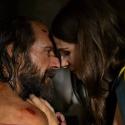
The tortuous civil war in Syria has produced a gaggle of such movies, and Birds of War is the conflict’s latest big-screen eye-catcher. It tracks a love story leading to marriage between two reporters and is shot, naturally enough, by the couple themselves. In 2016, Janay Boulos worked as a BBC fact-gatherer in London and cold-texted a Syrian activist-photographer called Abd Alkader Habak, known as Habak. “Can you find a story and film it?” she asks. “Yes but who are you?” he replies. His first piece for her is about people growing plants on a roof. (It makes its way to BBC News Arabic rather than Gardeners’ World.)
Habak had travelled to East Aleppo where rebels against the Assad regime, plus a mass of civilians, were under ferocious attack from Syrian and Russian barrel bombs, missiles and chlorine gas. So the first part of the film overlaps with the astonishing For Sama (2019), shot within Aleppo hospitals by Waad Al-Kateab, the young wife of a fantastically heroic doctor called Hamza Al-Kateab. Birds of War cuts between London and Aleppo, tracking the chat between Janay and Habak – professional at first, then flirtatious. In an online meet cute worthy of You’ve Got Mail, they graduate from abstract talk about birds of freedom to calling each other “my bird” and singing a song that goes, “Your love is carved in my blood.”
Where For Sama majored on hospital footage that was unspeakably searing, showing us dying and dead children, Habak specialises in the epicentres of major blasts seconds after they’ve happened. (He also shows us Hamza Al-Kateab again, at work in his hospital.) The directors here opt to leave out the most graphic images, so Birds of War has a more reined-in, TV news look, a diffidence that might reflect the character of Habak himself – a warm, soulful, straggly-haired guy who admits that he doesn’t give himself to others easily.
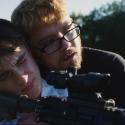
The cat-loving, snorkelling Janay seems more outgoing and comes from a fairly prosperous Christian family in Lebanon. After a news photo appears around the world of Habak carrying an injured child from a bomb attack that killed more than 100, extremists put a target on his back and he makes a hazardous escape to Turkey. It’s here that Janay and Habak meet in person and marry, before moving to London in a sequence that touches on Habak’s postwar stress and unease at abandoning the revolution.
The final section is shouldered by Janay’s conflict footage as she returns to Lebanon during a period of turmoil in 2019. She’s quit the BBC after deciding she wants to do more personalised work, and it’s noticeable that the film – which isn’t going to ask the Assad regime for its side of the story, and largely dodges the role of Islamists in the conflict – has no involvement from the broadcaster. After the fall of Assad in December 2024, Habak goes back to his homeland and the couple finally tell their parents that a Christian and a Muslim have tied the knot. A lemon-picking scene in which Janay’s conservative mum comes to terms with this, with a happy-grudging grin, is especially touching.
When editing, the filmmakers have said they struggled with whether the love story should take precedence over a news chronicle of Middle Eastern dust-ups. They say they decided to major on the romance, but I’m not sure if this is the case in their finished tale of young courage and everyday grace. Or that you need to have one or the other. Since love and war are both intensely human things, the two can bed down together well.