“Ish” is the name of the lead character in this movie, but it also might be a suffix attached to adjectives describing it. Here we have a sparkish piece full of smallish moments in a quietish town that’s typically dullish and British. For 12-year-old Ish, life is somewhere around okayish.
As a result, Imran Perretta’s autobiographical debut feature, which is touchingly performed, observant and defiantly localised, is a little too tentative to stand out. It follows a few idle summer weeks in the life of an Asian-Muslim kid (Farhan Hasnat) who is alternately perky and withdrawn, which seems right for someone who lost their mum a year or so back. Ish roams Luton with a Palestinian friend called Maram (Yahya Kitana), who’s bigger and sharper-elbowed and hot-headed over Gaza, declaring that “war is coming” – that is, over here, too.
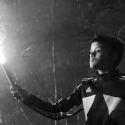
What actually comes for us, though, is a fairly modest meditation on fickle friendship and slippery identity, shot in luminous black and white in a 4-by-3 frame, consciously nodding to François Truffaut’s The 400 Blows and the peerless coming-of-age stories of Satyajit Ray. A still mist of grief settles over Ish’s neat modern semi, where he lives with his devoted dad (an airport security worker), his sister and his stoic nan (a fine performance by Sudha Bhuchar).
Maram lives in a scrappier area under low-flying aircraft. The two mates, swapping big-city patois, camp in the woods and trek through a town without much of a there there, bounded by the clogged concrete of the M1 and surveilled by giant electricity pylons.
But they are also watched over by the police, who deploy the anti-terrorist Prevent programme with excessive zeal, and this leads to the film’s only real turning point when Maram is hauled off his bike and into an unmarked cop van for a hassling. Ish hides in fear, and after Maram is tossed out of the van he’s cross with Ish for not helping out. Maram and his other mates send Ish to Coventry (or at least, say, Bedford), and the crestfallen Ish struggles to re-connect with his former oppo.
Maram, it has to be said, wasn’t the most brilliant of friends to start with, which is to take nothing away from the excellent, wholly embedded acting of the two young leads. Enda Walsh contributed to the touching script, though we wait in vain for a set-piece confrontation like that between prisoner and priest in Steve McQueen’s Hunger (2008), another first-timer’s project where Walsh also served as a kind of guest artist.
The work of cinematographer Jermaine Canute Edwards catches the eye, just as it did in the Nigerian-set My Father’s Shadow earlier this year. Yet Luton in the grey is no match for the jazzy, colourful clamour of Lagos captured by Edwards in that other youthful saga of hope and remembrance. Perretta juices things with unnerving intercuts of police face-recognition videos, like sci-strange moments from a Jonathan Glazer picture, though this seems more about box-ticking than storytelling.
The director, meanwhile, marshals the score himself – a majestic array of liminal, ambient sounds that at times resemble the Kronos Quartet playing Sigur Rós. The haunting sweep of the music accompanies a film that plays things, in the main, minor key.