This is an impeccably restored presentation of the 1945 feature-length documentary that was intended to be shown in German cinemas in order to counter any remaining support for Nazism. Backed by the British Ministry of Information, it was overseen by Sidney Bernstein and involved commissioning or gathering footage from army cameraman (American, British and Soviet) present at the liberation of the concentration camps, as well as from newsreel cameramen.
The assembled film, shot in over 14 locations including Bergen-Belsen and Dachau, did not spare viewers’ sensitivities. Forty-three cameramen shot unflinching footage of piles of skeletal bodies bulldozed into pits, co-opted camp guards lugging corpses past the shocked gaze of the locals, who had been forced to come and see what had been happening behind the barbed wire. The survivors are shown being nursed back to health where possible, although many continued to die in the days and weeks after liberation. It is a deeply disturbing film, made more so by the digital restoration that has removed any flicker, blur or reassuring patina of age; these images could have been shot yesterday.
It was only in 2014 that the original intended ending was edited together
Bernstein drafted in Alfred Hitchcock to advise on style and structure, while philosopher/politician Richard Crossman wrote the commentary script. Their aim was to bear witness and to teach a lesson, as the commentary intones: "We hope that Germans will mend what they have broken and cleanse what they have befouled." Much is made by the BFI and Imperial War Museum, which have jointly restored the film, about it being "lost"; the final reel that used Russian footage from Auschwitz and Majdanek was never completed. It was only in 2014 that the original intended ending was edited together from a contemporary script and cutting notes.
The history of Bernstein’s original production was the subject of 2014’s Night Will Fall, which slightly over-hyped the documentary’s disappearance and claimed that it had been unseen since 1945. This is not exactly the case: a much shorter version under the title of Die Todesmühlen (The Death Mills) was completed by Billy Wilder and the United States Department of War and screened in Germany in 1946, while another longer, partially restored version was shown at the Berlin Film Festival in 1984 and then broadcast with interspersed interviews with its creators on ITV in 1985 under the title A Painful Reminder: Evidence for All Mankind. Yet another version has been available in the USA since 1985 and shown on PBS as Memory of the Camps.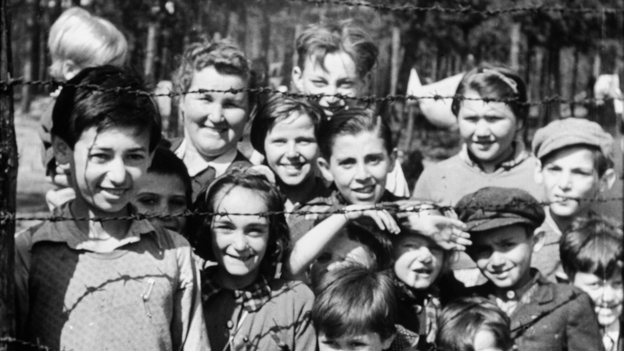
Much of the footage will be familiar – many of the scenes have been widely used as archive in other documentaries and TV programmes about the Final Solution. But there are sequences such as the torching of the typhus-infected barracks and the bald statements by SS officers which are less familiar. What may be more suprising to a younger generation, one which has grown up with the Holocaust as a key element in World War II history, is the film's reticence about the camps' victims.
Bernstein and his colleagues believed that as anti-semitism was still so rife in 1945, it was best not to mention that the vast majority of the dead were Jews. Instead the commentary emphasises that the victims came from all over the world and stressed our universal humanity. Watching the documentary with its original script re-recorded for this version by the actor Jasper Britton (far cooler in delivery than the acerbic tone of the recording by Trevor Howard), brings home yet again the complexities of historical narrative. One always has to consider who is telling the story, from what perspective and for what intended time and audience, never more so than when speaking of these atrocities.