One might think that of all the national cinemas, the one that least needs its own festival in the UK is the French; after all, Gallic fare has a better showing here than most foreign language films.
That said, distribution-wise it’s a large slice of a tiny pie. And with 30 new films, the 21st edition of the French Film Festival offers a glimpse of the breadth of French cinema that isn’t always apparent from general releases. For Francophiles in London, Warwick and a handful of Scottish cities, the next month promises quite a boon.
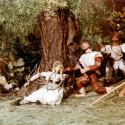
The festival opens with the first live action film by director Sylvain Chomet, who made his name with the deliciously inventive animations Belleville Rendez-vous and The Illusionist. The latter film was adapted from a script by Jacques Tati; the central character of Attila Marcelhas something of Tati about him, mixed with Buster Keaton – a sweet-natured, mute man-child, raised by two eccentric aunts whose childhood memories unleash marvellous musical fantasies.
Thereafter, the festival features films across an array of genres, as well as those that perform that particularly French feat of defying genre characterisation altogether.
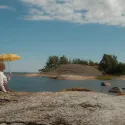
 One such is Tenderness, by Marion Hänsel. When a young man breaks his leg in the Swiss alps, his long-divorced parents decide to drive together from Belgian to collect him and bring their son home. Nothing much happens, but in that simple journey Hänsel and her actors Olivier Gourmet and Marilyne Canto offer a rich portrait of the love that binds.
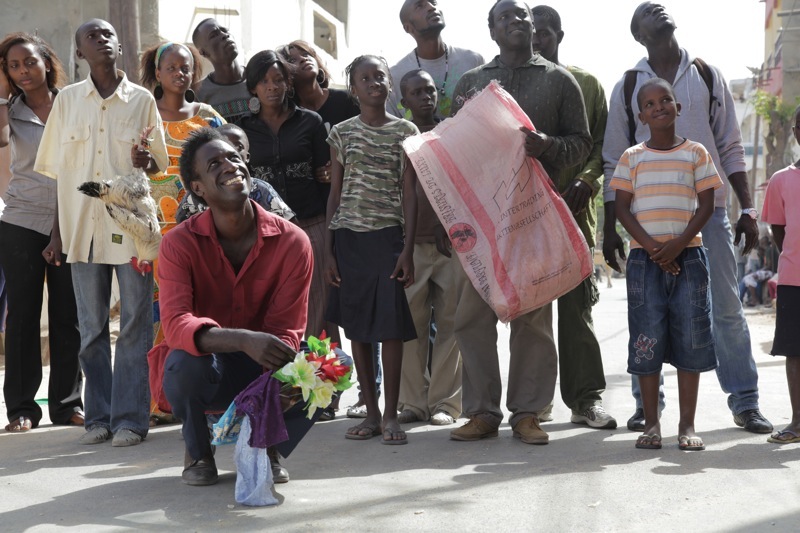
Another genre-buster is Today, by French-Senegalese director Alain Gomis, a dream-like and mesmerising account of an apparently healthy man (played by Saul Williams, above) who awakens at his mother’s house on the outskirts of Dakar with the knowledge that he will be dead by the end of the day. He and his loved ones have very little time to come to terms with his fate.
Juliette Binoche gives a typically towering performance in Camille Claudel 1915, portraying the tragic sculptor (main picture) early in her incarceration in a mental hospital, where she was locked up by her family. Bruno Dumont contrasts the suffering of a woman erroneously deemed to be mad, with the religious hypocrisy of her brother, whose zealousness and ego is intent on keeping her there. It’s a tough subject, beautifully conceived, photographed and acted.
 Among the comedies, the delightful yet oddly radical Paulette stars the late nouvelle vague favourite Bernadette Lafont (pictured left) as a pensioner struggling to make ends meet on a rough housing estate on the outskirts of Paris, who decides to become a drug dealer – because, after all, who would suspect a little old lady of dealing narcotics?
There’s a daft but very likeable romcom (Love is in the Air), another intelligent and morally teasing film by François Ozon (Jeune & Jolie), a crime thriller (11.6) and a rare French stab at a sports movie (Jappeloup) with actor-director Guilluame Canet proving another string to his bow, as an able horseman.
Daniel Auteuil, who has a touching supporting role in Jappeloup, gets behind the camera himself for his first adaptations of Marcel Pagnol’s Marseilles trilogy, Marius and Fanny. Auteuil of course made his name in Pagnol’s Jean de Florette and Manon des Sources. In this, and their homages to Maurice Pialet, Jacques Demy and others, programmers Richard Mowe and Ilona Morison show that their contemporary choices are informed by a deep appreciation of French cinema history.