Keith Jarrett’s Köln Concert is one of those albums that transcends its genre; it’s not only the best-selling jazz solo album of all time, but the best-selling piano album of any kind. And aside from its almost transcendental quality, this success reflects the mythical reputation of the one-off concert that it records.
Ido Fluk’s film is a fictionalised account of that concert, which took place in Köln’s opera house in 1975, late at night, for a packed crowd of jazz afficionados. The legend of the performance lies in the fact that it should not have taken place: on the night, Jarrett was faced with an unexpected and seemingly insurmountable obstacle; to pull it off would require a certain genius.
Rather than a worthy, respectful, by-the-book homage, Fluk takes a leaf out of Jarrett’s book and improvises the hell out of his story – not least by focussing not on the artist, but the 18-year-old, self-made German concert promoter, Vera Brandes, who all but dragged the testy perfectionist to the stage. The result is a jaunty, charming, highly enjoyable paean to both artists and the many who support them – to cite Fluk’s own quirky prologue, it’s less about the Sistine chapel, than the scaffolding that allowed Michelangelo to reach the heavens.
It opens, then, with Brandes, played by the terrific up-and-comer Mala Emde (main picture, above) as a charismatic force of nature, a Köln teenager who is vehemently at odds with her parents, especially her domineering, decidedly nasty dentist dad (Ulrich Tukur). As a precocious 16-year-old, Vera stumbles on her metier when she approaches the British saxophonist Ronnie Scott in a jazz club, and he suggests she book him some dates for a tour (Germany in the Seventies was a jazz hub). The film’s a bit muddy about the older man’s intentions, but he appears perfectly happy when the girl takes him literally – embarking on a fast-track, fake it till you make it course in concert promotion.
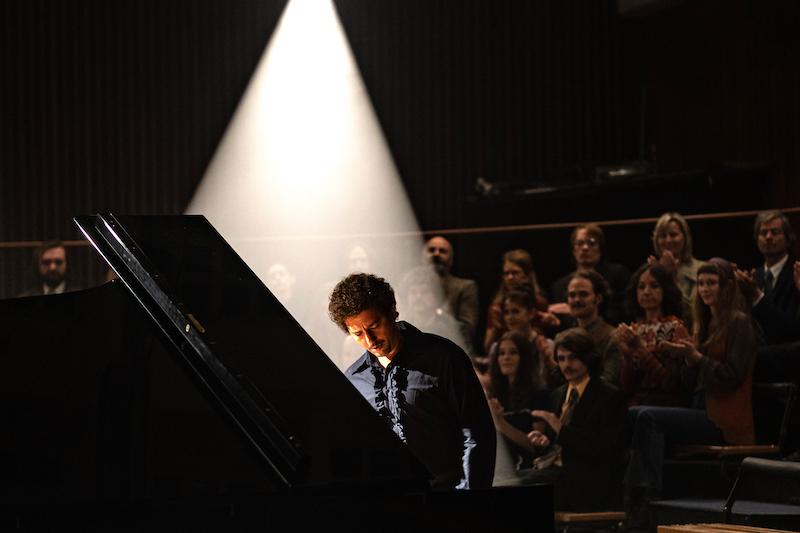
The first section of the film follows Vera's learning curve, with some colourful friends and a likeable, slightly suffering boyfriend in tow, making her calls at night from her father’s dentist office in the basement, pretending to be English to improve her results. As her local fame grows, so does the violent antipathy of her father, who would rather she join the family business of pulling teeth. Setting her sights on bringing Jarrett to Köln is a major step up that escalates the conflict and proves a moment of truth for the teenager. (Pictured above, John Magaro as Jarrett.)
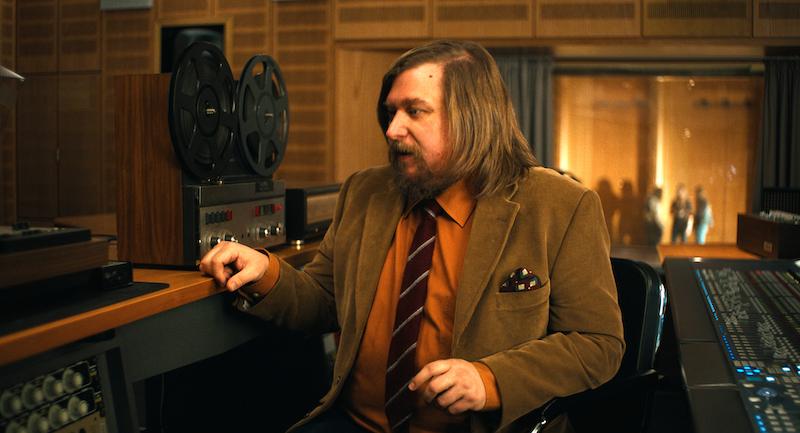
By this point, Fluk has already shown some surprising twists, not least by starting the film with a middle-aged Vera, breaking the fourth wall to transport the audience back to the Seventies. He now takes a couple more surprising turns: another direct address, by the fictional music journalist Michael Watts (Michael Chernus, pictured below), who offers the audience a fabulous lesson in improvisational jazz; and then, finally, switching to Jarrett himself.
And the musician is in a terrible state. Köln is one stop on a series of solo performances across Europe that Jarrett is completely improvising from scratch – stepping onto the stage to see where the muse will take him. In his desire to pursue this pure improvisation, he’s broken from his label and is going it alone. The concerts appear to be going well; but he is miserable, exhausted, suffering from intense back pain, made worse by his decision to sell his plane tickets, pocket the cash and travel in his tour manager’s tiny car. Watts is tagging along, patiently waiting for a promised interview.
This section of the film offers insight into the mind of a tortured artist. The ever-excellent John Magaro captures Jarrett’s intensity, the sadness of a perfectionist who feels misunderstood and alone, as well as the man’s idiosyncratic moves at the keyboard. The final phase comes with their arrival in Köln, Jarrett’s discovery that preparations are not as he would have hoped, and Vera’s desperate efforts to fix the problem.
Even when we know the outcome, this has a comic, edge-of-seat quality, driven by Emde’s Vera, rushing furiously around town in her fur coat and mini-skirt, her career on the line, refusing to give up. There’s a bit of Florence Pugh about Emde, a pocket-sized cheek and charm that the camera loves. Her energy and magnetism carry the movie, while Chernus offers its smarts, and Magaro its soul.
At the outset of Vera’s career, uncertain of how to proceed, a friend advises her to “just improvise”. This sense of being spontaneous, taking chances, of a determined trust in yourself, permeates the film – both its story and the fluidity and risk-taking of Fluk’s script and direction. It’s equal parts artist biopic, road movie, coming of age, comedy and family drama, as well as a celebration of an esoteric and inherently mysterious form of music. And, like Jarrett himself, it feels like the film itself is sometimes flying by the seat of its pants, stumbling a little in places, but exhilarating.
It’s no real spoiler to say that it brings us to the performance, but not the performance itself. Perhaps the greatest compliment one can pay is that, whether you’re familiar with the album or not, you’ll leave the cinema wanting to listen to the album as soon as you can.