We ought to be sated with the Royal Family right now – on screen, given the riches of The Crown, and in general, what with the persistent, annoying buzz emitted by Harry and Meghan, or the odour of Andrew. So, it’s testimony to the enduring fascination with Princess Diana and the wonderful, singular filmmaking of Pablo Larraín that there’s room for more.
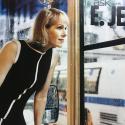
Spencer is an extraordinary film, daring in its conception, strange and captivating in its execution, and with a performance by Kristen Stewart that feels, quite literally, out of this world. We’re used to Brits personifying American icons, not the other way around; but Stewart nails the essence of what we remember, the rebelliousness and vulnerability, the shy humour, the luminosity, all with an immediacy that brings Diana’s painful battle with the Windsors into sharp relief.
Those who like a good old-fashioned, by-the-numbers biopic may find the approach of this self-styled “fable from a true tragedy” too eccentric. But dive in, succumb to its flow and intensity, and it’s impossible not to be deeply moved.
Larraín has always been adept at assaying psychological disturbance, whether of civilians caught up in the horrors of the Chilean dictatorship (Post Mortem), or Jackie Kennedy’s marshalling of grief after the assassination of her husband (Jackie), so the troubled Diana, almost alone against the oldest family firm on the planet, is right up his street.
In fact, there’s an obvious connection between Jackie and Spencer, both being accounts of real women whose fame grew well beyond the fact of their famous husbands; it’s pertinent that both films should use their subject’s name in the title. Why Spencer, rather than Diana? Perhaps because her battle for independence was with the family name, the brand. Steven Knight’s script also sets the action in Sandringham, the Queen’s Norfolk estate and just a stone’s throw from the Spencers’ former home – a place, and a life to which Diana longs to return. 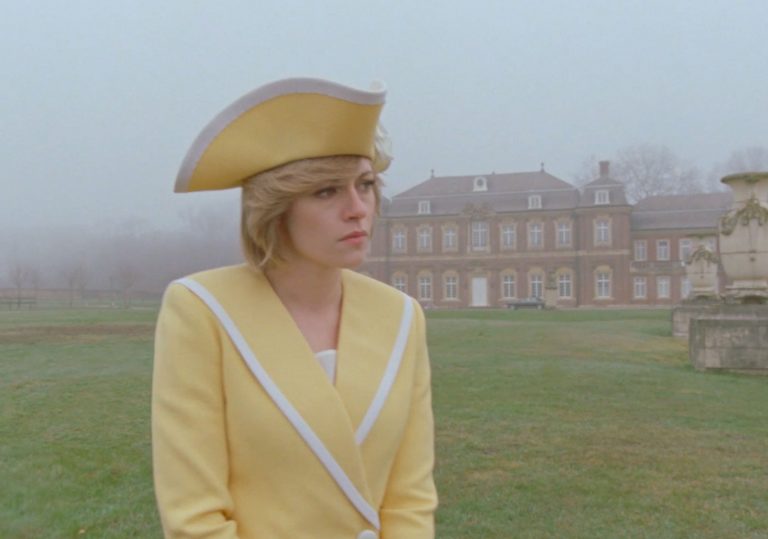 The film posits a Windsor family Christmas, around 10 years into the marriage and with the cracks very much in evidence. They've all gathered, except for Diana, who's managed to get lost in her sports car. Arriving late, she will remain completely out of synch with everyone else for the duration of the three-day holiday.
This disconnect between the princess and her husband’s family is at the very heart of the film’s approach; she spends more time alone, or speaking with servants than she does with Charles, or the Queen. When Larraín presents the Windsors all together – at a meal, or posing for photos – they are glumly unspeaking, as if relics placed in a museum tableau. Diana avoids them whenever she can, while ignoring the highly prescribed conditions of her stay – what she eats, what she wears, even when her sons William and Harry get to open their presents. “Here there is no future,” she tells the boys. “And the past and present are the same thing.”
The tension manifests around Diana’s confrontations with Major Alistair Gregory (Timothy Spall), the Queen Mother’s equerry who’s been brought in for Christmas to beef up security and comes across as part-jailor, part Stasi snoop. Spall has always had odiousness on tap, here puckering his gaunt face in a way that makes the major a seriously intimidating presence. The exchanges between Spall and Stewart are deliciously discomforting.
In contrast, Diana’s favoured dresser (Sally Hawkins) allows glimmers of real human connection, as does the head chef (Sean Harris), whose workplace has a sign that declares: “Keep noise to a minimum. They can hear you”. And the princess’s moments with her sons reveal the funny, fond, carefree young woman who’s being suppressed.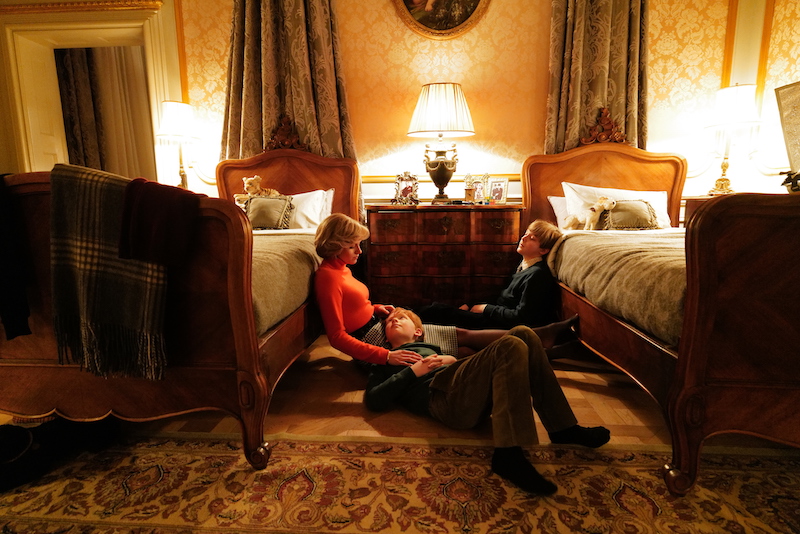 For the most part, though, the emphasis is on the solitary, sad Diana, whether the bulimic secretly woofing down food and throwing it up, or imagining the ghost of Anne Boleyn, or deigning to venture out at night to explore the now empty Spencer home.
This obviously requires a lot from Stewart, who’s on screen virtually the entire time. The actress may have drawn on her own experience, as a victim of the paparazzi, in conveying the agony of constant scrutiny; though there’s far more than Method in the performance. Stewart has that rare, mysterious rapport with the camera that allows her to display an inner life with startling, silent eloquence. And though it’s not an impersonation, at times she captures Diana’s oddly clipped and breathless delivery so perfectly that it's uncanny.
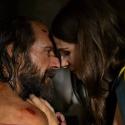
As with Jackie, Larraín ensures that the camera is all over his lead actress – tracking, circling, resting in lengthy close-up. One exceptional sequence has Diana imagining herself dancing in a variety of spaces, dresses, and modes, while actually teetering on the edge of suicide, all leading to a moment of exhilarating epiphany.
Talented cinematographer Claire Mathon, whose previous work includes Portrait of a Lady on Fire and Atlantics, excels again here, with an appropriately wintry palette and gorgeously lit interiors. The best parts of Jonny Greenwood’s score have an improvisational jazzy feel that chimes with the personality of a woman reaching for the point when she is going to break free.