Juliette Binoche gives a powerful performance at the heart of a thought-provoking, very topical drama, whose flaws reflect its difficult subject matter.
The Frenchwoman plays Rebecca, a highly-rated war photographer, whose single-minded pursuit of the perfect shot and the game-changing scoop has compromised both her attitude to family life and her professional ethics. When she nearly dies on an assignment, she is forced to take stock.
The film opens on that assignment, in Afghanistan, where the photographer has been given access by terrorists to accompany and photograph a young female suicide bomber, as she prepares for her diabolical deed. The photographer overplays her presence to an extent that almost kills her.
Binoche’s Rebecca is a complicated animal, in whom it’s difficult to distinguish journalistic mission from thrill addiction
She’s still nursing her physical wounds when she returns to her family, in Ireland; but her pain is nothing compared to the emotional torture felt by husband Marcus (Nikolaj Coster-Waldau) and their two daughters, 13-year-old Steph and seven-year-old Lisa. Steph in particular is buckling under the constant fear when her mother's away, and has become troubled and withdrawn; Marcus, a marine botanist and the primary parent, declares that he’s had enough.
Norwegian director Eric Poppe (who has drawn on his own experiences as a war photographer) and his screenwriter Harald Rosenløw Eeg chart Rebecca’s attempt to respond to her family’s emotional needs.
There’s no doubt that the conflicts she covers in the Middle East and Africa require constant media coverage, especially those that involve victims and refugees who may otherwise be forgotten; and a lesser film would champion Rebecca as an idealist. To this film’s credit, it does the opposite. Binoche’s Rebecca is a complicated animal, in whom it’s difficult to distinguish journalistic mission from thrill addiction.
It’s a brave approach to take, considering how many reporters and photographers have lost their lives in recent years – the photojournalist Tim Hetherington, who died while covering the Libyan civil war in 2011, being one such. No-one wants to question the motivations of mostly honourable individuals, but the question certainly exists.
 To my mind, however, Poppe and Eeg muddy the waters by introducing an ethical dimension that is then ignored. By effectively embedding herself with terrorists, chronicling their preparations for mass murder, arguably the photographer is giving them validation; it's controversial, to say the least. That no-one in the film confronts this point feels like a failure of the filmmakers, as well as the characters.
But it’s typical of Binoche not to glamourise Rebecca, and one of the thrills of the film is in watching this complex and not particularly likeable personality struggle with her demons.
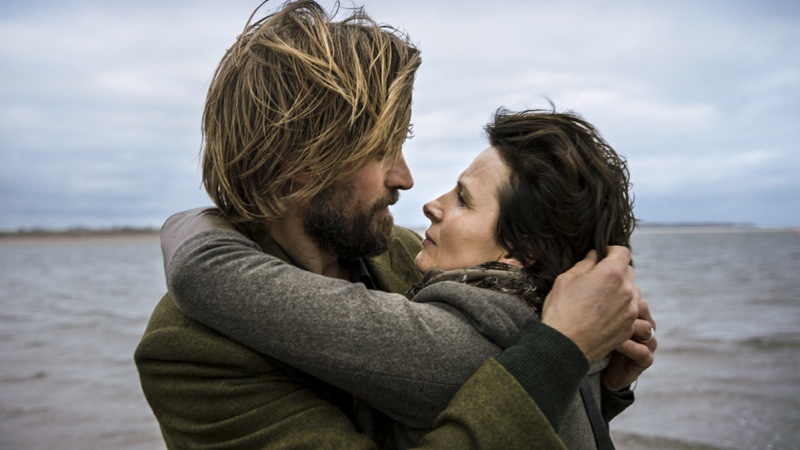
Coster-Waldau (pictured above, with Binoche), whose career has been given a well-deserved boost by Game of Thrones, lends a solid emotional anchor to the drama, while real fireworks come from young Lauryn Canny, as Steph, whose attempt to turn her fear around – and find a way of sharing some part of her mother’s occupation – is heartbreaking. In contrast, Larry Mullen Jr, the U2 drummer who is a surprise presence as a family friend, has that slow-motion way of moving and acting that is the giveaway of amateurs.
Poppe handles both the extreme tension of Rebecca’s assignments and the fevered family scenes extremely well; equally affecting are the abstractions and extreme close-ups that illustrate Rebecca’s psychological state.
Next page: watch the trailer for A Thousand Times Good Night