

State of Statelessness is the brainchild of the Drung Tibetan Filmmakers’ Collective based in Dharamshala, home to the Dalai Lama and spiritual heart of the Tibetan community in exile. Four short films, each by a different director, address what it means to live in the diaspora without a homeland. And like a short story, each film offers a glimpse into lives spent in perpetual exile.
The quartet begins and ends with water. An aerial shot of a ferry crossing the Mekong delta introduces Where the River Ends directed by Tsering Tashi Gyalthang. Waiting for the ferry are Tenzin and his young daughter, Pema. They couldn’t be more different; Pema is bright, vivacious and present while Tenzin looks and behaves like a bemused old man.
Once on board, he explains that the Mekong River flows from Tibet to Vietnam, creating a direct link between his homeland and their family life in Ho Chi Minh City. But Pema is sceptical about this supposed connection. Arriving home, they find that a neighbour has come to call. In a heavy-handed metaphor for Tenzin’s plight, she complains about the dams built upriver by the Chinese to restrict the flow of water.
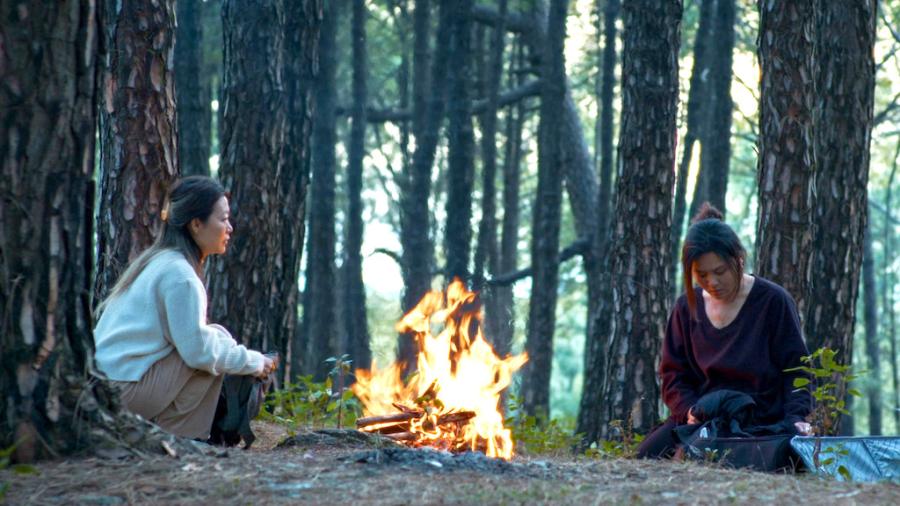
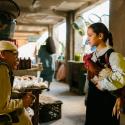
In Sonam Tseten’s Bardo: In-Between we are in India watching a family drama unfold. Yangchen’s mother has just died and she and her father await the arrival of her sister, Bhuti from France where she now lives. Yangchen gives Bhuti a chilly welcome and, as the sisters prepare for their mother’s cremation, tensions between them mount until a bitter exchange reveals the cause of her animosity (pictured above: Yangchen (Kalsang Dolma) on the right and Bhuti (Tenzin Pema) burn their mother's clothes).
Yangchen’s husband has also moved to France and expects his wife to follow; but protracted separation has led to problems so serious that staying put or joining him seem equally unbearable. It’s a beautifully understated drama that deserves to be developed into a full length feature.
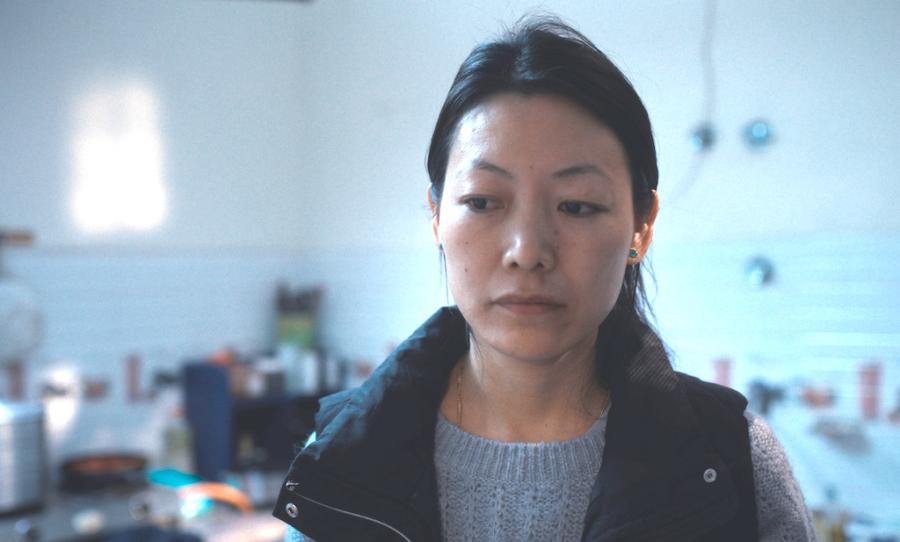
Directed by Tenzing Sonam and Ritu Sarin, A Little Cloud similarly addresses the vexed question of whether to stay or to go. Working as a painter of thangkas depicting the Buddha, Sonam seems content with his life in Dharamshala. But prompted by the death of their daughter, his wife Kesong (pictured above: Tenzin Pema as Kesong) is determined to up sticks and leave.
A visit from Jigdal, an old schoolmate now living in America, serves only to exacerbate the rift. He invites the couple to join him in America, but his behaviour – brash, boastful and obsessed with money – doesn’t encourage Sonam to take the plunge.
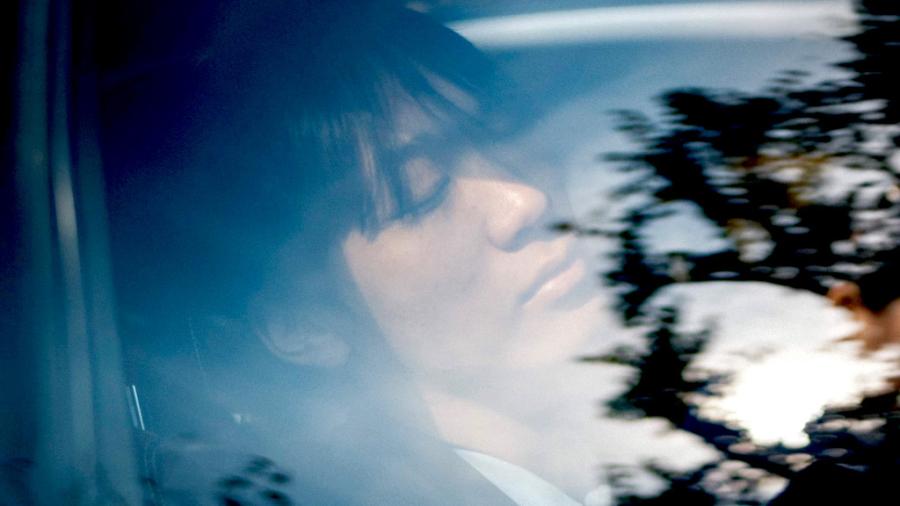
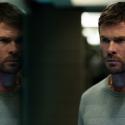
In films this short, there’s no opportunity to explore solutions to the problems they reveal and, inevitably, this leaves the viewer feeling as stuck as the protagonists. In the final film At the End the Rain Stops, though, director Tenzin Tsetan Choklay creates a satisfying sense of closure by dint of a neat visual idea. The beautiful opening shot is of a young man asleep. Seen indistinctly through the reflective glass of a car window, he seems in a world apart – as though frozen in aspic (pictured above: Tenzin (Tenzin Tseten) asleep in a car). The dream-like image complements a feeling that Tenzin articulates towards the end of the film. “Sometimes I feel I don’t belong anywhere,” he tells his new friend Norbu, “as if I’m a spectator looking at life through a window.”
Leaving his mother in Wisconsin where they now live, Tenzin flies to Dharamshala to scatter his father’s ashes and clear the house that, since their departure for the States, was used mainly by his late father. Sifting through old memorabilia, he uncovers an unnerving family secret that further confuses his fragile sense of identity.
Helping him is Norbu, the son of his mother’s friend Acha Pedon. The two young men (Tenzin Tseten and Thupten Dhargay) are utterly convincing and their growing relationship is beautifully portrayed. Time spent with Norbu makes Tenzin aware of how remote he feels from his Tibetan heritage.
All four films allude to feelings of restlessness and a lack of belonging that haunt those in exile while addressing the question of whether it is better to stay where you are or to go in search of greener pastures. Either way, there’s a price to pay.







Add comment