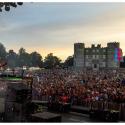
We’ve come a long way since 1971, when the audience at Madison Square Garden for the Concert for Bangladesh applauded when Ravi Shankar tuned up. Western audiences were first exposed to the sitar in 1965 when George Harrison played one on Rubber Soul, the earliest instance of the instrument being used in rock music. Soon it was all over the place, most often in the form of the Danelectro electric sitar, with its “buzz” bridge design offering an imitation of the sitar’s distinctive sound on an instrument easily playable by guitarists: unlike George Harrison, few took the time to master the complex Indian instrument. And these days of course, anyone with ears to hear is familiar with the multifarious sounds of world music, debasing as that description often is.
Anoushka Shankar begin studying sitar with her father at the age of seven, when the instrument was bigger than she. Having made her public debut aged 13, for Ravi Shankar’s 75th birthday concert, she was soon touring with him. At 16, she signed her first recording contract. Since then, there have been a dozen studio albums, garnering a cluster of awards and Grammy nominations, as well as film scores, and acting and writing projects. And she’s still only 41!
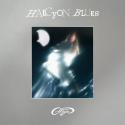
The second in a trilogy begun last October with Chapter I: Forever, For Now, Chapter II: How Dark It Is Before Dawn is a journey from night to light, a series of evocative dreamscapes that seem to reflect the different stages of our sleep. We’ve turned off our minds and relaxed; now we’re floating downstream. If you’re being facile, you’d say this is the kind of music you hear as you’re having a full body massage but then music is inevitably diminished when it’s associated with something other, an ad for instance. Or Indian restaurants!
Chapter II gets under your skin in the best way, yielding its secrets with repeated listenings. It’s a genuine fusion of eastern and western musical sensibilities, the piano, and the cello – and even at times the sitar itself – anchored in familiar tonalities, notably in “New Dawn”.
Essentially, this is a six-movement work, the first, “Pacifica”, with its appropriately rocking piano motif over which the sitar’s magical overtones suggest a journey through space and time. “Offering” is dreamier, a carpet of sound on to which the sitar throws occasional splashes of colour. The gentle sound of waves and voices opens “What Dreams Are Made Off”, while “In the End” begins with piano and noodling sitar and builds out sonically as strings enter and then drops away to end on a single sitar note. “Below the Surface” is mystical, while “New Dawn” picks up speed and energy, motifs and riffs piled on top of ostinato figures on the piano. The piece ends almost mid-flight.
And indeed listing to Chapter II: How Dark It Is Before Dawn does give you the feeling of being in space. As Davd Bowie put it: “Here am I floating round my tin can, far above the Moon, Planet Earth is blue and there's nothing I can do…” Shankar describes the album as being “a deepening of what Chapter I touched upon, the need for peaceful, healing music”. Listening to Chapter II is a healing experience – which is why you might hear it next time you go to be anointed with essential oils and coaxed into bodily alignment. It may be facile but well-chosen music matters, for music more than all the other arts does heal us.
People go crazy for Ludovico Einaudi, though his moment may have passed. There’s much more beauty and mysticism in these albums by Anoushka Shankar and friends.