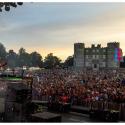
You can't explain stage presence like Anoushka Shankar’s. It just "is". When she steps out in front of a completely packed Royal Albert Hall, and utters a welcoming, exploratory, London-ish “Hi... welcome to my Prom… Oh, my God!”, a friendly connection with audience is made. Instantly and with disarming ease.
Then come memories: she thinks back to having participated with her father in the Ravi Shankar Prom in 2005 and her further three appearances since then, notably one in 2020 with no audience: “It’s so much nicer to have you guys all in here.”
And then, from the moment she starts to play, we are reminded that Anoushka has been blessed from an early age with an ambassadorial mission to carry the sound of her father’s instrument, the sitar, into a different age and different contexts. Having studied the instrument with him from the age of seven years old until his death – and having learnt his deep legacy in Hindustani classical music from the source – she represents and embodies that heritage.
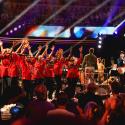
This concert is, she explains from the stage, the “culmination of a process”. She has made a trilogy of EPs which chart a path from pain to healing into a place of strength and power. The albums are three distinct collaborations, with different co-composers and producers and involved, and all three suites of music have been brought together in one place for the first time. The BBC commissioned Robert Ames, who also conducted (pictured below with Anoushka Shankar, clearly having fun), Cee Haines and Ian Anderson (the Berlin-based Scot orchestrated the third part of the trilogy, “We Return To Light”) to re-imagine the work for the London Contemporary Orchestra. No sarod, no tabla, but the endless, and different, possibilities of acoustic (western) instruments.
In effect, this orchestral version of “Chapters” is a single, long concertante work for orchestra with the sitarist as main protagonist. That is a curious paradox. Shankar has wanted to place faith in the arrangers of the orchestral score to unify it. There is a hope, even an expectation, that all the parts will cohere and become a single work…. And yet all the three individual EP recordings were set up in a way that Shankar, as she has said, “could show up to each session open to all possibilities, not knowing what would happen.” Perhaps that is the most remarkable thing, this “journey”, this unlikely fusion does happen.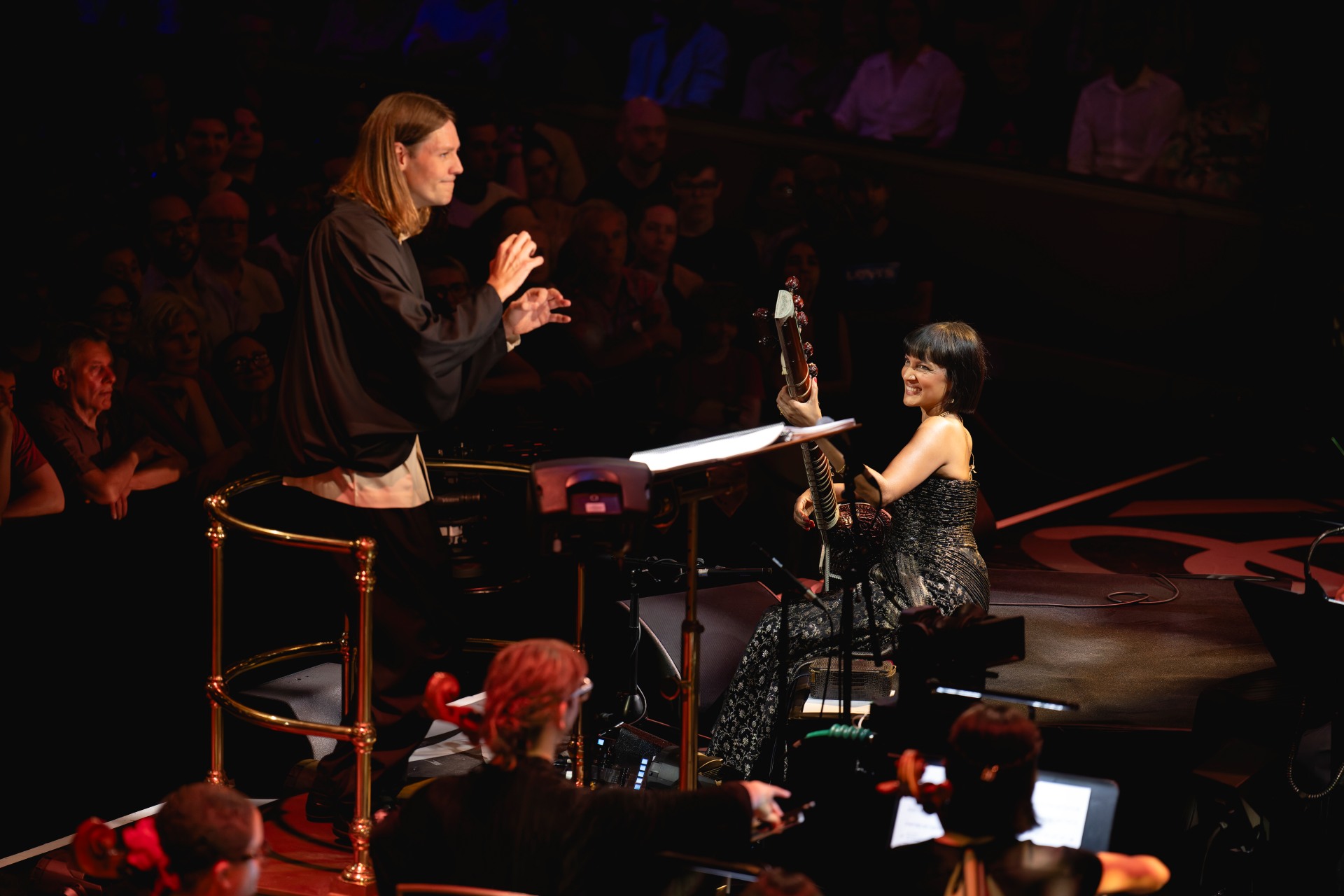 The arrangers have certainly made a virtue of the broader palette of acoustic instruments available in the orchestra and imagined a range of textures, which applies above all to the orchestra’s percussion section. They were quite rightly invited to receive the first applause at the end of the evening. Right from the start of the work, the sitar sound is given a sheen of the sound of a vibraphone, with the disc speed set low, as the listener is taken off in the direction of Glass-ian orchestral minimalism.
Later there was a wonderful episode with low marimba and ethereal glockenspiel encasing the soloist. And the contribution of the drum kit to the third section with its prog-rockier sequences was immense. There were some telling moments from pianist Kat Tinker, surely one of the finest orchestral pianists in the UK, whose abilities to set pace, flow and mood in any new departure in the score are something quite exceptional and always memorable. There was some heroic work from the low brass later in the evening: anger, a hint of anger, implacability, even war. Incredibly vivid.
It is no simple thing to allow traditional and contemporary worlds to converge, Shankar’s sitar – and her starry presence – bring an unmistakably emotive, improvisatory voice steeped in Indian classical tradition. The orchestra delivers her story in a many-hued cinematic orchestral narrative. And, somehow, together, it all works…