A reissue can be an aide-mémoire, a reminder that a record which has been off the radar for a while needs revisiting, that it deserves fresh attention.
In that spirit, this column has looked at straight vinyl reissues of albums of varying styles, from various periods; from the well-known to those which attracted barely any consideration when they first surfaced. In the latter category, there is the reissue of Horizoning by the Canadian folk-inclined singer-songwriter Stefan Gnyś whose sole album had, until 2024, never advanced beyond the 12 two-sided acetate discs which were specially cut in 1968. Then there are records which barely sold when they were first issued. The 1976 South-African jazz album The Bull And The Lion, by Mike Makhalemele & Winston “Mankunku” Ngozi, and the Beach Boys-style California pop of Mark Eric’s A Midsummer’s Day Dream (1969) awaited rediscovery and this year's reappearance on vinyl.
 Lacking this sort of initial inconspicuousness, White Noise’s An Electric Storm (1969) and Cluster’s Zuckerzeit (1974) weren’t lost upon their original release but they were niche records which became noteworthy cult items, attracting increasing traction – and higher and higher prices for original pressings – years and years after they initially hit shops. Again, they returned anew to vinyl.
There are also straight reissues of albums which were never a shadowy presence: Arvo Pärt’s Tabula Rasa (1984), a tranche of John Cale albums from the Seventies (a couple of which had bonus tracks) and the first four Magazine albums (two of which had now, mystifyingly, acquired reconfigured sleeves).
 It is great that all of these are on record and returning to shops. But a reissue – or, more accurately, an archive release – can be more than an aide-mémoire. Well thought out compilations can generate reappraisals of what initially might seem familiar territory. Jon Savage's The Secret Public - How The LGBTQ+ Aesthetic Shaped Pop Culture is a vital consideration of a crucial nonconformist strand of the pre-AIDS era. Groove Machine - The Earl Young Drum Sessions, a deep dig into the studio musician integral to creating disco music, prompts a recontextualisation of the titular drummer’s role. The same applies to Lee ‘Scratch’ Perry and Friends - People Funny Boy: The Upsetter Singles 1968-1969, a meticulous investigation of the early studio work of the Jamaican sonic auteur.
These are various artists collections. Releases dedicated to a single artist can generate the same need to reassess. Take the amazing complete solo works Barry Ryan box set The Albums 1969-1979 and the mind-blowing Gypsy Bells: Columbia Recordings 1967, which digs as never before into Lou Christie’s 1967 spell with Columbia Records.
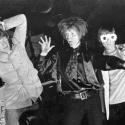
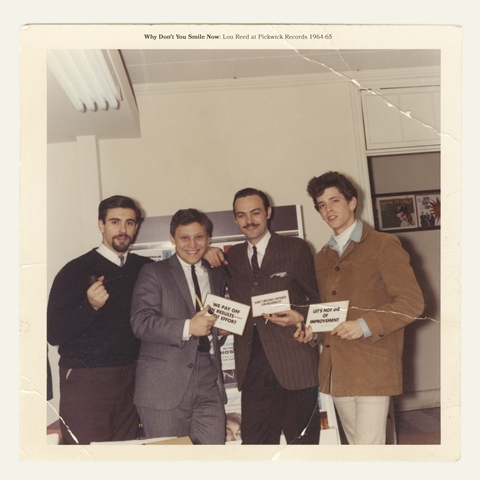
 Furthermore, most satisfyingly, there are forays into quasi-mythical, hitherto largely unknown (aurally, that is) territory. Why Don’t You Smile Now - Lou Reed at Pickwick Records 1964-65 (pictured above left) is the first-ever legal and first-ever definitive collection of the soon-to-be Velvet Underground man’s period as a salaried music-business employee, when he was a songwriter and musician contributing to a tranche of low-selling budget records. Some tracks were known and had previously been bootlegged: The Beachnuts’ “Cycle Annie,” The Primitives’ “The Ostrich,” The Roughnecks’ “You're Driving me Insane.” Others were titles which had been written about – Jeannie Larimore’s “Johnny Won’t Surf no More” – but barely heard. Adding to these on Why Don’t You Smile Now are never-before disinterred girl-group sounds, surf sound-alikes and soul cuts. It was extraordinary. A chapter in the Lou Reed story was so thoroughly rewritten it amounted to a new book. An important collection.
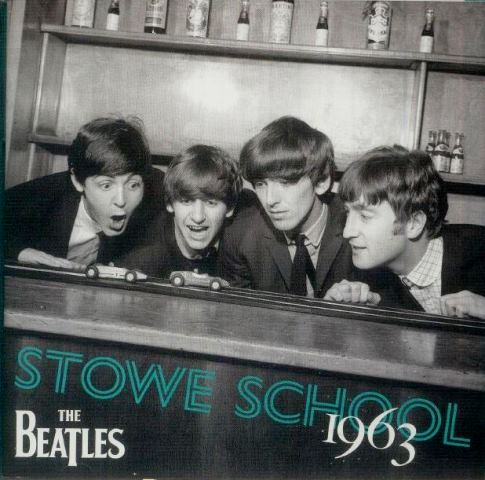
Then, most momentously of all, there was Stowe School 1963, the opportunity to hear The Beatles live at Stowe School on 4 April 1963. This was a recording which wasn’t known about until 2022. Historically significant understates it. Mandatory listening.
Year on year, treasures surface. As the story of popular music rewrites itself, it doesn't stand still. The limits of what’s known are shown to be elastic. Appreciating music from the past is not about living in the past. Instead, it is about expanding present-day horizons.
- Next week: American Baroque – exploration of how string quartets, harpsichords and woodwind created a summer-into-autumn melancholy that was new to rock
- More reissue reviews on theartsdesk
- Kieron Tyler’s website