The stylish gentlemen pictured above are Crimson Earth, a band active from 1970 to 1976. Regardless of their longevity, the Dorset-based outfit failed to attract national attention and didn’t release any records. There was an audition for EMI, local media support and a deal with a Bristol booking agency but cigars were not forthcoming.
Even so, a 1972 tape of the band has been disinterred and one track from it – the explosive, irresistible “Heathen Woman” – was included earlier this year on the agenda-setting Yeah Man, It's Bloody Heavy!!, an extraordinary, wild-ride compilation of never-before-issued tracks by similarly inclined, similarly little-known UK heavy rockers: all dealing in the heaviest of heavy rock from 1969 to 1974 (with one outlier from 1976).
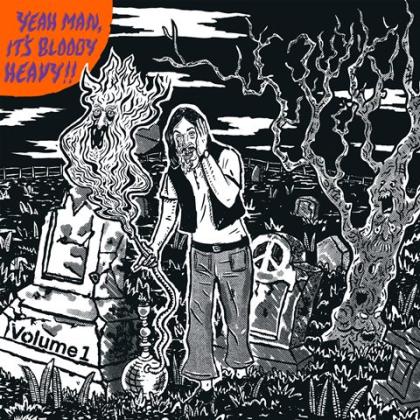
By some stretch, the out-of-the-blue Yeah Man, It's Bloody Heavy!! is the most startling archive release of 2025: “the ne plus ultra of British heavy rock” and “a tribute to a raft of bands who pushed forward as much as they could, despite whatever was stacked against them: the innate exclusion brought by where they were from; lack of contacts in the music business; questionable tactical judgement; their espousal of a music so extreme it could not have achieved traction in the wider marketplace” – as this column put it.
Crucially, Yeah Man, It's Bloody Heavy!! tells a new story. Not a fresh spin on one which is well or fairly well known. Or one which is pretty obscure but known to collectors or cultists. Equally crucially, the music is fantastic, a joy from beginning to end. Further volumes in the series will follow, so watch this space.
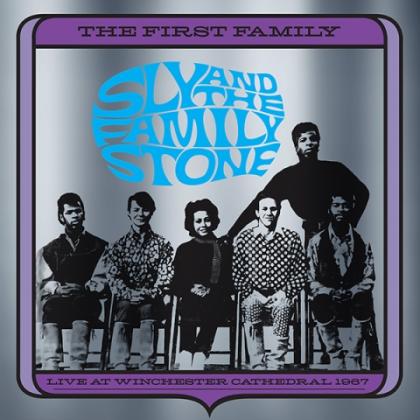
The First Family: Live At Winchester Cathedral 1967 does add to a known story – that of Sly and the Family Stone – but from a previously unknown perspective by throwing light on a fresh aspect of how Sly and co came to be. The first-ever release of the earliest surviving document of the legendary soul outfit, it catches them live on 26 March 1967 just four months after they were first seen by an audience and three months before they signed with Epic Records. The audio source is a professionally recorded four-track tape which, after restoration, was rendered wholly listenable for release: a little boxy sound-wise, but clear with first-rate definition and separation between instruments and vocals. Disclosure of a prehistory is rarely this exciting.
Along similar lines, though very different musically, is Sixes and Sevens, the first-ever release dedicated to former Siouxsie and the Banshees guitarist John McKay, whose unique playing defined and then influenced a raft of music which emerged in the wake of punk. Digging through his archive, the treasure found by McKay included three 1980 tracks he recorded with Banshees drummer Kenny Morris just after the pair had left the Siouxsie-fronted band (the bassist was Mick Allen, of some-time Banshees support band Rema-Rema). This trio is a remarkable window into where the Banshees could have gone in 1980. The rest of the collection is equally enlightening and sensational – a major archive release.
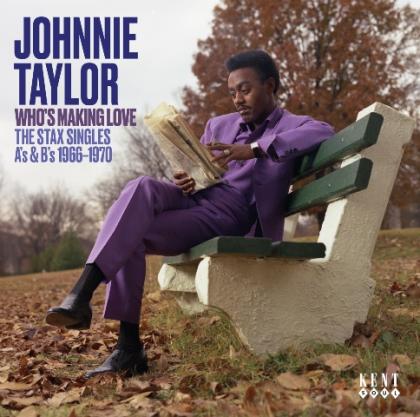
Soul stylist Johnnie Taylor is better known than John McKay, but Who's Making Love The Stax Singles 1966-1970 was also perception-shifting. Taylor hit the US charts in 1968 with “Who's Making Love,” but had been singing in bands since 1951. Sam Cooke was an early champion – Taylor took Cooke’s place in the Soul Stirrers in 1960. But it was a 1966 contract with Stax Records which would radically change Taylor’s fortunes. After the label lost its distribution deal with Atlantic – and, in the process, its stars big Sam and Dave and, due to his untimely death, Otis Redding too – circumstances propelled Taylor to the frontline of the Stax roster. “Who's Making Love” was a smash, and Taylor became big news. An illuminating – and thrilling – collection.
Perceptions are also shifted by Chip Shop Pop - The Sound of Denmark Street 1970-1975, a showcase of British studio-created pop from the early Seventies compiled by Saint Etienne's Bob Stanley. Contrasting with a continuum of denim-clad combos slogging their way to success by trudging the college circuit (see above: Yeah Man, It's Bloody Heavy!!), this told of a music business in which recordings were made, band names plucked from the air and labels then found to release the records. If there was radio play, sales or any form of attainment, a band could be assembled or found to fit the appropriate bill. As said while looking at Chip Shop Pop here, “it is the song which counts, not the nature of its creation or its non-canonical status.” Thought provoking, and a fantastic listen.
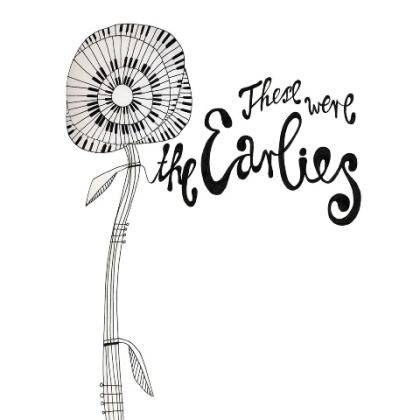
Sometimes, an archive release is a reminder that a band or record stands out in spite of having slipped the memory: a classic case of reappraisal. The reappearance of These Were The Earlies, the 2004 debut album by Lancashire / Texas quartet The Earlies, was such a case. As noted when the reissue arrived in October, “although the Earlies' debut LP received a maximum-marks review from NME on its release – and widespread praise in general – it is not an album instantly shouting ‘cult item.’” Nonetheless, “from its opening seconds, These Were The Earlies sets itself up as top-notch modern psychedelia, with references – some overt, some subtle – to The Beach Boys, Love and, more contemporaneously, Mercury Rev.” It turns out that the band’s story is unlikely; notably curious. A very welcome reissue.
Boiling-down 2025’s Music Reissues Weekly columns to a best-of-the-year is akin to assembling a compilation album: finding what’s notable, what needs to be heard, what tells the story. Everything here is essential. Spectacular too. And – importantly – as electrifying as the best new release by any contemporary artist.
- Next week: The Rolling Stones - Live & Sessions 1963-1969. 10-CD set of demos, live shows, radio and TV appearances with the emphasis on 1966 and earlier
- More reissue reviews on theartsdesk
- Kieron Tyler’s website