Funny how things turn out. As Damon Albarn has morphed from Blur’s Fred Perry-sporting jackanapes into the thinking man’s musical adventurer, flitting from opera to Malian music to cartoon conceptualist, Graham Coxon has opted to pursue the low key and lo-fi, seemingly happier hanging out on the margins than infiltrating the mainstream.
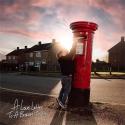
Coxon is currently touring his eighth solo album, A+E. It isn‘t a bad place to start: A+E is a tremendous record, easily the best thing he has done as a solo artist and up there with his best work full stop. A harsh, furiously inventive collection of 10 noisy little monsters, it’s bold, brattish and lots and lots of fun.
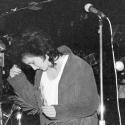
Having returned to wilful noisemaking after a dalliance with English folk on his previous album, The Spinning Top, last night Coxon was back with his old touring band, a six-piece which frequently featured four guitarists, one member swapping between six-string and an old analogue synth which gamely tried to recreate the eccentric sound palette of A+E. Frills were there none. Coxon whipping his glasses off after four songs was as dramatic as it got.
This kind of jagged pop music is built for a sprint rather than a marathon
For fully 40 minutes this really was a terrific gig: Coxon is Britain’s last great rock guitar hero, albeit one disguised as a perennially awkward postgrad. He’s a brilliant, brilliant player, equal parts abstract technique and fevered imagination, constantly looking to bash and bend his instrument into interesting and unexpected shapes. Early on he mixed the old (a superb “Standing on My Own Again“, a crackling “I Can‘t Look at Your Skin“) and the new to thrilling effect. Opener “Advice” - effectively four lost post-punk gems compressed into three breathless minutes - sped out of the traps. This was the peppy face of A+E; the grinding pre-industrial rock of “The Truth” showcased the other side. Hypnotically thick and heavy, Coxon‘s guitar circling the rhythm like a raptor, it ground on and on, ruthless and huge.
So far, so good, but two problems gradually became apparent. The first was revealed as soon as Coxon strolled onstage and announced - well, mumbled really - that his “voice was a bit funny” (which brought to mind the old Willie Nelson gag, told at the expense of Kris Kristofferson: “How can you tell?” Coxon has quite an endearing yelp, but at times he sounds alarmingly like an excitable Dalek.) In the event his fragile pipes gave out around half way through the set. By the time he got to the sinister-hilarious robotic groove of “Meet + Drink + Pollinate” he had effectively disappeared from the mix, and what remained - aside from the one welcome moment of relative stillness, the affecting “All Over Me” - was a great wave of noise, lapping back and forth.
The second was the fact that this kind of jagged pop music is built for a sprint rather than a marathon. It thrills in short, sharp blasts, but at length it begins to pall. After an hour, never mind the 90 minutes that Coxon played for, the scope of the music started to feel narrow and relentless. On the metallic krautrock of “City Hall” - so cool, hard and unflinching on A+E, but oddly flaccid here - the energy started to audibly dissipate. The set continued to flag in the middle, and although A+E highlights such as “Ooh Yeh Yeh“, “What’ll it Take” and “Seven Naked Valleys“ - like Duane Eddy jamming with Neu! - brought matters to a rousing enough conclusion, Coxon was clearly struggling. In truth, the night had peaked long before, and what remained was an object lesson in less being more.
Watch the video for "What'll it Take"