There’s jazz, and there’s transcendent jazz. Kamasi Washington and his band are the latter. His group — who hail from Los Angeles and have played together since childhood, made waves in 2015 when they released The Epic, a three-hour concept album, followed up by Heaven and Earth, which similarly explored esoteric conceptions and abstruse riffs. Now firmly established in the jazz firmament, their heterodox sound appeals far beyond the standard audience; it owes an enormous debt to John Coltrane, Herbie Hancock and Miles Davis, Sun Ra, Pharaoh Sanders but goes far beyond even their most experimental forebears to encompass all kinds of genre including rock, Afro-beat, funk, and trance. Despite this, their sound is somehow unavoidably, wholly new.
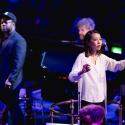
On stage at the Brixton Academy, Washington cuts a striking figure. His orange embroidered poncho gleams ultraviolet; when he motions for other players to take solos, he watches them, appreciative and mentor-like. Other band members are equally striking: double bassist Miles Mosley's excellent gold cuffs sit next to bass guitarist Thundercat's outrageous head gear. Big Yuki on keys glints silver and frenetic while vocalist Patrice Quinn waves arms and copper dress to the music throughout. Like the music, the fashion is both unexpected and bold.
Over a two-hour set, Washington stays true to his totemic slogan: “Diversity is not something to be tolerated but something to be celebrated.” The solo-led music slips from be-bop shakes to incessant cymbal-driven anxiety in the space of a semi-quaver. Tinkly keys leverage sexy bass drops and thrusting energetic dissonance; cheeky jaunts swell lush and orchestrated like natural foliage; staccato reiterations recall stuck vinyl, stalled tapes and uncertain stutters. The two drummers, Tony Austin and Ronald Bruner Jnr, thrash out a duetted conversation, Miles Mosely strums, bows and plucks right to the neck end of his double bass, invention spinning out faster than thought; Washington himself stays soft and sweet on the velvet edge as he scales up, keeping things smooth until finally breaking into sax heckle.
New starts and directions happen fast, the introduction of new keys changes the feel of well-known numbers — it’s all very human. Later, a similar sentiment reemerges in angry, urgent lyrics: “We will no longer ask for Justice. Instead we will take our retribution. Our time as victims is over”. Furious it may be, but the message is of empowerment — regeneration.
There are ways in which the Academy doesn’t quite do justice to their sound. Patrice Quinn’s vocals lose texture in being amplified so they sound occasionally shrill and overbearing and — especially towards the beginning of the concert — the intricacies of Washington’s trip-slips up and down the sax get swallowed into a haze of sound. The venue itself is also a slightly difficult size; it’s packed to capacity but 5,000 is an interim number, somewhere between intimate jazz venue and big gig arena. But it’s a magical performance, as packed with wizardry as it is with wisdom. Long may they play.