When Marina Allen’s second album Centrifics came out last autumn, the Los Angeles singer-songwriter said her voice was the only instrument on the record. She writes on guitar and piano but beyond what she sang, everything else was played by collaborators. Seeing her live might reveal how she saw the songs away from their studio setting – maybe getting close to how they were originally conceived.
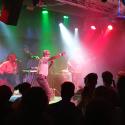
Centrifics is highly arranged. Brass, a flute, strings and more weave through the songs. Though guitar leads on some tracks, piano crops up more often as the main instrument complementing her voice. Here, for the set’s first six songs she stands alone in the darkness with an acoustic guitar. Over the final three she’s joined by fellow LA folks Kacey Johansing at a tiny keyboard programmed for piano and Tim Ramsey on six-string Fender Bass VI, an anachronistic instrument which gained prominence around 1969 when George Harrison and John Lennon adopted it when Paul McCartney was sat a piano.
This was different to the album, and not just because of its stripped-down nature. On record there are hints of Karen Carpenter, Joni Mitchell, Randy Newman and a Laura Nyro-esque penchant for sudden melodic shifts. In person, her voice was shorn of the allusions Centrifics brings to mind. More direct.
Marina Allen is aware of disengagement
Last up in the set was “Getting Better,” Centrifics's second track. Johansing was on piano and contributed vocals to the John Grant-ishly blunt lyrics. On album, it’s baroque. Live, it’s linear nature is revealed. “Smoke Bush” was sparse, without the added instruments and the released version’s ominous mood. The transition to record added layers of tension. Obviously, records are different to live performances but by taking so unadorned a path on this tour, Allen explicitly says it’s not about any framing. Especially so as she really carries a tune, making it clear her songs centre on their melodies rather than any arrangements, a distinction which is less clear on record.
Two new songs were played to the sold-out venue, neither of which were given titles. Without knowledge of any studio versions, no comparisons were possible. In the first of them, she sang “All we have is what we've forgiven.” In the sinuous second, the lyrics were along the lines of “I've been on my knees, I've listened, you’ve just been looking the other way.” Allen is aware of disengagement. Still, she’s fond of the company of her cat who was mentioned a couple of times.
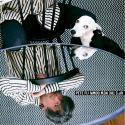
Her penchant for a late Sixties, Seventies style of song writing was in harmony with Kacey Johansing’s opening set where – alongside Tim Ramsey – an initial Fleetwood Mac vibe swiftly dissipated to suggest a mind-set in the ballpark of Todd Rundgren when he was under Laura Nyro’s spell. On a different yet allied tack, Allen’s sensibility parallels songwriters who emerged from the folk circuit to take the music elsewhere. Fittingly, the encore of Allen and Johansing’s duet version of Dear Nora’s “Morning Glories” evoked The Roches. More contemporarily, Allen’s assuredness was highlighted by the merchandise table's stylised Lana Del Ray-ish promo photos of her.
At east London’s prime venue dedicated to the cutting edge and idiosyncratic, books lining the walls are about The Fall and electro-acoustic experimenta. The ideal setting would have been The Troubadour in Los Angeles, around 1970 when Joni Mitchell could have played a string of dates a week earlier. Graham Nash is at a table. David Geffen walks in to check out her performance and wonders how it would be with a full band. She might be right for Asylum Records, the new label he’s going to found. However, this is a dream. Nonetheless, Marina Allen’s vision of music cuts across temporal barriers.